Turf Matters

The Site To Go To For All Your Turf Matters

  • Facebook Likes

  • The new Brushcutter

    Pengganti Brushcutter

    Increase productivity, cut labour. Try the AM61A

  • Trees Nursery

    Forest trees nursery

    Get your Trees from this nursery

Archive for the ‘Greens’ Category

Fertiliser: less is more

Posted by mynormas on August 9, 2016

I was doing training at a golf club the past couple of weeks. It was about basic chemical application, y’know, calibration, safety, pest identification and stuff. Since it was the fourth time for the club (the superintendent organised it every alternate year), I thought I’d slip in a module about fertilising, just to keep the training interesting and hopefully to ensure I get invited back next year. Two things came to mind:

One. I was explaining about the nutrients required by turf and how important each nutrient in its own way to the health of the turf. I was writing on the white board when suddenly I drew a wooden barrel (or cask, if you prefer) and mentioned about Liebig’s Law of Minimum. I said that according to Mr. Liebig, each nutrient is important and lacking in any will affect the plant’s health.

Liebig's barrel

Liebig used the image of a barrel with unequal staves to explain how plant growth is limited by the element in shortest supply, just as the level of water in the barrel is limited by the shortest stave.

During the lunch break a participant showed me a picture of the Liebig’s barrel sent by the superintendent (he was sitting at the back of the class) to their group WhatsApp presumably because my drawing was bad. It then occurred to me that I actually read about Liebig’s Law 22 or 23 years ago! I remember because I read it in the local public library. I know it was that long ago because back then, knowledge wasn’t the only thing I was pursuing at the library and when I got married, I largely stopped going to the library.

Anyway, Liebig’s law was more than 150 years old and there probably are people who disagreed with him but the fact that I recalled it at the particular instant reminded me about something I heard or read about the mysteries of the mind and how we don’t actually lose information in the brain, so I came to the logical conclusion: I am more than just a pretty face.

The second thing that struck my mind was when I was explaining about measuring green sizes and the participants eagerly asked that it be included in the practical session later in the evening. Know this; most of my participants are not particularly fond of practical sessions because it involves a lot of calculations. Know this too: many superintendents don’t know or don’t measure their green sizes.

Training day at KLGCC

I told my participants that knowing green sizes is important because it will be easier to weigh the amount of fertiliser needed for each green – based on fertilising rate – as compared to calibrating the fertiliser spreader or worse, having no system at all. It would also make it easy to buy close to exact amount of fertiliser needed instead of the usual one ton figure when what you really need is 0.8 ton for 18 greens for six months (all figures not real).

As an example, if we decide to fertilise at a rate of 1.5kg/100 sq.m then green 7 which is 600 sq.m in size will get 9kg, green 8 (703 sq.m) will get 10.5kg, green 16 (345 sq.m) shall receive 5.2kg of fertiliser brand Y which, when calculated with the percentage of nitrogen in the fertiliser, we can say that each green receives 150g of nitrogen per 100sq.m.

Furthermore if the total sizes of all 19 greens in your course is 9,200sq.m, and you think you will stick with applying 1.5kg/100 sq.m/month of that particular fertiliser, then you’ll know you need 125kg of it every month or about 750kg for the next six months. Why order more? Yet it is quite common for clubs to order an exact one ton despite the protestations of the supplier “NO! Don’t order so much! Order just enough for your needs!”. Ahem.

It is disappointing that I can still find Malaysian golf clubs that apply fertiliser at the rate of one bag per green regardless of green or fertiliser bag sizes. The other method I’ve seen was when I was told that this club used the setting ‘J’ on brand ‘X’ fertiliser spreader. That could’ve sound reasonable except that the spreader was never calibrated and the superintendent doesn’t know the rate of fertiliser he applied.

In the first club, after measuring the greens and weighing the fertiliser according to the size of greens and rate of application, they cut down their fertiliser use from 16 bags to 12 bags per month. Guess what? The greens were greener and in better condition two months later. In the other club, they chose to be secretive about the amount of fertiliser used before measurement or maybe they didn’t know or maybe they were upset that a consultant was forced on them and didn’t want to cooperate: didn’t matter  to me, based on a few factors, I chose a new rate and the greens improved too.

If you think by saving the club’s money every month, producing  greener and better greens means that I’m getting a huge paycheck; you’re wrong. Despite the improvements at one particular club, it still hasn’t paid me for the last four months of my consultancy there. No kidding.

Posted in Golf Course, Golf Course Superintendents, Greens, Padang Golf | Tagged: , , , , , , | Leave a Comment »

Malaysia’s Greens’ Grass

Posted by mynormas on July 18, 2016

The long Aidil Fitri leave (I took about a week off) at the beginning of July took a toll on my schedule. Last week was a pretty hectic week. Looking back at last week, I was struck by the coincidence that on Monday I was consulting a golf course with Tifeagle greens; Tuesday Tifdwarf; Wednesday Serangoon and on Thursday it was a golf course with greens covered with Zoysia . On Friday I visited two football fields in two different states with grass that in Malaysia we call cacamerba grass. Saturday morning found me on another football field that I was working on myself.

Grass on greens

Do pardon the plastic ruler on Tifeagle; I dared not bring a metal ruler through airport security. The Tifdwarf picture was actually to highlight a problem, so it wasn’t the best picture of Tifdwarf ever.

Ya, I took a side job maintaining a football field mainly because I got tired of the maintaining-a-football-field-is-harder-than-a-golf-course-you-wouldn’t-know-coz-you’ve-never-done-it argument. Well now I have and I’m pretty sure the field looked much better than it did before. Maintaining a football field, to me is like maintaining the fairway of a golf course, though I would treat the area in front of the goal like greens with more frequent cultural practice and tender loving care. It wasn’t hard at all. Well, maybe except for the area in front of the goal but fortunately, the football team have agreed to purchase a mobile goalpost for their practice sessions (think of moving the pins on the greens to spread the wear and tear).

Anyway, this article is about the grass on greens. I didn’t realise we had that many variety on Malaysian greens, though some golfers may argue on many golf courses there’s a lot more variety of grass on just one green! Tifdwarf offtypes, weeds, algae and one green with palm tree in the middle notwithstanding, Malaysian golfers do have a choice of grass to putt on. Other than the four I mentioned earlier, we also have Mini-Verde, Bentgrass Penn A4 (in Cameron Highlands, I’m not sure what Bentgrass variety was planted at that Sabah highland course) and also not forgetting Paspalum Supreme on Malaysia’s premier course.

me normas on Bentgrass green (2)

Bentgrass Penn A4 greens. I consulted for the reconstruction of the 1st Nine. Actually didn’t like the idea of Bentgrass but accepted the challenge. This picture was taken in Nov 2014.

Grass species doesn’t affect greenspeed as much as what many golfers, club management and owners think. Granted, some grass species can be mowed at lower heights and that is one factor for greenspeed but I have seen Tifeagle mown at 3.5 mm with speeds of around 7’5″ and I’ve seen Tifdwarf cut at 4.2 mm with speeds of up to 11’9″ and that measurement was taken by tournament referees, not club staff. The golf course with Serangoon greens I visited a few days ago? After just one roll I saw the speed on one green went up from 8’8″ to 9’7″ at the cutting height of 4mm.

What works at one golf course may not work on another for whatever reason that may not fit the species. It could be climate or local conditions like shade or management practices, old habits or even budget. Many Malaysian clubs are willing to spend a lot of money during construction but balk at the comparatively higher maintenance cost a few years down the road.

About the golf course with Zoysia greens; please don’t ask me the name of the club because they haven’t actually embraced it yet. It started out as a golf course with a lot of weeds on the greens. I’m talking about big areas of Cowgrass (Axonopus compressus), spurge, sedges and of course Zoysia encroaching from the rough.  In the first few months I realised that ridding the greens of weeds was a losing battle because of many factors so I decided to do what a doctor friend of mine call the concept of ‘triage’ where you help those that can be saved and leave those that can’t for later, if you have time.

Now some of the greens there are about 80% Zoysia. They look good, much better than before though admittedly, they putt slow. I’ve made some suggestions to fasten it up a bit but going from experience, it’ll be a few months before they get the hang of any new maintenance practice. When they do and start to market their unique greens as such, you as a golfer should try it out. Expand your experience, if it’s slow, adjust your putting. The only time you should have a problem with greenspeed, is when the speed on the 18 greens are inconsistent from one green to the other. Otherwise, by the third green, you should already get the hang of any reasonable speed.

I’ve been lucky to have worked with many of the grasses I mentioned above on an official basis whether as superintendent, club manager or as consultant. Didn’t the English say that ‘Variety is the spice of life’? It’s made for an interesting career.

I do recommend you try playing as many grasses on greens as possible. They are quite different to putt on you know. How different? Go ahead and play them. If you know the grass is different but you can’t feel/see the difference: try playing again. You’ll soon see, I’m sure, that it’ll enrich your experience as a golfer, even as it makes you poorer financially.

OLYMPUS DIGITAL CAMERA

It doesn’t come any more unique than this. Try putting around that.

Posted in Golf Course, Golf Course Superintendents, Greens, Maintenance, Padang Bola, Padang Golf | Leave a Comment »

A winner

Posted by mynormas on April 21, 2016

I was at a client club the other day going round the course with the superintendent. I was in crisis mode because their green no. 2 had the highest number of insects per square meter I’ve ever seen. Plus the hot weather was thinning out the other greens.

On one green, we met a flight of golfers and I as usual try to be unobtrusive without being unfriendly; a nod here, a smile there and a thumbs-up where appropriate. One of them approach us “Whatcha doing? Checking the greens?” he asked. “Yes” I whispered (one of his friend was putting). “The greens are quite fast now” he said. “Really?!” I said, wide-eyed. “Yes, really, it really is different from what it was before” or words to that effect. I’m assuming the ‘it’ he was referring to was the whole golf course.

OLYMPUS DIGITAL CAMERA

Just another green in another day on another golf course…

I pushed the superintendent to the front “Here’s the guy responsible for it. All his work” The golfer nodded to the super and the super was unsure of how to respond but I suppose it’s safe to say he was pretty proud and he should be.

He only has one triplex greensmower for 19 greens. That same mower is used for dethatching and rolling. One tractor pulled fairway mower, one unreliable front deck mower, one bunker raker and nine workers; four of which works for only half of the day. He mows his tees with backpack brushcutters. He fertilises his greens with slow-release greens’ grade fertiliser alternating with big-prilled oil palm fertiliser.

He has been working at the same course since the day it was planted with grass, in fact, he was one of the workers doing the planting. He stayed on through a few management changes and rose up through the ranks.

He doesn’t speak English and he doesn’t have formal training or even much education, what he has is a good attitude. He takes notes of almost everything that I said (doesn’t necessarily mean he does everything) and asks questions if he doesn’t understand. He is not afraid of trials and tests which I have come to fear more than he does but there were a few chemicals that I am using now that I learnt from him. He doesn’t complain or whine and he definitely does not have the victim mentality.

What he has achieved came through a victor mentality of wanting to try anything new.

Sure, the greens and even the course may not be much to KL folks but considering the resources he has, the location of the club and the price golfers pay; I think the club did well to improve the course and at least this flight of golfers agree.

OLYMPUS DIGITAL CAMERA

Those black things? Those are the bugs.

Posted in Golf club, Golf Course, Golf Course Superintendents, Greens | Tagged: , , | Leave a Comment »

Penyiraman

Posted by mynormas on March 21, 2016

Dalam beberapa hari ini (minggu ke tiga Mac 2016) kita akan menjaga rumput melalui dua fenomena cuaca panas yang kebetulan berlaku serentak iaitu ekuinoks dan juga El Nino. Saya biasa tengok rumput yang di siram hingga lecak tetapi mati kekeringan akibat kesilapan penyiraman. Di sini saya lampirkan nota tentang penyiraman rumput yang merupakan sebahagian dari penulisan yang akan menjadi bahagian dalam buku saya akan datang.

brown grasscrown grass diagramBila cuaca menjadi panas, kawasan rumput yang tidak mendapat siraman akan menunjukkan kesan stress dari kemarau dan kepanasan. Apa yang boleh di lihat pada waktu awal ialah kawasan yang bertukar warna kepada kehitaman di padang. Daun rumput akan berlipat dan kawasan yang di pijak akan menunjukkan kesan tapak kaki lebih lama. Ini semua di akibatkan oleh dehidrasi, iaitu bila tumbuhan tidak mempunyai kandungan air yang cukup di dalam sel nya. Seterusnya kebanyakan rumput yang tidak menerima air yang cukup akan menjadi dorman. Rumput dorman ialah rumput yang mempunyai daun yang mati tetapi akar tajuk (crown roots) yang masih hidup dan boleh bertahan selama tiga hingga empat minggu tanpa siraman.

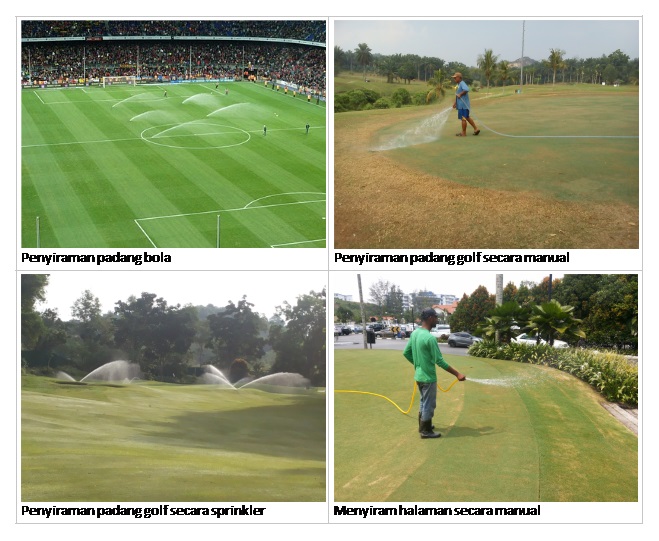

Jika kemarau berlanjutan,  pada minggu ke tiga siram dengan banyak iaitu sehingga 12mm (0.5 inci) air untuk mengelakkan kematian akar tajuk atau crown roots. Akar tajuk adalah bahagian di mana kebanyakan pertumbuhan baru bermula.

Penyiraman rumput jangan di lakukan mengikut jadual tertentu, contohnya menyiram setiap hari, tetapi penyiraman mestilah di lakukan mengikut keperluan rumput. Menyiram rumput mengikut jadual akan menyebabkan pembaziran air dan akar rumput yang pendek kerana kebiasaan senang mendapat air. Selain itu, tanah yang lembab menyebabkan mudah mendapat penyakit dan juga lumut.

Belanja minum?

Derma untuk belanja saya dan memberi lebih tenaga supaya lebih kreatif!

5.00RM

Jenis siraman

Dalam konteks ini terdapat dua jenis siraman (tidak termasuk siraman untuk melarutkan baja atau mencairkan bekas minyak yang tumpah dsb)

  1. Siraman untuk menghidratkan rumput.
  2. Siraman untuk menyejukkan kanopi rumput.


Siraman Penghidratan

Secara ringkasnya ia adalah siraman yang biasa di lakukan untuk memberi air kepada rumput. Kuantiti air yang di perlukan oleh rumput di tentukan oleh jenis rumput, ketinggian potongan, tekanan dari penggunaan padang dan juga jenis tanah. Rumput yang di tanam di atas pasir kasar memerlukan jumlah air yang lebih banyak kerana pasir kasar tidak dapat memegang kuantiti air yang banyak berbanding dengan tanah yang mempunyai partikel halus seperti tanah liat.

Jumlah air yang di perlukan di ukur dengan membuat andaian jika air tersebut tidak meresap ke dalam tanah sebaliknya ia kekal di atas tanah, berapakah ketinggian air tersebut. Adalah penting bahawa air yang di siram rata ke atas semua permukaan rumput yang terlibat.

Umumnya rumput memerlukan lebih kurang 2.5 – 3.0mm air sehari ataupun 25 mm (satu inci) seminggu.cara siram as picture

Siraman penyejukan

Akar yang di gunakan untuk mengambil nutrien dan air ialah akar rerambut yang amat halus  iaitu di antara 15 – 17 micrometer diameter dan 80 – 1,500 micrometer panjang.  Akar rerambut adalah sensitif dan banyak terdapat di satu hingga dua inci teratas lapisan tanah. Suhu yang tinggi di lapisan ini akan merosakkan bukan sahaja akar rerambut tetapi juga akar biasa dan seterusnya menjejaskan keupayaan rumput mengambil air dan nutrien dari tanah.

Tujuan penyiraman ini adalah untuk menurunkan suhu kanopi dan juga lapisan atas bahagian tanah. Siraman penyejukan hanya mengambil masa satu persepuluh dari masa siraman penghidratan.

Teori yang mengatakan butir air yang berada di atas daun akan bersifat seperti kanta yang akan memfokuskan sinar matahari ketika panas terik untuk membakar daun adalah mitos, sebarang cahaya matahari yang cukup kuat untuk membakar daun akan mengeringkan butir air.

Waktu-waktu menyiram

Waktu yang terbaik untuk menyiram rumput untuk tujuan penghidratan ialah pada awal pagi kerana

  1. Tiada gangguan; ia merupakan masa sebelum padang di gunakan untuk aktiviti sukan atau riadah.
  2. Air tersimpan di dalam tanah untuk di ambil oleh rumput pada waktu ia di perlukan
  3. Rumput dan tanah berada dalam keadaan basah ketika cuaca semakin panas.
  4. Waktu awal pagi lazimnya mempunyai kurang angin yang akan meniup siraman air.

Penyiraman untuk penyejukan seharusnya di lakukan pada masa cuaca paling panas, contohnya pada tengahari dan awal petang. Elakkan dari menyiram lewat petang.

Menyiram di waktu petang bermaksud menyiram rumput yang sudah pun mengalami tekanan kerana ketiadaan air ataupun sudah dorman malah mungkin sudah pun mati dan juga menyebabkan tanah basah di waktu senja dan malam yang memudahkan kulat membiak dan menjangkit rumput yang stress tadi.

Maintaining this Website. Sumbangan.

Saya menyumbang ilmu secara ikhlas melalui laman web ini. Tetapi pengendalian laman web ini perlukan wang. Setiap tahun USD99 (lebihkurang RM400). Sedikit sumbangan anda amat membantu. Anda mendapat manafaat dari laman web ini? Sumbangan bermula dari $10. Jangan lupa ‘Like’ artikel ini; ‘Follow’ laman web ini dan klik mana mana iklan di page ini. This website is maintained and managed with my own money. I’ve done my best to not allow advertisement on this site thus far so that I can be independent. I’m going to start to ask for donations and see if I can get enough to sustain it that way. Donations start from $10.

$10.00

Cara-cara menyiram.

Samada menggunakan sistem pengairan moden ataupun paip getah, adalah penting untuk mempastikan semua bahagian tanah menerima jumlah air yang sama rata. Ambil kira bahawa kawasan rumput yang berada di lereng bukit atau di kawasan curam akan mengalami keadaan air akan mengalir di permukaan untuk turun ke tempat rendah sebelum ia meresap. Maka rumput yang berada di lereng atau di tempat curam perlu di siram sedikit tetapi selalu. Contohnya, jika rumput di kawasan rata di siram selama 20 minit, rumput di lereng akan di siram 5 minit empat kali. Berhenti siram apabila air bertakung atau mengalir di permukaan lereng, kemudian ulang; berhenti siram bila air bertakung atau mengalir di permukaan lereng, ulang.water ponding during irrigation watering

‘Siram dengan banyak tetapi jarang-jarang’ adalah cara terbaik, ini akan mengajar rumput untuk mencari air dan tidak terlalu bergantung kepada siraman. Siram banyak akan mempastikan air masuk hingga ke bahagian bawah tanah sebagai simpanan. Berapa banyak dan berapa jarang bergantung kepada jenis tanah dan pemerhatian penjaga padang.

Untuk nota selanjutnya tentang isu lain dalam penyiraman seperti hydrophobicity, wetting agents, dormancy dan sebagainya; sila tunggu buku saya.

Rujukan:

http://www.turffiles.ncsu.edu/alerts/grasses/turfgrass-heat-and-drought-stress

http://prpm.dbp.gov.my/Search.aspx?k=dormant

http://www.thelawninstitute.org/pages/education/lawn-maintenance/let-your-turfgrass-go-dormant/

http://www.petanihebat.com/2013/09/klasifikasi-dan-morfologi-tanaman-padi.html

http://buckeyeturf.osu.edu/index.php?option=com_content&view=article&id=1194&catid=1:latest-news&Itemid=170

https://en.wikipedia.org/wiki/Root_hair


Posted in Greens, Padang, Padang Bola, Padang Golf, Rumput halaman rumah, stadium, Taman | Tagged: , , , , , , , , , , | Leave a Comment »

Jerebu lagi

Posted by mynormas on September 11, 2015

wpid-wp-1441956908644.jpeg

Gambar matahari di Shah Alam pukul 10 pagi 11 Sept 2015.

Jerebu pada minggu ini nampak teruk. Kepada yg bekerja di luar, sila ambil langkah keselamatan yg bersesuaian.
Kepada yg menjaga rumput, beberapa perkara perlu di beri perhatian.

Biasanya kita akan lebih risau tentang kesihatan kita dan manusia lain bila kita bercerita tentang jerebu ini. Masa ini juga ialah masa untuk sesetengah orang untuk mencari salah siapa yang menyebabkan jerebu.

Dengan membuat andaian anda membaca ini kerana anda mahukan cadangan untuk rumput atau mungkin tumbuhan lanskap anda, maka saya akan abaikan cadangan untuk kesihatan manusia atau siapa bakar apa dan dimana dalam artikel ini.

Tidak ada kajian khusus pernah di buat untuk menilai kesan jerebu keatas rumput. Setakat yang saya temui, terdapat kajian keatas padi, tembakau, dan Meranti.

Dua perkara utama pada jerebu akan memberi kesan pada rumput:

Pertama ialah jerebu tebal mengurangkan cahaya matahari yang akan mempengaruhi keupayaan rumput membuat makanan melalui proses fotosintesis. Fotosintesis hanya mampu berlaku bila tumbuhan mendapat cahaya matahari yang cukup.

Gambar hiasan> Rumput waktu jerebu tidak jadi macam ini. Tapi ini berlaku kerana kurang cahaya matahari. Kedua-dua adalah rumput spesis yang sama, satu di bawah redup. Teka yang mana.

Gambar hiasan> Rumput waktu jerebu tidak jadi macam ini. Tapi ini berlaku kerana kurang cahaya matahari. Kedua-dua adalah rumput spesis yang sama, satu di bawah redup. Teka yang mana.

Tumbuhan (rumput) yang tidak mampu membuat makanan tadi akan menggunakan tenaga simpanan yang ada di bahagian-bahagian lain seperti di batang atau akar. Bila tenaga simpanan ini habis dan masih tidak cukup sinar matahari untuk membuat fotosintesis, maka rumput ini akan mula memanjangkan lai daun nya.  Ia akan cuba untuk menambah luas permukaan daun supaya boleh memaksimakan cahaya matahari yang ada. Anda pernah lihat rumput yang tumbuh di kawasan redup? Ia akan menjadi lebih panjang dari biasa; panjang tapi kurus.

Tanya operator yang potong rumput anda samada dia lihat lebih banyak sampah clipping dari biasa; ataupun rumput anda nampak kuning dan bila anda perhatikan dari dekat, apa yang anda lihat adalah batang (stem) rumput dan kurang daun. Itu tanda-tanda rumput tak cukup matahari dan sedang cuba mengadaptasi.

Kedua, di dalam jerebu tersebut terkandung partikel-partikel seni yang akhirnya akan mendap ke atas permukaan rumput. Kalau seni yang saya maksudkan ialah seni budaya tidaklah ia menjadi masalah. Tapi partikel2 disini ialah oksida dan juga ‘heavy metal’ seperti Plumbum dan Sulfur. Ia akan melekat pada permukaan daun atau tanah. Jika dibiarkan unsur2 ini akan terkumpul dan akhirnya memberi kesan ke atas kimia tanah atau rumput tadi.

Ketiga ialah kemungkinan ‘hujan asid’ iaitu kombinasi hujan dan pencemaran udara. Tidaklah bermaksud akan berlaku hujan yang boleh melubangkan baju anda; tapi tahap keasidan air yang turun itu ialah lebih dari hujan biasa. Ini berlaku walaupun tiada jerebu. Anda juga bertanggungjawab untuk fenomena ini bila anda membuat apa2 pembakaran, termasuk enjin kereta anda. Hujan asid ini akan – sedikit sebanyak – meninggalkan kesan keasidan pada tanah juga. Tanah yang berasid akan mempunyai sifat kimia yang akan menghalang rumput dari mengambil nutrien dari tanah.

Cadangan saya

Saya hanya mencadangkan anda perhatikan rumput anda, jika anda dapati ia mula memanjang (tanda-tanda nya ialah, anda mula memotong lebih banyak batang dari daun, atau anda dapati lebih banyak ‘sampah’ di kutip oleh mesin anda dari biasa, atau sekadar dari pemerhatian mata kasar) maka anda patut menaikkan ketinggian potongan. Terutamanya green di padang golf.

Jika anda mampu, siram dengan kuantiti yang banyak untuk ‘membasuh’ permukaan lai daun dan membawa partikel2 seni tadi  ke dalam tanah.

Anda juga boleh membantu perjalanan air ke dalam tanah dengan hollow tining, slicing, spiking atau semata-mata mencucuk-cucuk tanah supaya air boleh turun ke bawah dengan cepat.

Lagi?  Doa banyak-banyak untuk mintak hujan atau salahkan orang sebelah yang tengah bakar sampah tu…

Posted in Greens, Lanskap, Padang, Padang Golf, Rumput halaman rumah | Tagged: , , , | Leave a Comment »

Licence to Kill

Posted by mynormas on June 8, 2015

Very few turfgrass professionals in Malaysia realise that there is such a thing as a licence to apply pesticides. Except perhaps suppliers who have to have a licence to keep pesticides in their stores; they would be aware because it is given by the same body which is the Department of Agriculture.

Wait. What? You’re a supplier and you don’t have a licence to store pesticides? Oops. Well, perhaps because nobody checks so nobody knows. Except that recently a client who was worried about using pesticides that are irresistably cheap they actually kill – not only the target pests – but the grass as well, have asked me to narrow down specifications for pesticides and the three things that I can think of were to find chemicals that are registered with the LRMP (Pesticide Board), have MSDS (Material Safety Data Sheet) and buy from suppliers that have licences from DOA. So maybe one day, your customers will ask for your licence, then maybe you have to have one.

Pesticides, which includes herbicides by the way and not just insecticides and fungicides, are often used in relatively large quantities on a golf course. I say relatively because in Malaysia, it is rare to find them being used on fairways which is about 50% of a golf course never mind roughs (30%?) so for most of Malaysian golf courses; pesticides are restricted only on greens which constitutes about 5 – 10% of the golf course – ditto fertiliser (does that solve the mystery of Malaysian golf course quality for you?) – and because of Malaysia’s rainfall and humidity, the greens’ grass are quite often infected so we are still talking about a big amount of pesticides; though not as big as if it is also applied to fairways and rough hence the word ‘relatively’. Get my drift? Pun intended.

Despite applying mostly on greens, pesticides can consume up to 10 – 20% of the material cost on the golf course maintenance budget.

Even though the greens constitute only about 5 – 10% of the golf course area, golfers spend about 75% of their game on the greens so the greens are considered as the most important part of the golf course and the most highly maintained. It also means that golfers spend a lot of time on the most pesticide-applied area of the golf course. Constant exposure to pesticides can cause a multitude of reactions to different people; some are harmless and some can be dangerous. Of course a low level of exposure to a very toxic pesticide may be no more dangerous than a high level of exposure to a relatively low toxicity pesticide; so most of the risk is assumed by the applicators themselves. But still, I feel that golfers must beware the grass they are playing on is applied with chemicals that are potentially toxic. Then there’s also the risk of pesticide ‘drifting’ when applied at the neighbouring holes.

So we would expect that because of the risks to the applicators, to the greens, to the golfers and to the environment; most golf courses have applicators that are specially trained in this area with special equipment; right?

Not really…

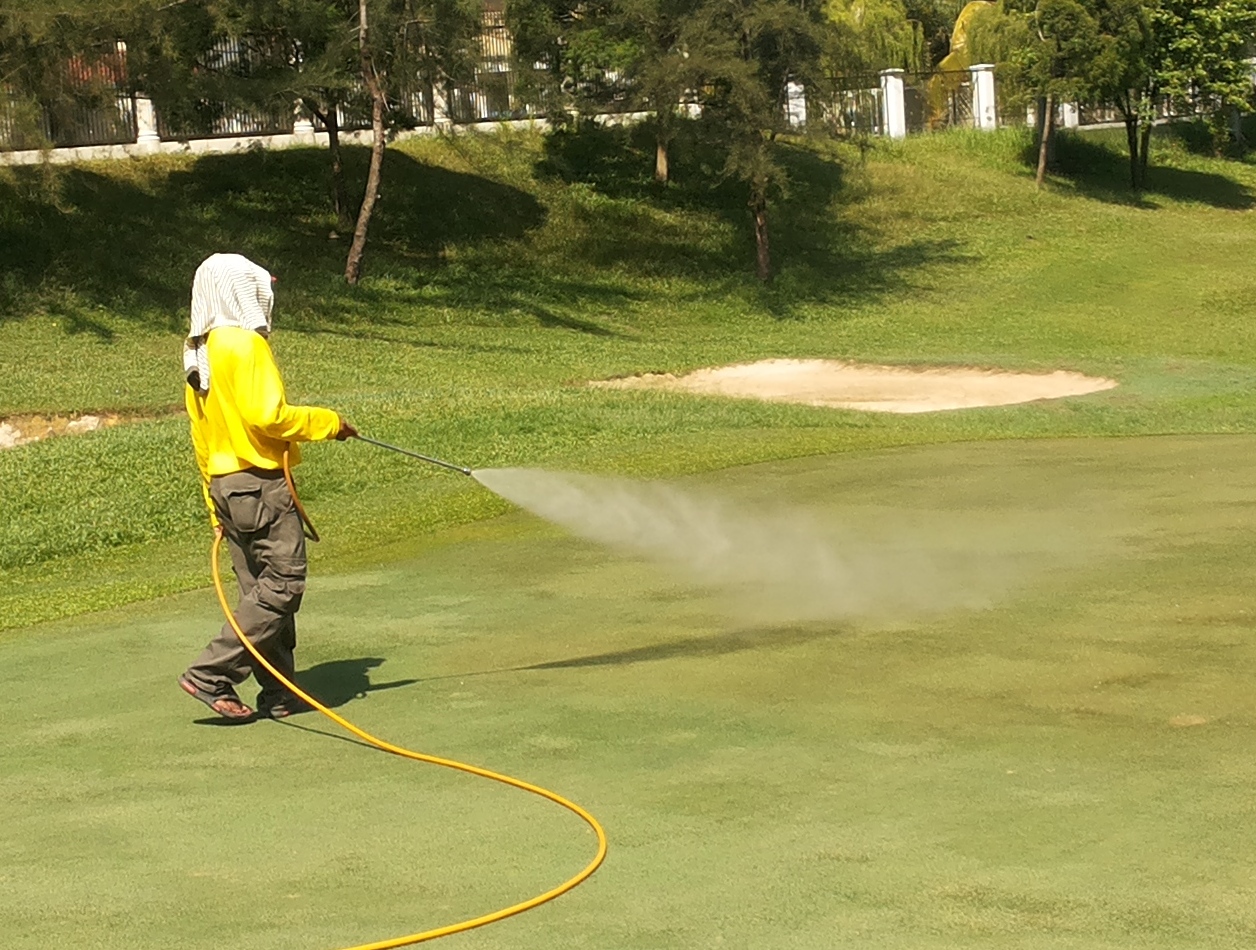
Spraying greens with knapsack sprayer

Spraying greens with knapsack sprayer

Spraying iwth walking boom.

Spraying with walking boom.

Manual spray in progress

Manual spray in progress. Note the amount of spray coming out. How to know how much was sprayed in one area?

I’ve always find it strange and slightly worrying that the concept of ‘calibrating’ of sprayers are not common among Malaysian pesticide applicators, be them golf courses or even football fields. How do you know how much pesticide you are using or have applied? How do you know you have sprayed once or overlapped?

I suppose most of us have seen the application of chemicals so often that we are immune to what is wrong or right.

Unfortunately, the applicators licence issued by DoA are not compulsory on golf courses because they are considered as private property and the licence are compulsory for applicators in public property such as houses (for pest-control companies) but wouldn’t it be nice if ALL golf courses and football fields in Malaysia have trained pesticide applicators? Wouldn’t we feel safer?

I conduct a two-day hands-on training limited to six person to a class at your golf course with your current equipment (which means I can evaluate it too) so if you want to make sure that your grass gets the right amount of pesticide to treat the disease/insects/weeds, I assure you, the cost of using too much or the wrong chemicals is much, much higher than the cost of training. Call O3-5I3I OO66 or email mynormasATconsultant (AT=@) now.

I had to brag (liar) but I'm probably one of the few in the industry in Malaysia that has an applicators licence.

I hate to brag (liar) but I’m probably one of the few in the turf industry in Malaysia that has a pesticide applicator’s licence.

Posted in Golf club, Golf Course, Golf Course Superintendents, Greens, Lanskap | Tagged: , , , | Leave a Comment »

Mengenal ‘Penyakit’

Posted by mynormas on April 13, 2015

In the past few years I’ve been travelling visiting golf courses and a few football fields in Malaysia, one common problem I see is the difficulty some (let me stress that; some) Superintendents find it difficult to diagnose what is wrong with their grass. Especially on greens. I know it can be difficult to identify what disease is at fault except perhaps Fairy Ring but I find it a little alarming when the an insect attack is confused with fungi or even irrigation water contamination is blamed on disease (did that sound right). I’ve seen greens being compacted by some kind of heavy machinery and yet it was blamed on fungus. Sure, there were fungus on the green but you could see that the disease was mostly on the tyre marks and whatever the guy was dragging behind that tractor; a heavy roller perhaps? So I put together a slide that I used for teaching golf course staff on how to identify between abiotic and biotic causes of damage or disease on the course. I also saw a well-constructed football field having problems because the outlet drains were clogged: unclog it, and it improved almost immediately. The slides are in the Malaysian language because it is used to teach Malaysian staff. It is a two-day course and includes a calibration module. For more info on this and other field/course maintenance seminars, please contact me.

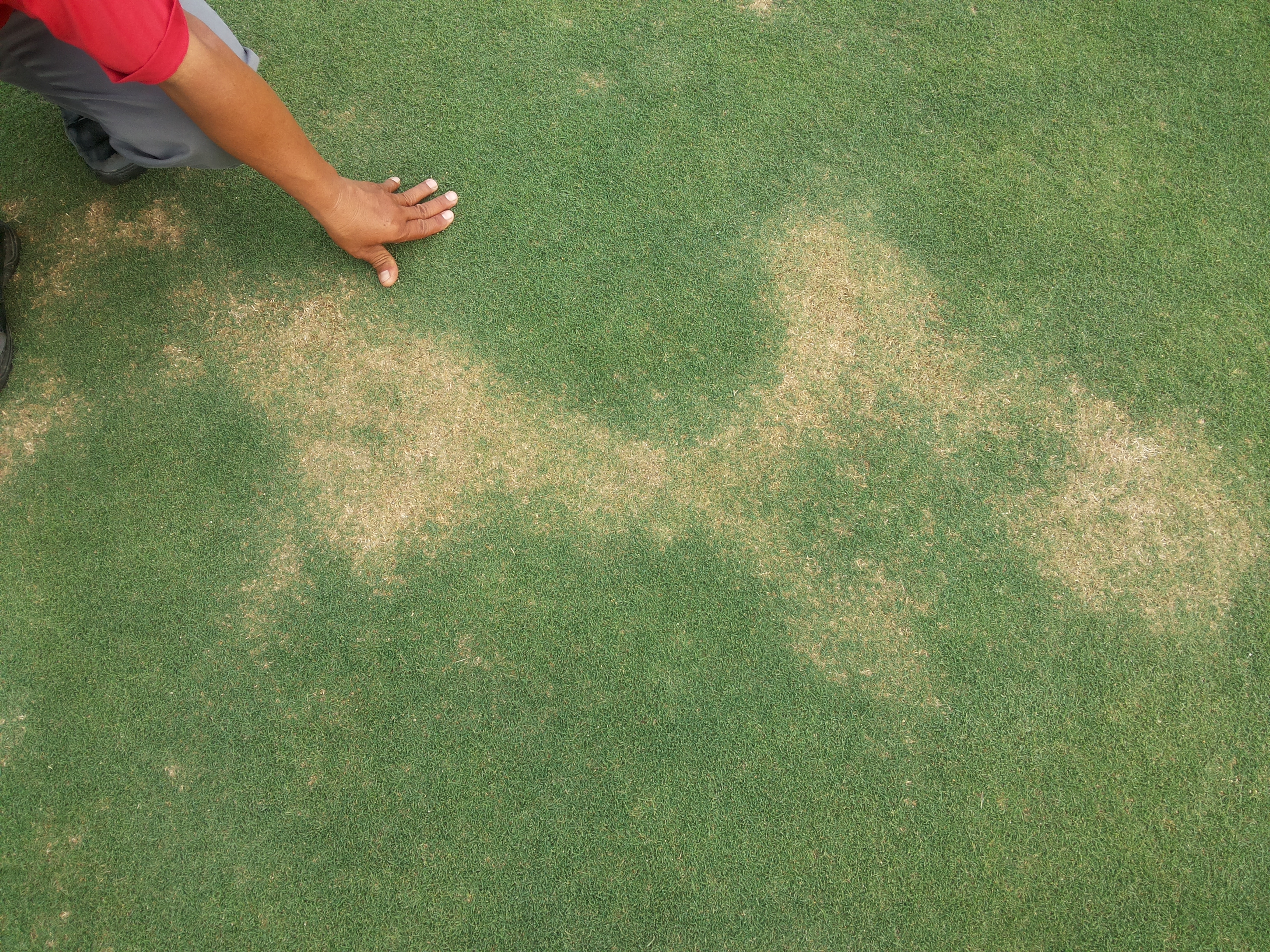
Penyakit apa membuat corak begini? What disease does this?

Penyakit apa membuat corak begini? What disease does this?

Dalam kerja saya sekarang, saya banyak melawat padang golf dan padang bola, dan salah satu masalah yang paling selalu saya jumpa ialah masalah pengenalan kepada penyakit di padang. Kekadang kita confuse di antara penyakit kulat dan serangan serangga. Kekadang masalah yang datang dari pengairan pun kita salahkan kulat. Saya pernah lihat rumput yang mempunyai kesan tayar pun di salahkan kepada kulat juga. Saya pernah lihat rumput yang di salah spray di salahkan penyakit rumput. Saya pernah jumpa padang bola yang di perbuat dengan sempurna dan di jaga dengan baik tetapi bermasalah, saya dapati masalahnya ialah paip outlet membawa air keluar dari padang telah sumbat. Setelah itu di perbaiki, padang tersebut telah berfungsi seperti biasa: tiada penyakit.

Saya telah membuat satu kursus bertajuk “Kursus Asas Aplikasi Racun di Padang” untuk di ajar kepada kakitangan padang dan slaid ini di gunakan sebagai petunjuk kepada mereka untuk membezakan punca penyakit. Ia dalam Bahasa Malaysia. Kursus ini adalah selama dua hari dan termasuk cara kalibrasi mesin. 

Untuk maklumat lanjut tentang kursus ini, sila hubungi saya…

<div style=”margin-bottom:5px”> <strong> <a href=”//www.slideshare.net/normas98/diagnosis-penyakit-rumput” title=”Diagnosis penyakit rumput” target=”_blank”>Diagnosis penyakit rumput</a> </strong> from <strong><a href=”//www.slideshare.net/normas98″ target=”_blank”>Normas Yakin</a></strong> </div>

Posted in Fields, Golf club, Golf Course, Golf Course Superintendents, Greens, Maintenance, Padang, Padang Golf, Taman | Tagged: , , , , , , , | Leave a Comment »

Hot and kering

Posted by mynormas on February 23, 2015

The Malaysian Meteorological Department has issued a statement that the current hot and dry spell in Malaysia will last until end of March 2015. 
That’s 30 over days away. Bearing in mind that some parts of Malaysia haven’t had rain since a couple of weeks ago, the question to ask is; do you have enough irrigation water to last for the next 30 days? Or maybe even longer?
It would be good to know early so that you may want to start rationing, look for other sources of water or perhaps look around for other alternatives to making your irrigation more effective and efficient. You know, wetting agent, better sprinklers or even an irrigation audit. I’ve heard of claims that a slight increase in Kalium (thats Potassium to you Americans) will help in retaining water but don’t quote me.

Jabatan Meteorologi Malaysia telah mengeluarkan kenyataan tentang cuaca panas dan kering sekarang akan berlanjutan hingga akhir Mac 2015. Ini adalah lebih dari 30 hari dari hari ini.
Adakah kita mempunyai air yg cukup utk menyiram hingga April?
Jika tidak, kita mungkin perlu mencatu air, mencari sumber lain ataupun alternative lain seperti agen pembasah (wetting agent) audit sistem pengairan dan sebagai nya. 
Selamat Mencuba!

http://www.met.gov.my

image

Posted in Fields, Golf Course, Greens, Landscape, Lanskap, Maintenance, Padang, Padang Golf, Rumput halaman rumah, Rumput secara am | Tagged: , , , | 2 Comments »

Rumput untuk Stadium

Posted by mynormas on January 27, 2015

Kesilapan memilih rumput adalah masalah utama kebanyakkan pemilik tanah, dari sekecil halaman rumah hinggalah ke sebesar padang golf. Rumput yang cantik di padang orang lain, belum tentu cantik di padang kita. Rumput yang cantik di dalam gambar, belum tentu cantik di tempat kita. Rumput yang cantik di nursery belum tentu cantik di laman kita.

Di tiap kawasan atau tanah atau tapak atau padang; redup, cuaca, iklim-mikro, keupayaan penjagaan, kegunaan dan sebagainya tak sama. Jadi jangan lah kita pilih rumput berdasarkan kecantikan atau kebagusan nya di tempat lain dan kita tangkapmuat dia di tempat kita dan berdoa supaya ia padan.

Di dalam slaid-slaid berikut saya cuba memberitahu apa yang saya pertimbangkan ketika saya membantu sebuah stadium membuat pilihan rumput. Saya cuba jadikan pemilihan rumput itu sebagai suatu proses sama seperti memilih pemenang dalam rancangan hiburan. Peserta rancangan hiburan ada menang dalam kategori tertentu dan ada peserta yang menang dalam acara keseluruhan. Begitu juga dalam pemilihan rumput; saya bahagikan proses pemilihan ke dalam tiga ‘kategori’ dan pilih pemenang untuk tiap kategori. Peserta yang paling banyak menang dalam kategori-kategori itu akan memenangi acara keseruhan. Tentunya pemilihan saya bukan muktamad, saya akan memberi ‘ranking’ dan terpulang kepada tuanpunya untuk membuat keputusan terakhir. Kadang-kadang, ada perkara yang berada di luar jangkaan seseorang. Contohnya tuanpunya mahukan rumput yang sama dengan stadium lain sediaada, atau rumput ranking kedua adalah rumput kegemaran boss, atau rumput dalam ranking pertama tiada ‘backup’ atau tiada di jual oleh pembekal/nursery lain. Maka mungkin tuanpunya mahu membuat ‘gamble’ dan memilih rumput dalam ranking kedua atau ketiga.

Menggunakan rumput yang tiada ‘backup’ adalah – pada pendapat saya – suatu keputusan yang berisiko tinggi. Padang kita  akan menjadi tebusan pembekal sekarang dan di masa yang sama, jika rumput di padang rosak atau mati seminggu sebelum suatu acara/pertandingan penting, kita tiada sumber untuk mendapat bekalan untuk menampal kawasan yang mati atau rosak.

Sebagai bonus, untuk mengelakkan pemilik padang ini menerima nasihat penjual yang memaksa mereka menggunakan terlalu banyak input sewaktu penanaman, saya telah memasukkan beberapa cadangan untuk proses tanam semula. Saya cadangkan supaya mereka kembali ke basic. Guna pasir kasar sudahlah, tidak perlu lain lain bahan seperti tanah liat, top soil yang terlalu banyak (satu lapis?) ataupun benda-benda ‘canggih’ lain.

Jika anda dalam proses memilih rumput untuk padang anda; silakan guna proses ‘3K’ ini. Jika anda ingin membuat penyampaian kepada boss anda dan anda memilih untuk menggunakan proses 3K, saya hanya minta anda beri kredit kepada saya.

Ataupun, jika anda akan membelanjakan jutaan ringgit untuk menanam padang, mengapa tidak belanja lebih kurang 0.001% dari satu juta untuk membayar seorang pakar yang telah membela rumput selama 20 tahun? Anda boleh tanya soalan ini sekarang atau anda boleh tunggu 3 tahun lagi bila soalan ini di tanya oleh pemberita, Board of Director ataupun pengguna ketika rumput di padang anda mula bermasalah.

Selamat membaca.

Posted in Golf Course, Golf Course Superintendents, Greens, Landscape, Maintenance, Padang, Padang Golf, Rumput halaman rumah, Taman | Tagged: , , , , , , , , , | 6 Comments »

Rumput selepas banjir

Posted by mynormas on January 5, 2015

The recent flood in Malaysia has affected a few stadiums, football fields and lawns, The priority of course, is to save the people and to reduce their suffering. Next will be their property and helping them move on with their lives. For some, looking after grass is part of their work or even part of their home. This sharing is for them. Do add any tips you have in the comments here in http://www.mynormas.com and not on my FB.

Banjir yang baru lepas ini adalah antara yang terburuk yang kita telah lalui. Orang dan tempat yang tidak pernah banjir sebelum ini pun telah mengalami nya. Ini termasuklah beberapa stadium dan padang bola.

File pic: Flooded field.  Gambar hiasan.

File pic: Flooded field.
Gambar hiasan.

Walau apa kita panggil keadaan sekarang dan sesiapa pun kita nak salahkan, yang penting sekali ialah kita dan orang orang lain selamat. Lepas tu kita cuba untuk selamatkan harta benda kita. Ada orang yang kerja mereka adalah menjaga padang bola, golf dan ada orang yang laman rumput adalah sebahagian dari rumah mereka. Posting ini adalah untuk mereka, Jika anda ada maklumat lain/tambahan, sila tambah di bahagian comment di sini di http://www.mynormas.com dan bukan di FB saya.

Selalunya air banjir akan surut selepas beberapa hari dan kebanyakkan rumput boleh bertahan keadaan air banjir untuk beberapa hari itu. Bila air surut, kita akan mempunyai lebih banyak perkara yang lebih penting yang perlu kita selesaikan sebelum kita nak fikir tentang rumput ataupun halaman kita. Tapi bila semua yang lain dah settle ataupun untuk orang yang kerjanya memang menjaga rumput samada di taman ataupun di padang, apa seterusnya?

Pertama sekali, kita mesti keluarkan sisa air bertakung di atas permukaan rumput. Gunakan pam air, atau gunakan hos untuk sedut secara ‘siphon’  ataupun guna cangkul untuk buat longkang sementara supaya air mengalir keluar.

Gambar hiasan: membuang pasir yang terlalu tebal.

Gambar hiasan: membuang pasir yang terlalu tebal.

Kedua, kita bersihkan apa yang air banjir bawak masuk. Daun kering, kayu, sampah yang dulu kita buang merata (padan muka!), pampers dan apa apa yang bukan berasal dari rumput kita, kita buang. Membuang benda besar adalah senang. Yang lebih susah ialah benda halus seperti selut dan pasir halus yang mendak. Kedua dua benda ini adalah merbahaya pada jangka masa panjang kerana butir butir selut yang halus boleh masuk ke celah celah butir tanah atau pasir yang lebih besar dan menyumbat profil tanah kita dan menyebabkan air, nutrient dan udara tak boleh tembus ke bawah. Selut itu juga mempunyai potensi membawa unsur-unsur lain yang boleh mengubah sifat kimia tanah kita.

Gunakan cara manual dengan penyapu, penyodok, cangkul, tangan dan sebagainya. Ataupun gunakan air untuk ‘pancut’ selut dan pasir supaya ia lari melalui saliran. Kita TIDAK MAHU ia masuk ke celah rumput dan ke dalam tanah. Selut BUKAN topdressing yang baik.

Butir selut adalah lebih halus dari pasir dan akan menyumbat ruangan di antara butir pasir

Butir selut adalah lebih halus dari pasir dan akan menyumbat ruangan di antara butir pasir

Ketiga, repair kawasan yang rosak – jika ada. Beli rumput baru dan tanam ataupun ‘curi’ dari kawasan sempadan kawasan sendiri. Ataupun curi dari belakang tiang gol ataupun sempadan green dan collar yang jauh dari tempat golfer masuk. Ganti di tempat yang rosak tadi.

Keempat, bila cuaca dah kurang hujan dan kita lebih banyak masa; lakukan pengudaraan iaitu menebuk tanah sedalam lebih kurang empat inci dan gantikan dengan pasir baru. Ini akan membantu air masuk melepasi struktur/profil tanah yang telah rosak akibat di cemari selut dan pasir halus. Topdress untuk menutup lubang baru itu. Jika anda biar ia terbuka, selut boleh masuk jika banjir berlaku lagi. Topdress guna pasir yang lebih kasar dari apa yang kita guna. JANGAN guna pasir yang lebih halus. Ini nasihat yang boleh di guna pakai bila bila pun.

the 'layering effect'

Pelapisan atau ‘layering’ dalam profil tanah.

Nota: gunakan HOLLOW tine dan bukan solid tine. Ertinya sewaktu kita buat pengudaraan, kita akan keluarkan tanah lama dan masukkan pasir baru. Bukan vertidrain, venting, needle tine dan sewaktu dengannya.

Nota kepada nota: Jangan topdressing jika anda tidak pasti anda dah keluarkan semua selut atau silt. Jika anda topdress, anda mungkin bersubahat dalam pembuatan tanah lapis (layering) yang akan lebih teruk lagi menyekat kemasukkan air, nutrient dan udara ke dalam tanah dan penembusan akar.

Better than nothing. Menggunakan manual hollow tine bagus untuk orang yang tiada mesin ataupun untuk buat di tempat tempat yang kecil sahaja.

Better than nothing. Menggunakan manual hollow tine bagus untuk orang yang tiada mesin ataupun untuk buat di tempat tempat yang kecil sahaja.

Kelima, belajar dari kesilapan. Dimana anda boleh buat benteng? Di mana anda boleh tambah perparitan? Bolehkan anda guna pagar yang mempunyai lubang lebih halus supaya kurang sampah masuk? Dan sebagainya.

Keenam. Lakukan soil test. Kita takut air banjir membawa perubahan kepada sifat kimia tanah. Do a full soil test. Ambil dari semua green yang terlibat dan bandingkan dengan satu dua green yang tidak kena banjir jika ada. Untuk padang rumput yang besar; ambil di beberapa tempat yang di tenggelami air dan bandingkan di kawasan yang tidak di tenggelami air, bukan dari daerah atau padang lain: di padang yang sama. Ya. Padang bola pun mesti buat soil test. Sekarang ia boleh di lakukan di makmal tempatan, layari http://www.sgs.com. Anda boleh gunakan university tempatan tetapi dari pengalaman saya, ia lebih mahal, lebih lambat dan perlukan penterjemahan oleh seorang agronomist. Dan lakukan ia setahun sekali atau dua kali  supaya kita dapat memantau perubahan.

Selamat Mencuba!

Posted in Fields, Golf Course, Greens, Lanskap, Rumput, Taman | Tagged: , , , , | 1 Comment »