Turf Matters

The Site To Go To For All Your Turf Matters

  • Facebook Likes

  • The new Brushcutter

    Pengganti Brushcutter

    Increase productivity, cut labour. Try the AM61A

  • Trees Nursery

    Forest trees nursery

    Get your Trees from this nursery

Author Archive

Natrium and Aeration

Posted by mynormas on November 16, 2016

Lifelong learning sounds philosophical doesn’t it? Makes me feel clever. Gives me visions of being the old guy in tight school uniform among the young kids. There’s just so many things to learn! The more I know the more I realise that there’s a lot more that I don’t know. I attended a seminar recently organised and hosted by Sports Turf Solutions. I learned many things but best of all, I had that running-naked-through-the-street-shouting-Eureka moment when I realised the problem of the greens’ edges, the high slopes and the sods when I replant those areas that keeps dying? They weren’t caused by localised dry spot or the mowers’ compaction from circling the green for the clean-up pass. It was caused by something more sinister: Gas.
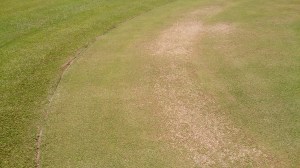
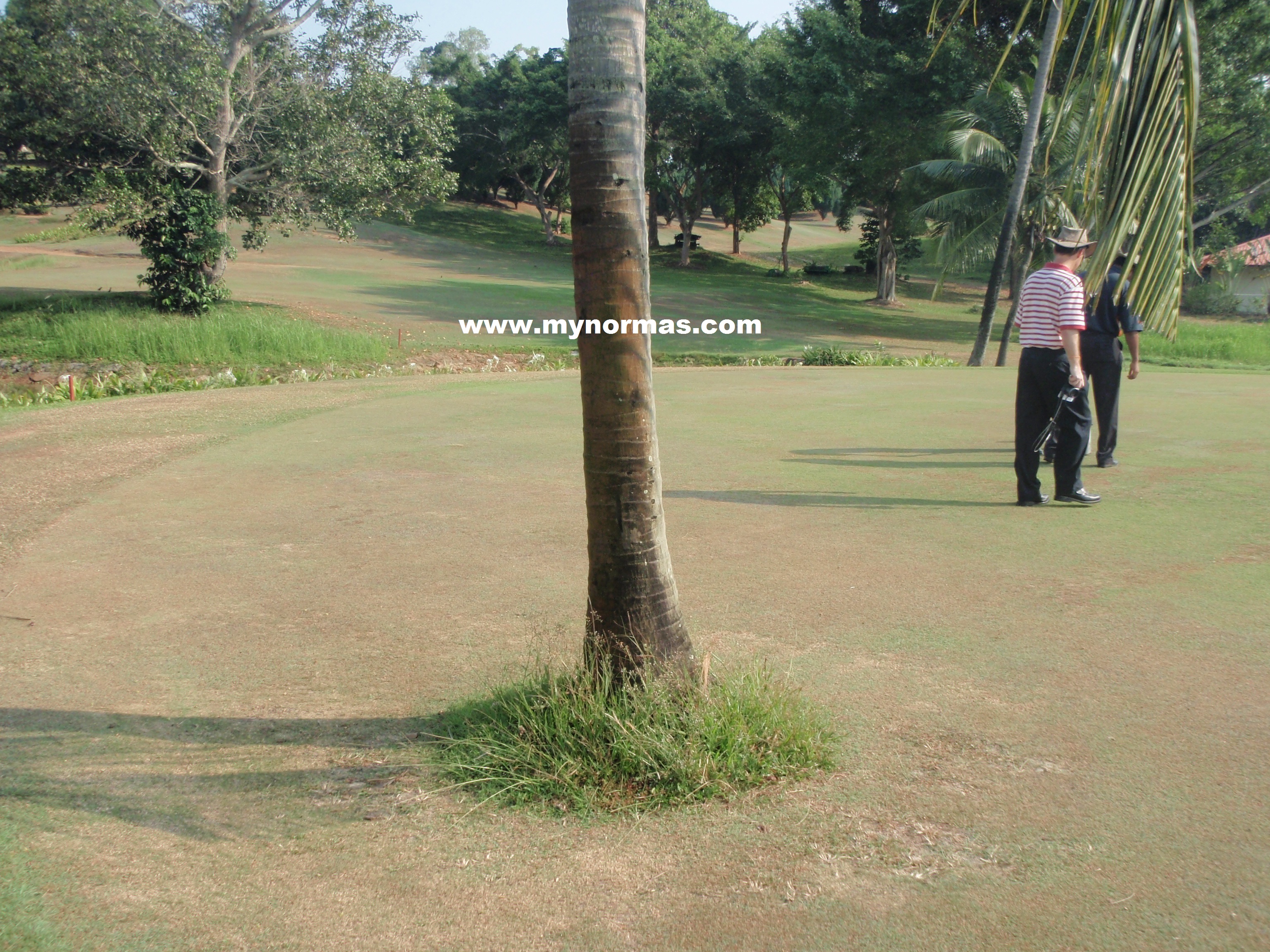
perimeter-damage

See this again carefully, what makes you think this is caused by compaction? Picture only for example.

Let’s start at the beginning of the seminar. Not that I want (or am qualified) to regurgitate back the seminar’s contents, but the subject matter was so interesting and the way it was presented so different that I took a lot of notes and well, sharing them will help me remember plus those that attended may correct me if I’m wrong or the speakers themselves, when they finished laughing (or crying) can add or subtract these notes. If nobody corrects me, I’ll assume everything I wrote is right – ignoring the possibility that nobody reads this of course.

The first topic was by this guy called Pat McHugh CGCS, a former superintendent and now staff at Floratine. He talks about controlling sodium which we – or rather, the rest of the world – call natrium.

Excess natrium affects turfgrass because it hogs the CEC sites in the soil colloid and also at the roots. Some of the effects are:

  • Plants will prefer to take up the natrium rather than kalium (which the Americans call Potassium, by the way)
  • High natrium causes the plants to have weak stomates
  • Na will replace Calcium on the surface of the roots.
  • The plants will actually go into repair injury mode
  • The plants will act like they were applied plant growth regulator on.
  • When the Na attach themselves to the CEC sites, they dominate it, so the nutrients from your regular granular fertiliser won’t have space in the soil.

Where does the Na come from? It is usually from the irrigation system, the tidal water which may swamp low lying areas or inundate the irrigation pond, applied products, sodic soil and a few others.

To make a long lecture short, lets go directly to how to get rid of this excess natrium. Oh wait, someone is asking, “How do you diagnose excess natrium?”. Well, we use an EC meter or we take soil samples and send to a lab, taking the risk that more grass will die by the time the results come back.

We get rid of excess natrium by flushing it out with water, preferably we remove the salts (that’s what natrium is: salt) from the soil colloid and from the roots’ surface by a applying an adequate amount of Calcium. Now don’t go applying the agriculture CaCo3  that we buy by the truckloads, it takes too long to take effect. I suggest you get the Calcium you need from the foliar kind. where it will act faster. Use the best Calcium from STS, it’s designed to be better than the others.

Hey, think about it, do you have turf that looks like it hasn’t been fertilised? Even as I am writing this I can think of a few clubs that has grass that looks like it hasn’t been fertilised in a while. Then you need to check for excess natrium and do something about it. When was the last time you did a soil test? A water test? How do you know the problem you are having is not related to excess natrium?

Question: can we use the same irrigation water that causes the excess natrium to flush out the excess natrium? Yes we can, on condition that accumulated natrium in the soil is more than the natrium in the water. Of course, a lot of rain will help too.

The next topic is about aeration, which is my favourite topic. Most golfers hate playing on a green that has just been aerated but many understand that it is a necessary evil

Many superintendents understand the importance of it in turf health but avoid it because of the disturbance to the surface of perfectly good green. Some dislike the hassle and some say they can’t afford it in terms of manpower, machinery, extra sand or even the time.

Especially the fairways, tees and rough. We equate aeration only on greens while actually aeration should be done on fairways, tees and rough too.

I grew up on golf courses (okay, not literally ‘grew up’) that uses certain brands of machinery for aeration only, so to listen to some guy talk about the Wiedenmann, or was it Weidenmann? Perhaps Wiedenman? Anyway these are the strongest and straighest aerators around. It can also be adjusted to do hollow-tining at different depths, which gives us two advantage; we avoid ‘pan compaction’ and we can use one set of hollow-tine tines for a longer time. I use to buy one set for the first six holes, then another new set for hole 7 to 12. The third set can be the longest of all two sets combined or a new third set anyway. With Wiedenmann, we can just buy one set and adjust the depth accordingly when the tines becomes shorter.

The talk about aeration was given by a gentleman called Mr. Weidenmann (I kd you not and he is supposed to not be related to Weidenmann senior too).

I seem to have run out of space and time.

If you do have problems of greens dying at the edges, or high spots and if you resod the sod will die again; I’m afraid you’ll have to continue reading the next article. Or you can call any of STS staff for more information.
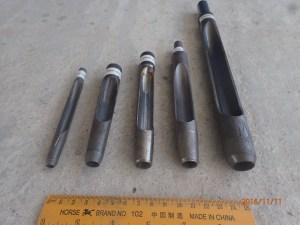
OLYMPUS DIGITAL CAMERA

OLYMPUS DIGITAL CAMERA

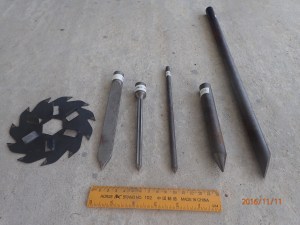
Samples of hollow tine; the leftmost is what I’m told is called a ‘ninja tine’.

Posted in Golf Course | Leave a Comment »

Teluk Intan Golf &CC

Posted by mynormas on November 8, 2016

The town of Teluk Intan is situated about 170km northwest of Kuala Lumpur. It doesn’t sound very far but it is actually 50km away from the North-South Expressway and you have to drive along a rural road flanked by oil palm plantations. Yet about 20 minutes away from this town, lies a golf club. I’ve lost count how many times I’ve been asked “There’s a golf club in Teluk Intan?” when I mention the club. Its actually a good club; simple design, flat fairways, decent greens, cheap fees and few golfers.Truth be told, I was their consultant for about three years. I avoid talking about my clients because I think of it as a client privilege that I don’t talk about it, but we’ve mutually parted ways and I feel that I just had to write about this golf club.

map-tigcc-far

Gives meaning to the phrase ‘in the middle of nowhere’ right? Be the first of your friends, or rather, be the first WITH your friends to try the course and the town. To you non-Malaysians, I just want to point out that that’s the Malacca Straits on the left.

First, lets talk about Teluk Intan town itself. Legend has it the original name of the place was Teluk Mak Intan; ‘Teluk’ is the Malay word for bay and ‘Mak Intan’ is said to be the name of a beautiful lady who happens to be the daughter of a prominent business man based there (it wasn’t a town yet back then). Other sources (Wikipedia) says that she was a prominent business woman herself.

When the British colonialists came to the area, they decided it was a good place to set up a port to transport all the tin mined from the surrounding areas so they built a railway line (now defunct), a port (ditto),  a town (still there) and presumably a golf course (not immediately but one was built eventually).

The then-Resident of Perak, Sir Hugh Low in 1874 wanted to give the place an administrative status and it became a town. Probably some ambitious lower-rank bureaucrat finds it difficult to pronounce ‘Mak Intan’ (Hugh Low himself was said to pronounce it as ‘Malunting’) and/or thinks it wise to stroke the ego of the then acting-governor of the Straits Settlement, Sir General Archibald Anson and renamed it as Teluk Anson in 1882. Gee, I wish I had creative (read: ass-kissing) subordinates like that. It wasn’t till 1982 when the then Sultan of Perak, DYMM Almarhum Sultan Idris II changed the name back to Teluk Intan.

The golf club was originally in the Teluk Intan town itself but in the 1990s the local authority offered the club members a bigger piece of land enough for 18 holes in exchange for the 9-hole club and clubhouse in town. The local authority actually owned the land so I don’t think the members had much choice anyway. The local authority still owned the new club and they found it more efficient to lease the club to an operator.

The new course was what one would call a flat course, mainly because it was built on a flat piece of land with no hills whatsoever that they can use to shape the course. It was also close enough to the river that flows to the sea that it had a high water-table that limits any digging to shape the course too. The green was… different and what I mean by that is that it is different from most clubs and different from one green to the other too. But hey… as I said earlier, the greens were more decent than a few Klang Valley golf clubs I’ve seen so let’s not make too big a deal about that.

Its quite a ‘lonely club’ in the sense that if you look at it from the air, all you see surrounding it are oil palm plantations. Here’s a picture of it at night. The picture in the daytime is a little bit crowded with clouds.teluk-intan-google-earth-lonely-club

I suppose originally it was maintained with a complete fleet of machinery but like many golf clubs in Malaysia, no plans were made with regard to long-term machinery replacement and they keep losing machines. On top of that, they also lose workers and after that, golfers; when the novelty of a new golf club and in fact, the novelty of golf wore out. Fewer and fewer golfers came by until one day some KL golfers forgot there was a golf club in Teluk Intan.

A few years back, one of the original investor in the operating company left and the remaining investor, a self-made rags-to-riches guy decided to take positive steps to rebrand or renew the club. I was engaged for a one-year period and a hefty sum of money was forked out to purchase new machinery.

A year later there were obvious improvements and even the local council praised the changes at the club. Of course this is all comparative, either in terms of current condition compared to its condition in previous years and to other clubs in the area. I was asked to stay on as consultant for two more years after that. I guess you could say I was the de facto superintendent.

More importantly this, this is a case of a little club that tried. It wanted to improve and it did its best to improve. It would be a shame if golfers continue to ignore it. The operator, the owner, the committee and the staff worked hard to improve it with limited resources. I’ve seen urban clubs with better resources, experienced staff and educated superintendents that don’t give a hoot about course conditions, preferring to play the victim game and blame the weather, the budget, the construction, the boss, the committee, the grass, the previous superintendent; anyone but themselves.

Teluk Intan G&CC is the only long-term client that insists I do a presentation at a meeting to their biggest boss every month, where he will then question the superintendent and club manager. Other clubs make do with a written report that usually go unread or perhaps misunderstood (except perhaps by the superintendent who sometimes ignore it). There is also another exception to this; one club who insisted on written reports and whose superintendent was being targeted for early retirement went through my reports with a magnifying glass, accusing the superintendent of NOT implementing my recommendations. He was – diligently. Which resulted in his greenspeed increasing from an average of about 7’6″ to 9′ plus (one green had a reading of 11′ +) in two months WITHOUT reducing their cutting height. Don’t get mixed up: this is not Teluk Intan G&CC I’m talking about: this other club’s superintendent’s job is now safe; mine wasn’t; my contract wasn’t renewed and seven months later, this club up north close to the border of Thailand (are you reading this?) still haven’t paid me my fees yet. Teluk Intan pays me regularly.

In Teluk Intan G&CC, the green fee is cheap, the fairways are nice, the greens are small, the bunkers are shallow and the design is what I would describe as ‘Highway’ type of design, y’know, the kind where bunkers are in the rough and the fairways are like roads leading to the green. The cost of hotel and food in Teluk Intan is pretty low too.

It is perfect for new golfers or hackers or for those who like to play without pressure of other golfers, without feeling being cheated by high green fees with bad greens or just to have fun playing on a totally different course. I know your home club is good, but how many times can you play the same course over and over again?

Should the temptation of ‘cheating’ on your club arise, call Teluk Intan Golf and Country Club at: 016-417 2661 and speak to Khairul Anuar, he’s the friendly Club Manager or just go to their website for more details. While you are there, don’t forget to visit the leaning tower of Teluk Intan and other attractions too and do stuff.


Posted in Golf club, Golf Course, Golf Course Superintendents | 1 Comment »

Penjagaan padang di musim hujan.

Posted by mynormas on November 1, 2016

Kita akan melalui musim hujan ataupun kita boleh kata, musim hujan sudah pun bermula. Pada masa ini kebanyakkan penjaga padang kalau boleh mahu padang kurang di gunakan, tetapi walau macamanapun, padang akan digunakan juga. Apakah langkah penjagaan rumput yang perlu diambil di  waktu musim hujan? Mari kita berkongsi.

1. Pembajaan. Penggunaan baja di musim hujan akan menyebabkan baja larut dan lesap ke dalam sistem saliran yg menyebabkan pembaziran dan pencemaran air. Elakkan menggunakan baja kimia biasa ketika dah tahu hujan lebat setap hari. Amalkan pembajaan ‘sikit tapi selalu’ contohnya baja yang kita bajet untuk sebulan, kita bahagi kepada empat bahagian dan baja seminggu sekali. Ataupun jika hujan terlalu selalu, kita baja dengan baja foliar selang beberapa hari.

2. Menggunakan racun makhluk perosak juga boleh menyebabkan pencemaran di tambah pula air dalam tanah atau air hujan boleh mencairkan racun dan menyebabkan kelalian pest kepada racun. Jika anda ada masalah penyakit atau anda ada sejarah penyakit merebak di waktu musim hujan, cuba gunakan racun jenis serap atau sistemik yang akan masuk ke dalam rumput dan menjadikan rumput itu racun kepada kulat. Begitu juga serangga tetapi elakkan menggnakan racun granul sistemik seperti Carbofuran. Saya pernah guna Carbofuran di musim hujan dan akibatnya ikan mati dengan banyak di kolam.

3. Wetting agent. Memang di luar dugaan dan counter intuitive “Kenapa nak guna wetting agent waktu dah basah giler?” Kebanyakkan wetting agent, terutamanya wetting agent generasi kedua (tanya supplier, klau dia tak tau, tanya supplier lain) akan menjadikan tanah lebih ‘mesra-air’ dan memudahkan ia masuk ke dalam tanah. Gunakan ia secara berterusan dari musim kering hinggalah ke musim hujan.

4. Pengudaraan. Kerja hollow-tine tu bagus tetapi untuk membuatnya di musim hujan adalah kerja yang ‘kurang pandai’ kerana nak mengutip sisa hollow-tine yang basah dan menabur pasir topdressing adalah amat amat susah. Cuba spiking or slicing. Buat selalu. Malah sepatutnya anda dah mula beberapa bulan sebelum bermulanya musim hujan. Ia akan membantu memecahkan algae dan/atau permukaan keras supaya air masuk ke bawah.

Pengudaraan tanah.

5. Vertical-cutting. Tidak bijak untuk buat kerja dethatch yang terlalu dalam kerana kerja mengutip sisa adalah susah. Saya pernah dethatch dua jam sebelum hujan lebat, nak kutip sisa ambil masa hingga seminggu. But grooming or light dethatching: amat baik kerana ia menipiskan rumput utk mudah udara keringkan rumput.

6.  Potong kenalah potong rumput. Jangan biarkan rumput terlalu panjang kerana alasan tak boleh masuk mesin; gunakan manpower dengan brush-cutters or push mowers. Jika terlalu lama tidak di potong, ia akan menggalakkan rumput liar membiak dan juga menyebabkan kita memotong terlalu banyak daun bila kita dah boleh masuk mesin nanti. Lepas potong, jangan biar sampah rumput bertaburan untuk di larikan oleh air hujan! Ia akan menjadikan tanah tidak rata dan menjadi masalah di masa akan datang.

7. Growth regulator:  Ia sangat membantu di waktu ini kerana ia melambatkan rumput tumbuh jadi jika kita ada masalah padang atau fairway yang terlalu lecak dan tak boleh potong, sembur dengan Primo (takde jenama lain di Malaysia) supaya kita tidak ada tekanan memotong sewaktu hujan tengah lebat.

8. Tree pruning: Kurangkan dahan pokok yang ada risiko untuk patah dan sekaligus akan mengurangkan daun yang gugur dan terpaksa di kutip.

9. Rubbish and leave collection. Kutip sampah, daun atau clipping yang akan menyumbat longkang dan menjadi masalah di masa akan datang.

10.  Cuba pastikan air tidak bertakung terlalu lama. Buat longkang sementara atau tebuk tanah supaya air mengalir.

11. Jika kawasan anda mempunyai selut,  buang lapisan selut itu supaya ia tidak menutup permukaan tanah dan air tidak mengalir.


Jika anda mendapati ada tempat yang mempunyai masalah air tidak mengalir atau lecak; tandakan tempat itu di atas peta dan buat rancangan untuk membuat longkang bawah tanah, atau apa cara pun supaya masalah yang sama tidak berulang. Saya dapati, pembetulan dan tindakan jangka masa panjang adalah lebih berkesan dari kerja sementara yang di buat berulang kali.

Selamat mencuba!
Read the rest of this entry »

Posted in Fields, Golf club, Golf Course, Greens, Padang, Padang Bola, Padang Golf, Rumput, stadium, Taman | Tagged: , | 3 Comments »

Tukang Kebun Glamour

Posted by mynormas on October 20, 2016

23 tahun selepas saya memulakan kerjaya dalam bidang penjagaan rumput di Malaysia, saya masih lagi menerima soalan: “Ada kerja macam ni??”. Jadi saya rasa teruja dan seronok bila berpeluang bersama-sama dengan orang orang yang mempunyai kerjaya yang sama, dari serata dunia di Bukit Kiara di seminar anjuran GCSAM/AGIF. Kehadiran saya ke seminar tersebut telah di taja oleh GulfRich Corp. Terima kasih.

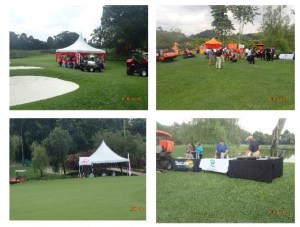
Khemah syarikat yang menunjukkan mesin baru mereka.

Khemah syarikat yang menunjukkan mesin baru mereka.

Perkembangan terkini bidang penjagaan rumput telah berkembang pesat berbanding dengan apa yang saya lalui 20 tahun lalu. Kini terdapat mesin pemotong rumput besar (mempunyai lima unit pisau pemotong atau dipanggil 5-gang mowers) jenis hybrid yang kelima-lima unit pisau pemotong nya di putar menggunakan motor elektrik dan juga mampu menyalurkan tenaga elektrik ke putaran tayar dan mampu menaikkan kekuatan keseluruhan mesin, di bantu dengan sebuah enjin Kubota 25 kuasa-kuda, kepada sekuat 40 kuasa-kuda.

Saya juga tertarik kepada mesin pemotong yang mempunyai pisau jenis reel yang boleh di laraskan kekerapan pemotongan nya (frequency of clip) yang memberi pemotongan lebih rapi dan kemas. Saya percaya ini perkara yang pertama seumpamanya di dunia.

Atau pisau rekaan Jepun yang mempunyai ‘offset’ yang boleh di laras utk memberi pemotongan yang lebih agresif dengan hanya menjarakkan di antara reel dan bedknife. Saya di beritahu ini adalah teknologi eksklusif kepada jenama ini sahaja.

Saya jumpa sebuah alat yang nampak sempoi tetapi mampu mengukur luas kawasan melalui sistem GPS dan mampu menyimpan data di dalam komputer anda. Ia juga mampu mengukur kelembapan tanah serta EC (electrical conductivity yang memberitahu kita tahap ‘kemasinan’ tanah dan juga sebahagian jenis baja). Dengan alat ini kita mampu mengukur kelembapan padang pada waktu siang selepas siram dan juga lapan jam kemudian. Sangat berguna kepada orang yang tidak mahu meneka dan mahu lebih bersifat saintifik dalam penjagaan padang mereka. Insya Allah saya akan order satu untuk kegunaan saya.

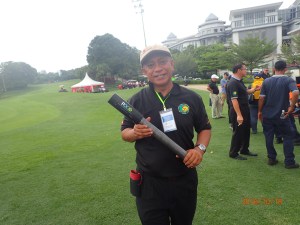
Alat canggih mengesan keadaan tanah untuk rumput (Jejaka tampan tidak termasuk).

Alat canggih mengesan keadaan tanah untuk rumput (Jejaka tampan tidak termasuk dalam pakej).

Berapa orang dari kita yang boleh kata kita potong rumput setinggi 4mm? Itu setinggi beberapa keping duit siling ya. Tetapi dengan teknologi sekarang, ada orang dah potong hingga 2.8mm. Cuba lihat pembaris dan beritahu saya di mana kah letaknya 2.8mm atau 3.6mm. Kini ada tolok canggih untuk mengukur ketinggian rumput begitu; sementara itu ada antara kita masih potong rumput padang bola dengan brushcutter sandang belakang. Untuk pengetahuan, padang bola di potong pada ketinggian lebih kurang 25mm. Boleh kah anda ukur ketinggian potongan dengan brushcutter?

Itu hanyalah sebahagian sahaja dari kemajuan terbaru yang datang ke negara kita. Kami di khabarkan akan ada pemotong rumput robot yang akan sampai ke negara jiran tidak lama lagi. Sementara itu, masih ada di kalangan kita yang bertanya “Ada kerja macam ini?” bila kami kata kerjaya kami adalah penjagaan rumput.


Video untuk mesin hybrid.

Video untuk pisau bolehlaras FoC.

Video untuk mesin buatan Jepun dengan offset bolehlaras.

Posted in Fields, Golf Course, Golf Course Superintendents, Padang, Padang Bola, Padang Golf, Rumput halaman rumah, stadium, Taman | Tagged: , , | 1 Comment »

Ada Apa Dengan Urea.

Posted by mynormas on August 23, 2016

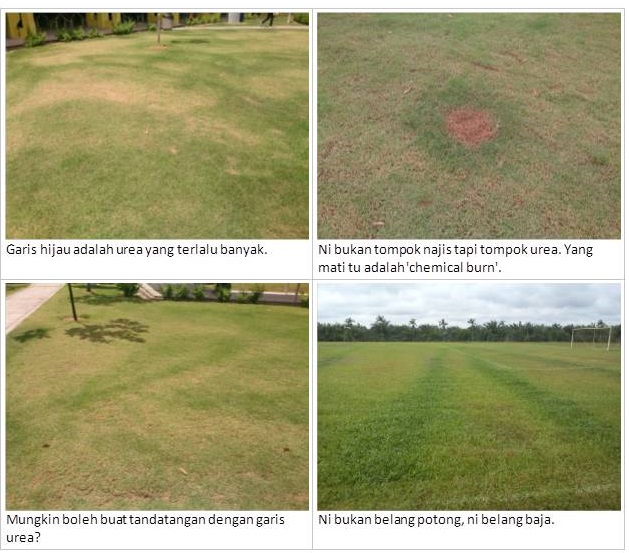
Kali terakhir saya guna urea sebagai baja (pupuk) tunggal di atas rumput adalah pada tahun 1993 jadi saya rasa tergeletek dalam sebulan ini, ada dua client saya yang mahu urea di gunakan. Saya beritahu mereka saya tidak bersetuju, kedua dua client akur, tetapi pekerja salah seorang client menyembur juga baja urea dari stok lama dan mengakibatkan kerosakan ke atas rumput.

Salah satu kemudaratan menjadi konsultan untuk perkara ‘mudah’ seperti penjagaan rumput ialah bila dah ada perubahan positif kepada padang/halaman yang di mandatkan kepada saya untuk perbaiki, tiba-tiba ramai pakar akan timbul. Dari orang atas yang ada PhD ekonomi (contoh) sampai lah ke pekerja asing yang kerja potong rumput (juga contoh), ada sahaja pendapat dan cadangan. Saya suka kepada perbincangan dan penambahan ilmu berdasarkan pengalaman tempatan tetapi biarlah bersifat dua hala.

Selalunya ialah tentang pembajaan dan penyiraman. Langkah pertama saya dalam pembaikan padang selalunya ialah dengan meminta untuk hentikan penyiraman. Ya, banyak padang yang over-siram atau silap siram (pagi tadi saya nampak satu padang pasang sprinkler selama satu jam dan sprinklernya bukan ‘head-to-head’ maka berlakulah siraman helikopter) dan saya akan mulakan pembajaan kerana kebanyakan padang tidak atau kurang membaja.

Saya biasanya akan memulakan dengan baja murah sama seperti baja yang digunakan untuk sayur atau kelapa sawit tetapi ramai ‘pakar’ yang gemarkan urea dan tidak faham bila saya kata kali terakhir saya guna urea sebagai baja tunggal atas rumput ialah pada tahun 1993.

Saya tidak gemarkan urea sebagai baja tunggal di atas rumput (sila baca ayat ni berkali-kali ya. Katakunci: ‘tunggal’ dan ‘rumput’) kerana ia lebih banyak masalah dari kebaikan.

Masalah:

  1. Perlukan penyembur yang terlatih dan ambil peduli.
  2. Perlukan peralatan yang telah di kalibrasi dengan betul.
  3. Mempunyai hanya satu unsur nutrien (nitrogen 46%).
  4. Oleh kerana ia memberi kesan hijau gelap yang di gemari, terdapat kecenderungan untuk terlebih aplikasi.
  5. Jika ketulan urea berada di atas daun rumput; ia akan menyebabkan kesan ‘terbakar’.
  6. Boleh menyebabkan pertumbuhan mendadak dan masalah potongan.
  7. Boleh menyebabkan dinding sel menjadi lembut dan nipis; memudahkan penyerangan serangga dan penyakit.
  8. Mencepatkan pertumbuhan pucuk tetapi memperlahankan pertumbuhan akar dan meningkatkan keperluan memotong.
  9. Urea akan bertukar kepada gas ammonium dan melowap jika ia tidak di campurkan kepada tanah secara di gaul atau di siram.
  10. Nitrogen boleh di larutlesap (leach) ke sumber air jika hujan lebat atau terlebih siram.

Kebaikan urea:

  1. Sumber nitrogen yang murah berbanding baja sintetik lain. (katakunci: sintetik)
  2. Menghijaukan dengan cepat (ini sebenarnya adalah kerana nitrogen, bukan urea; taburlah baja lain yang ada sama banyak nitrogen, akan hijaulah rumput anda)
  3. Ia cepat mengasidkan tanah dan sesuai untuk tanaman yang suka tanah berasid seperti jagung, strawberry dan lain lain tumbuhan yang perlu nitrogen tinggi.

Gunakanlah baja yang seimbang. Ingat, baja bukan makanan tapi ibarat vitamin kepada rumput. Anda boleh hidup hanya dengan vitamin C? Tentu boleh tapi badan anda perlukan juga vitamin E, A, B complex dan lain-lain. Abaikan mereka dan satu hari nanti anda akan sakit/mati tapi berbanggalah: kulit anda cantik. Gunakanlah multivitamin dan tambah dengan vitamin C jika anda tergolong orang yang percaya vitamin C boleh menghidari penyakit. Insya Allah anda akan lebih sihat.

Jadi kalau manusia guna pelbagai unsur vitamin, kenapa rumput guna satu nutrien saja?

Urea mistakes

Rujukan:

Posted in Landscape, Lanskap, Padang, Padang Bola, Padang Golf, Rumput halaman rumah, Rumput secara am, stadium, Taman | Tagged: , , | 1 Comment »

Fertiliser: less is more

Posted by mynormas on August 9, 2016

I was doing training at a golf club the past couple of weeks. It was about basic chemical application, y’know, calibration, safety, pest identification and stuff. Since it was the fourth time for the club (the superintendent organised it every alternate year), I thought I’d slip in a module about fertilising, just to keep the training interesting and hopefully to ensure I get invited back next year. Two things came to mind:

One. I was explaining about the nutrients required by turf and how important each nutrient in its own way to the health of the turf. I was writing on the white board when suddenly I drew a wooden barrel (or cask, if you prefer) and mentioned about Liebig’s Law of Minimum. I said that according to Mr. Liebig, each nutrient is important and lacking in any will affect the plant’s health.

Liebig's barrel

Liebig used the image of a barrel with unequal staves to explain how plant growth is limited by the element in shortest supply, just as the level of water in the barrel is limited by the shortest stave.

During the lunch break a participant showed me a picture of the Liebig’s barrel sent by the superintendent (he was sitting at the back of the class) to their group WhatsApp presumably because my drawing was bad. It then occurred to me that I actually read about Liebig’s Law 22 or 23 years ago! I remember because I read it in the local public library. I know it was that long ago because back then, knowledge wasn’t the only thing I was pursuing at the library and when I got married, I largely stopped going to the library.

Anyway, Liebig’s law was more than 150 years old and there probably are people who disagreed with him but the fact that I recalled it at the particular instant reminded me about something I heard or read about the mysteries of the mind and how we don’t actually lose information in the brain, so I came to the logical conclusion: I am more than just a pretty face.

The second thing that struck my mind was when I was explaining about measuring green sizes and the participants eagerly asked that it be included in the practical session later in the evening. Know this; most of my participants are not particularly fond of practical sessions because it involves a lot of calculations. Know this too: many superintendents don’t know or don’t measure their green sizes.

Training day at KLGCC

I told my participants that knowing green sizes is important because it will be easier to weigh the amount of fertiliser needed for each green – based on fertilising rate – as compared to calibrating the fertiliser spreader or worse, having no system at all. It would also make it easy to buy close to exact amount of fertiliser needed instead of the usual one ton figure when what you really need is 0.8 ton for 18 greens for six months (all figures not real).

As an example, if we decide to fertilise at a rate of 1.5kg/100 sq.m then green 7 which is 600 sq.m in size will get 9kg, green 8 (703 sq.m) will get 10.5kg, green 16 (345 sq.m) shall receive 5.2kg of fertiliser brand Y which, when calculated with the percentage of nitrogen in the fertiliser, we can say that each green receives 150g of nitrogen per 100sq.m.

Furthermore if the total sizes of all 19 greens in your course is 9,200sq.m, and you think you will stick with applying 1.5kg/100 sq.m/month of that particular fertiliser, then you’ll know you need 125kg of it every month or about 750kg for the next six months. Why order more? Yet it is quite common for clubs to order an exact one ton despite the protestations of the supplier “NO! Don’t order so much! Order just enough for your needs!”. Ahem.

It is disappointing that I can still find Malaysian golf clubs that apply fertiliser at the rate of one bag per green regardless of green or fertiliser bag sizes. The other method I’ve seen was when I was told that this club used the setting ‘J’ on brand ‘X’ fertiliser spreader. That could’ve sound reasonable except that the spreader was never calibrated and the superintendent doesn’t know the rate of fertiliser he applied.

In the first club, after measuring the greens and weighing the fertiliser according to the size of greens and rate of application, they cut down their fertiliser use from 16 bags to 12 bags per month. Guess what? The greens were greener and in better condition two months later. In the other club, they chose to be secretive about the amount of fertiliser used before measurement or maybe they didn’t know or maybe they were upset that a consultant was forced on them and didn’t want to cooperate: didn’t matter  to me, based on a few factors, I chose a new rate and the greens improved too.

If you think by saving the club’s money every month, producing  greener and better greens means that I’m getting a huge paycheck; you’re wrong. Despite the improvements at one particular club, it still hasn’t paid me for the last four months of my consultancy there. No kidding.

Posted in Golf Course, Golf Course Superintendents, Greens, Padang Golf | Tagged: , , , , , , | Leave a Comment »

Malaysia’s Greens’ Grass

Posted by mynormas on July 18, 2016

The long Aidil Fitri leave (I took about a week off) at the beginning of July took a toll on my schedule. Last week was a pretty hectic week. Looking back at last week, I was struck by the coincidence that on Monday I was consulting a golf course with Tifeagle greens; Tuesday Tifdwarf; Wednesday Serangoon and on Thursday it was a golf course with greens covered with Zoysia . On Friday I visited two football fields in two different states with grass that in Malaysia we call cacamerba grass. Saturday morning found me on another football field that I was working on myself.

Grass on greens

Do pardon the plastic ruler on Tifeagle; I dared not bring a metal ruler through airport security. The Tifdwarf picture was actually to highlight a problem, so it wasn’t the best picture of Tifdwarf ever.

Ya, I took a side job maintaining a football field mainly because I got tired of the maintaining-a-football-field-is-harder-than-a-golf-course-you-wouldn’t-know-coz-you’ve-never-done-it argument. Well now I have and I’m pretty sure the field looked much better than it did before. Maintaining a football field, to me is like maintaining the fairway of a golf course, though I would treat the area in front of the goal like greens with more frequent cultural practice and tender loving care. It wasn’t hard at all. Well, maybe except for the area in front of the goal but fortunately, the football team have agreed to purchase a mobile goalpost for their practice sessions (think of moving the pins on the greens to spread the wear and tear).

Anyway, this article is about the grass on greens. I didn’t realise we had that many variety on Malaysian greens, though some golfers may argue on many golf courses there’s a lot more variety of grass on just one green! Tifdwarf offtypes, weeds, algae and one green with palm tree in the middle notwithstanding, Malaysian golfers do have a choice of grass to putt on. Other than the four I mentioned earlier, we also have Mini-Verde, Bentgrass Penn A4 (in Cameron Highlands, I’m not sure what Bentgrass variety was planted at that Sabah highland course) and also not forgetting Paspalum Supreme on Malaysia’s premier course.

me normas on Bentgrass green (2)

Bentgrass Penn A4 greens. I consulted for the reconstruction of the 1st Nine. Actually didn’t like the idea of Bentgrass but accepted the challenge. This picture was taken in Nov 2014.

Grass species doesn’t affect greenspeed as much as what many golfers, club management and owners think. Granted, some grass species can be mowed at lower heights and that is one factor for greenspeed but I have seen Tifeagle mown at 3.5 mm with speeds of around 7’5″ and I’ve seen Tifdwarf cut at 4.2 mm with speeds of up to 11’9″ and that measurement was taken by tournament referees, not club staff. The golf course with Serangoon greens I visited a few days ago? After just one roll I saw the speed on one green went up from 8’8″ to 9’7″ at the cutting height of 4mm.

What works at one golf course may not work on another for whatever reason that may not fit the species. It could be climate or local conditions like shade or management practices, old habits or even budget. Many Malaysian clubs are willing to spend a lot of money during construction but balk at the comparatively higher maintenance cost a few years down the road.

About the golf course with Zoysia greens; please don’t ask me the name of the club because they haven’t actually embraced it yet. It started out as a golf course with a lot of weeds on the greens. I’m talking about big areas of Cowgrass (Axonopus compressus), spurge, sedges and of course Zoysia encroaching from the rough.  In the first few months I realised that ridding the greens of weeds was a losing battle because of many factors so I decided to do what a doctor friend of mine call the concept of ‘triage’ where you help those that can be saved and leave those that can’t for later, if you have time.

Now some of the greens there are about 80% Zoysia. They look good, much better than before though admittedly, they putt slow. I’ve made some suggestions to fasten it up a bit but going from experience, it’ll be a few months before they get the hang of any new maintenance practice. When they do and start to market their unique greens as such, you as a golfer should try it out. Expand your experience, if it’s slow, adjust your putting. The only time you should have a problem with greenspeed, is when the speed on the 18 greens are inconsistent from one green to the other. Otherwise, by the third green, you should already get the hang of any reasonable speed.

I’ve been lucky to have worked with many of the grasses I mentioned above on an official basis whether as superintendent, club manager or as consultant. Didn’t the English say that ‘Variety is the spice of life’? It’s made for an interesting career.

I do recommend you try playing as many grasses on greens as possible. They are quite different to putt on you know. How different? Go ahead and play them. If you know the grass is different but you can’t feel/see the difference: try playing again. You’ll soon see, I’m sure, that it’ll enrich your experience as a golfer, even as it makes you poorer financially.

OLYMPUS DIGITAL CAMERA

It doesn’t come any more unique than this. Try putting around that.

Posted in Golf Course, Golf Course Superintendents, Greens, Maintenance, Padang Bola, Padang Golf | Leave a Comment »

Racun Apa?

Posted by mynormas on June 27, 2016

Racun makhluk perosak adalah suatu bahan yang selalu kita gunakan samada sebagai penjaga rumput, landskap, halaman, padang ataupun orang biasa. Racun semut atau nyamuk yang kita sembur pada waktu petang untuk menghalau atau membunuh nyamuk adalah contoh racun makhluk perosak. Bahkan lingkaran ubat nyamuk yang kita bakar supaya kita boleh tidur lena juga adalah racun makhluk perosak atau pesticide walaupun kita panggil ia ‘ubat nyamuk’, namun ia bukanlah apa yang kita beri pada nyamuk yang sedang sakit tapi kita beri supaya nyamuk sakit atau lebih baik lagi; mati.

Saya merasa pelik bila saya menerima message dalam group WhatsApp bahawa seorang rakan yang menghadiri taklimat dari pegawai kesihatan tentang Denggi memberitahu bahawa pegawai tersebut mencadangkan penukaran racun supaya nyamuk tidak lali jika hanya satu racun di gunakan. Hmm… bagaimana jika semua racun itu berlainan nama dagangan (Baygon, Ridsect, Fumakilla dsb) tetapi mempunyai bahan aktif yang sama?

Dan ini yang berlaku pada saya minggu lepas;

Lokasi: sebuah pekan kecil di selatan semenanjung Malaysia

Misi: mencari racun rumpai berdaun lebar untuk membunuh semalu untuk padang bola seorang client. Saya telah pergi ke tiga buah kedai; dua kedai hardware yang menjual racun dan juga satu nursery pokok hiasan.

Perbualan:

Saya: “Hai, ada jual racun rumput?”

Pekedai: “Ada, kami ada dua jenis. Yang satu ialah Round-up dan satu lagi yang ini…” (Betul, kebetulan ketiga-tiga kedai pun tunjuk dua racun, kecuali salah satu kedai lagi tunjuk satu jenis racun tambahan tapi di label sebagai baja kerana ia adalah racun yang di haramkan di Malaysia)

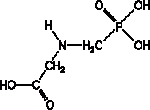
Saya: “Eh… tapi kedua-dua racun ni sama. Kedua-dua nya adalah glyphosate”

Pekedai: …(?)

Nama racun

Nama yang biasa kita kenali suatu racun ialah nama dagangan. Terdapat satu lagi jenis nama yang kebanyakan racun di kenali iaitu nama biasa atau common name. Nama biasa lazimnya adalah nama pendek kepada racun itu dan biasanya adalah kependekan daripada nama bahan aktif. yang lebih rumit dan panjang…

Kadang-kadang, nama biasa juga adalah nama generic yang digunakan secara umum oleh pengguna sama seperti mee segera dari pelbagai jenama adalah di panggil sebagai ‘Maggi’ dan ubat gigi dari pelbagai jenama semua di panggil ‘Colgate’.

sample of glyphosate

Contoh racun yang mempunyai bahan aktif glyphosate.

Bahan aktif

Apa yang membuat satu racun itu efektif ialah bahan aktif nya. Bahan aktif ialah bahan kimia di dalam racun herba (atau herbicide dalam konteks artikel ini) yang membunuh atau mencederakan rumpai (dan kadang-kadang…rumput!). Bahan aktif hanyalah sebahagian kecil dari keseluruhan racun, yang lain selalunya adalah apa yang kita panggil sebagai bahan lengai.

Semua racun yang di jual di Malaysia dan telah di sahkan oleh Lembaga Racun Makhluk Perosak (LRMP atau Pesticide Board) akan mempunyai label yang di mestikan mempunyai nama bahan aktif dan kepekatannya dalam racun tersebut. Ya, walaupun racun serangga di rumah.

active ingredient label samples

Label contoh racun disebut di atas mempunyai bahan aktif glyphosate.

Racun rumput

Bila kita pergi ke kedai dan meminta racun rumput; kita akan di tunjukkan -biasanya- kepada racun jenama Roundup dan beberapa racun lagi. Saya pasti jika and perhatikan betul betul, racun lain itu juga akan mempunyai bahan aktif yang sama dengan Roundup iaitu glyphosate.

Glyphosate

Roundup ialah jenama sejenis racun rumpai popular yang di temui oleh seorang ahli kimia dari syarikat Monsanto yang bernama John E. Franz pada tahun 1970 .

glyphosate derivatives

glyphosate

Pada tahun 2000 bila berakhirnya tarikh hakcipta untuk glyphosate maka banyak lah syarikat pengeluar racun yang mengeluarkan racun berasaskan bahan aktif glyphosate di bawah pelbagai jenama. Malangnya kerana populariti Roundup ataupun kerana kurangnya daya kreativiti, banyak racun ini yang menggunakan ‘up’ di belakang nama (kecuali Seven-Up; iaitu sejenis minuman ringan)

Dengan pengetahuan kimia yang berkembang, glyphosate juga telah di kembangkan kepada pelbagai bentuk dan formulasi. Sebahagiannya di jual sebelum berakhirnya hakcipta Monsanto ke atas glyphosate lagi, mungkin kerana ia di jual dengan nama bahan aktif yang berbeza formulasinya. Contohnya (cuba baca kuat-kuat) glyphosate-diammonium, glyphosate-dimethylammonium, glyphosate-isopropylammonium, glyphosate-monoammonium, glyphosate-potassium, glyphosate-sesquisodium dan glyphosate-trimesium.

Namun begitu, apa yang saya ingin sampaikan di sini ialah jika anda ingin membeli racun, jangan hanya dengar apa yang penjual beritahu anda tentang racun itu, tetapi lihat juga apakah bahan aktif dalam racun itu. Jangan beli dua jenama racun yang berbeza tetapi sebenarnya mempunyai satu bahan aktif yang sama.

Rujukan.

https://en.wikipedia.org/wiki/Glyphosate#Formulations_and_tradenames
http://prpm.dbp.gov.my/
http://roundup.ca/en/rounduphistory
http://npic.orst.edu/ingred/active.html
http://www.alanwood.net/pesticides/glyphosate.html

Posted in Fields, Golf Course, Padang, Padang Bola, Padang Golf, Rumput halaman rumah, Rumput secara am, stadium, Taman | Tagged: , , , , , , , , , | 1 Comment »

Rehabilitasi Padang

Posted by mynormas on May 30, 2016

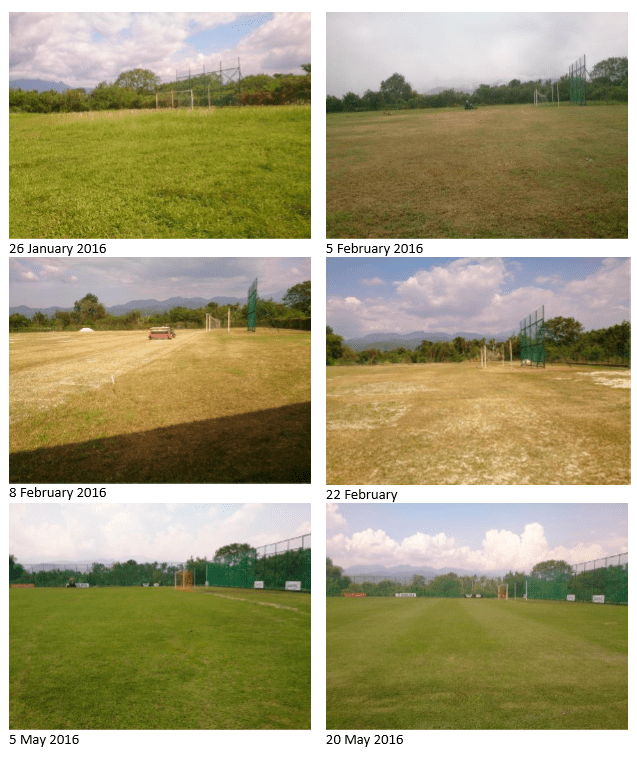
Akhir tahun lepas saya bercerita tentang pengalaman saya mengrehabilitasi padang yang basah sebelum sebuah pertandingan. Awal tahun ini saya telah di minta untuk mengrehabilitasi sebuah padang terbiar. Padang tersebut di katakan telah terbiar selama beberapa tahun.

Berjalan di atas padang itu untuk pertama kali, saya dapati.

  1. Tanahnya padat. Ini baik dan juga tidak baik. Baik untuk permainan tetapi juga bermakna air, di musim hujan nanti, akan tidak mengalir ke bawah.
  2. Ia di tumbuhi lalang yang banyak dan telah terbakar di beberapa tempat. Lalang yang tinggi akan menyebabkan rumput di bawah mati kerana tiada matahari.
  3. Rumpai semalu paling besar yang pernah saya lihat dalam hidup saya.
  4. Rumput yang tidak berpotong selama bertahun tahun.
  5. Tanah yang tidak rata.
  6. Kawasan yang kering dan botak.
  7. Pagar yang telah di penuhi dengan pokok segera seperti petai belalang dan creepers.
    Padang Chemor before
    Gambar padang pada 13 January 2016

Tanah yang padat itu – saya di beritahu oleh orang kampung kemudiannya – ialah kerana mereka telah menggunakan sebuah steamroll untuk meratakan padang bila mereka mahu menggunakannya (Nota: Jangan, jangan, jangan guna steamroll besar utk meratakan padang, anda akan hilangkan ‘camber’ padang serta tanah keras akan timbul dan tanah lembut akan tenggelam: ya; tanah tak sama kekerasannya terutamanya jika anda penggemar TOPSOIL!)

Dengan belanjawan yang terhad dan masa yang singkat, apa yang perlu saya buat ialah:

  1. Melembutkan padang
  2. Membunuh lalang dan semalu.
  3. Memotong rumput berulang kali dan menurunkan ketinggian perlahan lahan
  4. Meratakan padang dengan melakukan hias atas berkali kali.
  5. Membunuh rumpai di pagar.
  6. Menanam semula kawasan yang botak.

Untuk melembutkan tanah, saya perlu lakukan pengudaraan padang. Tetapi lama sebelum itu, saya perlu selesaikan masalah rumpai di padang. Adalah mudah untuk saya menyewa sebuat traktor untuk potong sahaja lalang dan semalu tetapi saya tahu mereka akan balik semula tak lama selepas itu, jadi saya perlu meracun mereka tanpa menjejas rumput padang di bawah lalang dan semalu. Saya tahu untuk meracun lalang saya hanya perlu guna sebarang jenama glyphosate tetapi untuk semalu? Sedikit penyelidikan di Google dan saya dapati racun dengan bahan aktif triclopyr adalah efektif (ejaan mungkin silap, sila selidik sendiri).

Setelah saya racun dengan cara melayangkan penyembur di atas rumpai yang berkaitan dua hari kemudian saya mulakan proses pemotongan. Dan potong dan potong dan potong. Saya tidak dapat potong sekali gus kerana A. Saya takde tempat nak buang sampah rumput dan B. Jika saya potong rumput padang itu pada kerendahan yang terlalu drastik, maka rumput boleh mati. Hampir lima lori sampah akhirnya di keluarkan.

potong padang c
Potong, potong, potong dan potong, dari siang ke malam; dari padang hijau ke kuning.

DSC_0267

Kemudian saya lakukan pengudaraan tanah dengan cara hollow-tine. Menggunakan mesin kecil, hampir merosakkan mesin tersebut kerana kekerasan padang.DSC_0283

Selepas itu saya lakukan hias-atas sebanyak dua kali untuk cuba meratakan padang tanpa menggunakan steamroll.

Terkejutnya saya bila saya dapati ada masalah baru pula: iaitu semut merah yang mempunyai sarang di merata-rata tempat di atas padang. Kini saya terpaksa meracun semut itu pula. Ini senang; saya banjirkan sarangnya supaya permaisuri nya mati atau lari. Saya biarkan askar atau pekerja semut yang berkeliaran di atas tanah; tanpa permaisuri atau sarang, mereka akan mati sendiri tanpa pengganti.

Seterusnya saya lakukan pembajaan. Masalahnya ialah saya tiada sumber air untuk menyiram padang tersebut. Setiap hari saya tunggu hujan. Hujan tiada, dan rumput mulai layu.

Suatu hari, kami terdengar guruh, kami bergegas ke padang dan tabur baja, tapi tiada hujan. Ini berulang sekali lagi. “Tak per, baja tu duduk dalam tanah tunggu hujan” bohong saya pada partner saya Aman bin Yeop dan Bakri bin Zainal.  Sebenarnya, baja tersebut akan hilang sebagai wap sahaja.

En. Aman akhirnya mengambil keputusan untuk membawa pam air kecil dan beberapa sprinkler dan menggunakan sumber air yang berdekatan, kami telah menyiram padang untuk mengelakkan rumput dari menjadi dormant. Untuk siram keseluruhan padang dengan sprinkler boleh-ubah mengambil masa hampir satu hari suntuk.

Kami bernasib baik kerana tuan padang yang juga susah hati tentang keadaaan padang telah mengambil keputusan untuk memasang sprinkler. Malangnya tukang paip yang di pilih tiada pengalaman padang; sprinkler yang di bawanya hanya boleh menyembur air sejauh 4 meter sedang kan lebar padang adalah 64 meter. Tuan padang tidak membenarkan sprinkler di atas padang, suatu keputusan yang saya setujui. Nasib baik En. Aman ada supply sprinkler padang golf yang mampu menyembur hingga 20 meter. Nasib baik juga tukang paip ini jenis yang befikiran terbuka dan mahu mendengar nasihat, beliau telah memasang sprinkler yang ada dan juga menambah beberapa paip kosong untuk kami gunakan untuk menyiram tengah padang.

temporary sprinkler (2)

Penyiraman air menggunakan sprinkler boleh-ubah

Kami siram. Kami baja. Kami potong. Tetapi cuaca yang kering tidak membantu. Padang nampak macam kering. Akhirnya saya mengambil keputusan untuk menambah dengan Agen pembasah untuk membantu air siraman masuk ke bawah tanah. Mungkin tanah ini adalah tanah hydrophobic?

Masa itu, alhamduliLlah, keadaan menjadi bertambah baik, rumput mula bertukar menjadi hijau dan cuaca juga semakin baik.

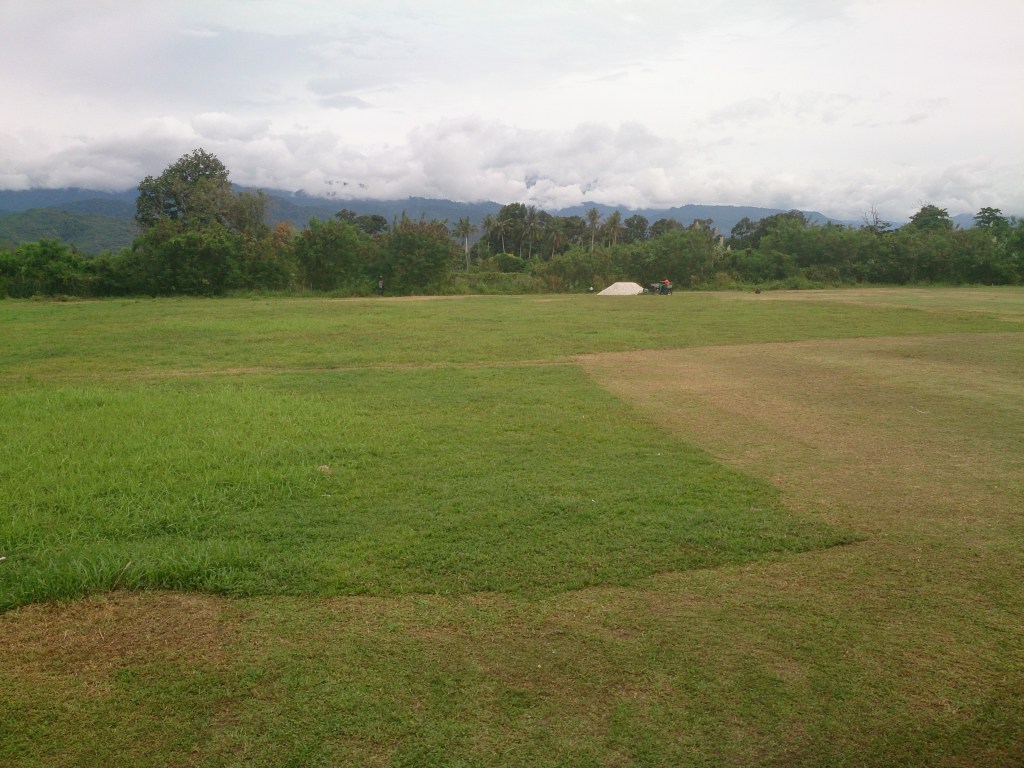
Padang Chemor after
Gambar padang selepas empat bulan.

Maka makin ramai lah pelawat yang berminat ke padang itu dan tidak juga kurang ‘pakar-pakar’ lain yang berkata “Eleh, aku pun boleh buat!”

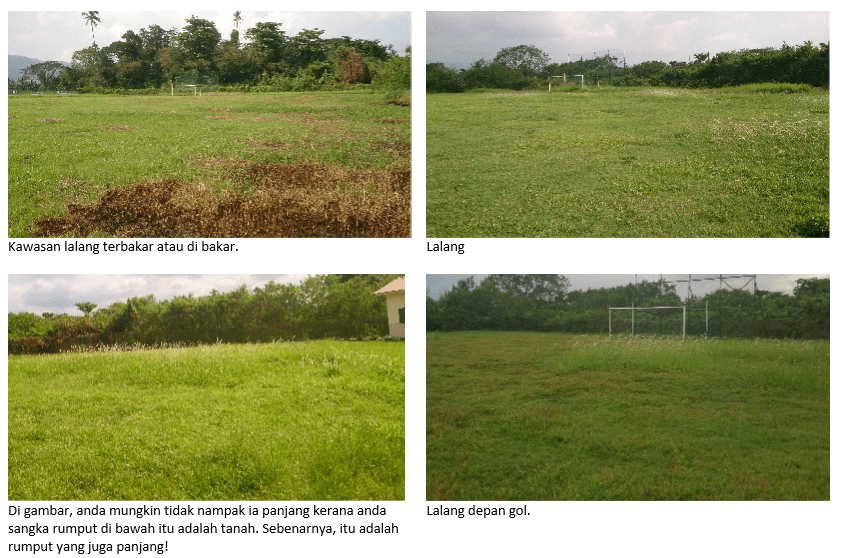
Berikut adalah gambar ‘time lapse’ tepi gol untuk anda lihat perkembangan dari masa ke semasa perubahan padang.

Time lapse pictures

Gambar dari satu sudut padang


Posted in Padang, Padang Bola, stadium | Tagged: , , | 9 Comments »

The Consultant

Posted by mynormas on May 24, 2016

I was with a client Golf Course Superintendent (CS) and he was telling me about a golfer that was gushing about the improvements in his course and wonders how the CS could manage such work in a short time during one of Malaysia’s hottest weather period ever. The superintendent said “I told him that now, we have a consultant who…” I held up my hand “No, you were 70% of it” I said “You, and your people did all of the work. We had a discussion, yes, but you did the work. I have clubs that I have consulted for much longer and there was no difference, sometimes their condition got worse”

The CS blinked. “How could that be?” he asked.

“Well, not all superintendents are willing to listen. There are those who felt that a consultant was forced on them when they don’t need one. I have a superintendent who will do the opposite of my recommendations and there was one who would deliberately take my recommendations to extremes” I continued to give him two specific examples of the incidents.

Unfortunately for the golf course, when the CS did the opposite of my recommendations, it back-fired and as for the part where a superintendent took my recommendation to the extreme, I was lucky that in my report I showed pictures of two other clubs that received the same recommendation with good result because it was done with common sense.

I just could not bring myself to put those kind of things in my report or mention it to the management. In one club when the GM – who was a friend – asked my opinion about a CS related to one of the cases I spoke of earlier.  I told him “I think he should be promoted, either to be a club manager or perhaps laterally as operations manager”

“Why?”

“He is loyal, qualified, has good relations with golfers and perhaps he has been in one position too long, exposing him to other jobs may improve his morale and perhaps even open a brand new career path for him”

I told my client CS “Some days I just want to resign from being their consultant. It has come to a stage where it can be embarrassing to admit I consulted for them. The incidents I quoted were for the things that I can follow up on but what about stuff that I can’t?  Like fertilising or chemical applications?”

There are of course, other clubs that can be a challenge too, for example clubs that has a case of ‘the improvement lust is strong but the financial flesh is weak’. Watching TV turns them on but they have no money for Viagra (for the clubs that are in that position usually are at an old, Viagra-needing age already). So they hire someone who can give suggestions that they can’t act on. Honestly, I usually stay on at these clubs because the CSs there are usually hard-working and full of initiative.

Then there are clubs where the management are perhaps are not clear on what they want. “I want to improve my golf course” they said “Sure” I replied and a couple of months later they’ll say “My fairways are still wet”. I said “Your fairways are wet during the rainy season and we can only work on them when they’re dry, in the meantime, we work on your greens”. “But my greens are fine” one particular boss said. So I showed him the before and after pictures of the greens because somehow the young CS managed to improve the greens in just two months.

The only club – so far – that I have refused to work as a consultant for is a club that the GM would continuously reduce the cutting height after I have asked that they be raised because of health issues. When explained, he would feign understanding and agreement but it would happen again within an hour of me leaving the club. I was engaged under a friend’s company so I told the friend; “Sorry, I’m busy and can’t cope”.

There are also some superintendents who don’t like to be friends (tongue in cheek) with me. Whenever I go to a club, whether at the invite of the management or as a customer, I do my best to contact the superintendent beforehand but I don’t know everyone and some superintendents live like hermits with no friends in the industry or not a member of the association so I don’t know who they are in which case I usually tell the management to ‘make sure the superintendent know I am coming’. Once or twice the management will be red-faced to explain the absence of the superintendent “I met him this morning!” was one reply I got; there was one ‘Emergency Leave’ and a recent ‘Very Busy’.

In general, it has always been a good experience, I enjoy the work though yesterday my wife said that soon, maybe I should look for a permanent job without so much of traveling because “… you are not getting any younger”. Hard to argue with that, the traveling is the toughest part of this job.

When I first started this consultant business a friend remarked “I have always imagined you as a consultant” I wasn’t that surprised and asked why, assuming the answer to be my knowledge, experience and luck in working for big or award-winning clubs.”Because you are always smiling and approachable”

Oh…

Posted in Golf Course, Golf Course Superintendents | Tagged: , , | Leave a Comment »