Turf Matters

The Site To Go To For All Your Turf Matters

  • Facebook Likes

  • The new Brushcutter

    Pengganti Brushcutter

    Increase productivity, cut labour. Try the AM61A

  • Trees Nursery

    Forest trees nursery

    Get your Trees from this nursery

Archive for the ‘Golf Course Superintendents’ Category

Shade & Serangoon

Posted by mynormas on December 8, 2014

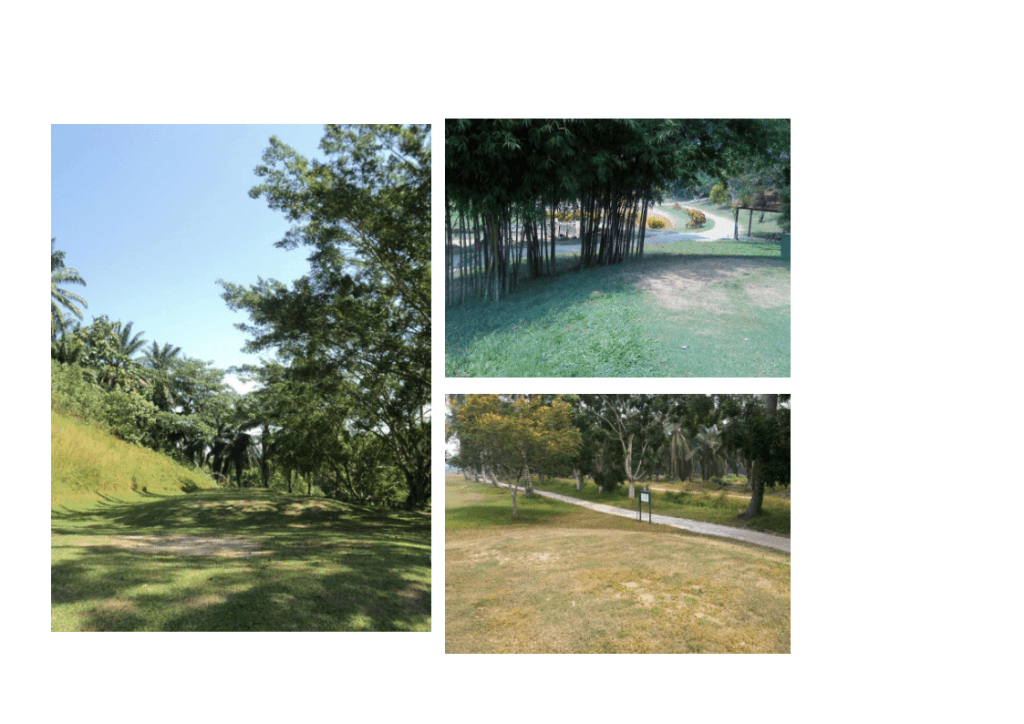
I found a tee that was almost completely shaded by trees. I was told this has been the case for a few years.

image

In my experience, in most cases, the tee would have been in poor condition, but not this tee.
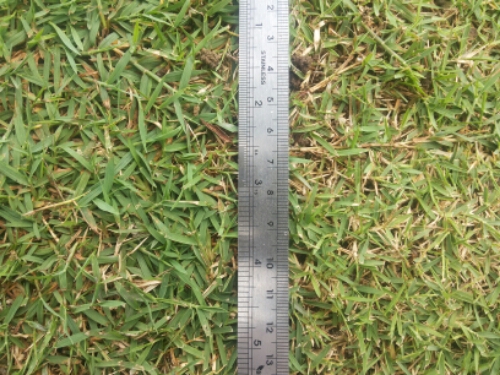
Upon closer inspection and after asking the Superintendent, I was told that the tee – in fact the golf course – was planted with Serangoon grass (I believe its Digitaria didactyla). This strengthens my belief about the shade tolerance of Serangoon. There is a bit of browning and scalping on the surface which I believe are due to Philippine grass  (Zoysia tenuifolia?) planted there when they enlarged the tee.
Both grass are a lighter green in colour compared to Bermuda and Cowgrass.

image

On the left is Serangoon, on the right is Zoysia.

It is a pity that the only nursery I know of that sold Serangoon has replanted it with Bermuda and golf courses that has Serangoon greens are rumoured to be contemplating to change to other grasses. I hope it is not about following a trend. I also hope that, in this context, they think about their shade issues too.

Baru baru ini saya terjumpa sebuah tee (org Malaysia kata tee-box) yg hampir terlindung sepenuhnya oleh pokok. Ini bukan perkara baru tapi selalu nya saya perhatikan rumput di tee yg terlindung akan bermasalah rumput yg terlindung akan kurang makan kerana kurang photosynthesis dan akan memanjangkan daun utk mencari matahari dan memendekkan pertumbuhan akar utk menjimat tenaga.

image

Tapi di tee ini, rumput ini subur walaupun sudah bertahun tidak di baja.
Saya di beritahu tee ini di tanam dengan rumput Serangoon yg memang di kenali sebagai rumput yg ‘shade tolerant’. Ia juga di campur dengan rumput Philippine sewaktu tee di besar kan saiznya.
Adalah malang sekali jika kita kehilangan species rumput tempatan ini kerana satu satu nya nursery yg menjual Serangoon sudah tidak lagi menjual nya. Dan padang golf yg mempunyai green Serangoon di khabar kan akan menukar kepada rumput lain.  Kita memang suka benda benda import ni kan? Rumput, kereta, baja, consultant…
Apa pun saya harap mereka ambil perhatian tentang kawasan terlindung di padang mereka. Jangan menyesal kemudian…

example of tees suffering under shade
Contoh contoh tee yg rosak akibat teduhan (examples of tees damaged due to shade)

Posted in Fields, Golf Course, Golf Course Superintendents, Greens, Landscape, Lanskap, Maintenance, Padang Golf, Rumput, Rumput halaman rumah, Rumput secara am, Taman | Tagged: , , , , | Leave a Comment »

Padang dan belang

Posted by mynormas on November 18, 2014

Stripes, whether on a football field or a golf course fairway, are nice to look at. Some Superintendents/Groundsmen are quite creative and can create nice patterns. However, the danger of having one direction of stripe for years and the same mower every time we mow, is creating ruts where the tyres are.

File picture; not directly related to story.

Nice stripes from a simple tractor. But at least this is a light machine.
Gambar hiasan.

For those not in the know; to get those nice stripes that you see on TV or at your local field/fairways/rough, the mower operator has to mow in the same place and at the same direction every time. The grass then bends in that particular direction and when the mower comes back on the ‘return’ trip, the grass will bend in the opposite direction. The effect of light reflecting on the bent grass are what creates the striping effect. Not really the cutting action per se, more likely the rollers behind the ‘knife’.

Its easier to do with some grass compared to others. For the grasses that are harder to create the stripes, the mower operators has to be disciplined and skilled enough to be able to repeat that task every time he/she mows. Some courses/fields can have a few directions to spread the wear and tear but in Malaysia, most clubs will have one one direction of mowing; from tee to green of fairway or on the football field, from one side of the field to the other i.e. left to right.

If you don’t spread out the wear and tear and keep on mowing in the same place/direction every time over many years and even during wet soil conditions – especially if you don’t aerate your fairways – what will happen is that the machine’s tyres will always be in the same location every time you mow and this will soon create ruts.

Maybe not my best artwork; but what I'm trying to show is a profile of ruts created by a machine.

Maybe not my best artwork; but what I’m trying to show is a profile of ruts created by a machine’s tyres.

I recently advised one club to change the direction of their fairway stripes because it has been that since the beginning. I suggested a ‘diamond’ cut from two directions to create a checker board effect from a straight up and down striping as it is now. At least then there can be two set of places where the machine’s tyres can be placed and since that particular club mows its fairways twice a week, that means on one day it will mow from left to right and on the other; right to left.

When the owner came by a few weeks ago, he decided he preferred the old stripes and instructed the Superintendent to go back to the old stripes. The Superintendent were not able to give a proper explanation why we changed mowing direction and had no choice but to go back to the previous direction.

Sigh… I guess I should let it go, but the rainy season has just begun and I’m afraid the ruts will just get worse.

Belang pada padang – samada pada fairway padang golf atau di padang bola – adalah cantik. Tetapi ia datang dengan kos tertentu. 

Pedulikan botol air mineral tu. Apa yang saya nak tunjuk ialah arah rumput baring akan menentukan warna belang rumput.

Pedulikan botol air mineral tu. Apa yang saya nak tunjuk ialah arah rumput baring akan menentukan warna belang rumput.

Untuk mendapatkan belang tersebut, si operator yang membawa mesin mestilah memotong pada arah dan tapak yang sama setiap kali dia memotong. Ini kerana belang itu datang dari rumput yang ‘baring’. Bila mesin itu potong ke arah hadapan kita, rumput itu akan baring ke pergi dari; dan bila mesin itu potong di arah berlawanan iaitu ke arah kita, rumput akan baring ke arah kita. Cahaya yang melantun atas permukaan rumput itu akan membalikkan jumlah cahaya yang berbeza dan memberi kesan belang yang kita nampak. 

Oleh kerana mesin itu terpaksa potong pada arah dan lokasi yang sama setiap kali ia potong selama bertahun-tahun; tayar mesin itu akan berada di lokasi yang sama dan akan membentuk lekuk terutamanya bila kita potong pada waktu tanah lembik; i.e musim hujan. 

Untuk mengurangkan efek tersebut, saya cadangkan padang mempunyai dua atau tiga ‘pattern’ belang supaya mampatan dari tayar boleh di sebarkan ke beberapa lokasi. Ini mungkin membantu. 

Example of striping on football field

Contoh belang atau stripe di padang bola.

Posted in Fields, Golf Course, Golf Course Superintendents, Maintenance, Padang, Padang Golf | Tagged: , , , , , | Leave a Comment »

The Big Small Things

Posted by mynormas on September 11, 2014

Contrary to popular belief, usually, the greens are the easiest problems for me to help with. Usually, the current superintendents know what to do and just need some encouragement or pointers. Even if they don’t know what to do, they’ll be eager to listen and follow. Plus if it came to the stage that my help is needed, that usually means the club are willing to spend money and sacrifice time to make things better. Maybe occasionally some major replanting are needed but these aren’t often.

Sometimes it’s not about making things better too, but just to redraw the lines, clarify some stuff; usually about green speed. You know some clubs just chase after that extra six inches of speed by cutting low and rolling hard.

So give it three months or at worst a year, the greens would improve and then what?

Greens improvemnt

Thats when I get to do what to me is the harder part; to change what most clubs and staff have already been used to or did not put as priority.

Honestly, I really did not think that the small things are the difficult things. The cleanliness by the buggy path, the paint at the halfway huts. The landscaping at the starter huts. The sand bins. The painting of the tee markers. The flag pins. The kerb edges etc.

Kerbs are visible. A little effort in maintaining it goes a long way.

Kerbs are visible. A little effort in maintaining it goes a long way.

In the beginning of the contract the boss and even the owner would want to know what my recommendations are or at least have a meal with me. When the greens are better I am usually left with just the superintendent. Not that its bad, but without having the boss’ ear, it is a little harder to make changes.

Some days, I think that not doing the improvement too fast may be a better idea. Make the work last longer… you know what I mean?

Posted in Golf club, Golf Course, Golf Course Superintendents, Greens, lovegrass, Maintenance, Padang, Padang Golf | Tagged: , , , , , | Leave a Comment »

4 cara baiki pdg golf

Posted by mynormas on May 5, 2014

This post is a how-to. As in How To Skin A Cat; or How To Leave a Guy in 10 Days; or How to tie a tie or the impossible but best-selling: How to lose weight. Stuff like that. Since this is a blog about grass, I am talking about how to improve a golf course in the local lingo. I mean, I talk about it in the local lingo, not improve it in the local lingo… never mind. 

Saya percaya ramai di antara pembaca laman web ini adalah orang yang mempunyai kepentingan di padang atau kelab golf, samada sebagai pengurusan, pekerja ataupun ahli kelab. Mungkin ada di antara anda duduk di dalam Jawantkuasa atau Committee atau sub-committee. Mungkin ada di antara pembaca yang mempunyai rasa sayang kepada kelab golf sebagai ahli, atau sebagai ‘regular’ yang sering mengunjungi. Saya selalu menerima pertanyaan dari orang ramai tentang cara untuk memperbaiki kelab atau padang golf mereka. Di sini saya beri beberapa cara.

1. Perbaiki kelajuan green. Improve your Green Speed (not necessarily increase them)

“Of course” saya boleh dengar kata pembaca “siapa tak tau. Tak payah nak bayar konsultan pun kita dah tahu”. Perhatikan saya guna perkataan ‘Perbaiki’ dan bukan ‘Tambah’ kelajuan green. Banyak padang golf yang mempunyai kelajuan yang tidak sekata di antara satu green kepada green yang lain. Green di lubang 4 mempunyai kelajuan 8 kaki, green 5 kelajuan 9 kaki 2 inci dan green 6 berkelajuan 7 kaki 10 inci. Kebanyakkan golfer takkan perasan perbezaan kelajuan tidak melebihi 1 kaki, tetapi mereka akan perasan bahawa green susah nak putting; terutamanya pada kelajuan melebihi 8 kaki yang dianggap laju. Kebanyakkan golfer tidak dapat membuat putting yang betul dan akan memuji kelab kerana green yang mencabar; apa yang mereka tidak tahu ialah green di kelab tersebut tidak adil kerana tidak konsisten.

I love this guy. He knows how to appreciate a good consultant who brought him good greens at minimum cost. You would too.

I love this guy. He knows how to appreciate a consultant who brought him good greens at minimum cost. You would too.

Dan bila sebuah kelab mahukan green yang laju; apa yang akan di lakukan biasanya ialah menurunkan ketinggian potongan sehingga green stress. Sebenarnya ada banyak lagi cara lain untuk menambah kelajuan green.

Green yang baik adalah juga green yang ‘true’ (terjemahan: benar?). Green yang true adalah green yang bila bola di ketuk atau di baling dengan kekuatan dan arah yang sama; ia akan bergolek pada jarak dan arah yang sama. Tidak ada ketul pasir, tidak ada grain rumput yang akan memesongkan bola.

Green yang sihat dengan kelajuan yang munasabah (7 – 9 kaki), true dan konsisten dari green 1 hingga 18 (perbezaan di antara green paling laju dan paling perlahan dalam 18 lubang ialah 1 – 12inci) adalah apa yang sebenarnya memuaskan hati majority golfer.

2. Ambil perhatian benda-benda remeh. (Take care of the little things)

Seorang kawan pernah beritahu saya bahawa padang golf x adalah padang golf paling cantik yang dia pernah main. Dari pemerhatian saya, satu perkara yang padang itu buat tetapi di abaikan oleh padang lain ialah menggunting rumput tepi jalan supaya ia kelihatan lurus, tersusun dan kemas.

This flag used to be white(r).

This flag used to be white(r).

Saya biasa lihat padang golf yang mempunyai pasu pecah di tepi jalan, papan tanda yang kotor, cat yang hampir tanggal atau pudar, air yang busuk di tandas halfway hut, bendera koyak, tee marker yang berlainan warna, batang pin yang dah tak ada warna dan macam-macam lagi benda yang menyakitkan mata.

Tidak ada pemain golf yang akan komen “cantiklah tiang bendera awak” atau “tee marker awak baguslah” atau “rumput tepi jalan awak kemaslah” dan sebagainya; tetapi mereka akan perasan bahawa “padang golf ini cantiklah” walaupun mereka tak pasti kenapa.

Ini adalah sebab utama kenapa terdapat perbezaan dan pujian dari pelanggan bila terdapat pengurusan baru di sebuah kelab. Orang lama dah lali dengan masalah lama. Orang baru akan bertindak untuk memperbaikki benda kecil yang dia tahu dia mampu buat serta merta dengan kos rendah.

Cadangan saya, sediakan beberapa tin cat (RM5 se tin di kedai hardware) kita boleh menyembur cat baru perkakas atau perabot padang golf setiap bulan puasa atau waktu hollow-tine ketika pelanggan kurang.

3. Cantikkan tempat di mana pelanggan tunggu (Beautify at the places where your customer waits)

Di mana tempat pelanggan tunggu? Tee hole 1, hole 10, lubang-lubang par3, halfway hut, starter hut, bagdrop, car park dan sebagainya.

Sedikit warna dari bunga-bunga tempatan atau cat-cat menarik untuk dinding atau tiang tertentu akan menambah seri suatu kawasan. Anda mungkin tak mampu untuk lanskapkan seluruh padang, tapi cantikkan lanskap di tempat-tempat tersebut kerana waktu menunggu adalah waktu pelanggan memberi perhatian kepada sekelilingnya.

Jika tak mampu untuk penambahan warna atau pokok; sekurang-kurangnya jaga kebersihan. Pastikan kawasan tersebut kemas dan rapi. Letak satu atau dua kerusi/bangku supaya pelanggan selesa. Saya pernah nampak kelab yang menggunakan bangku usang tetapi bersih dan kemas; hasilnya? Nampak macam antik.

Cadangan saya ialah, berfikir sebagai pelanggan untuk sehari. Di mana mereka berhenti? Di mana mereka menunggu ‘kaki golf’ mereka? Di mana tempat mereka beratur untuk membuat bayaran? Par 3 mana yang paling banyak flight menunggu? Perbaiki pemandangan kawasan itu.

4. Cari Pendapat Orang ketiga yang Berpengalaman (Get an experienced third-party opinion)

Cari atau upah orang yang boleh memberi pendapat tentang semua yang di atas; dan lebih lagi.

This guy looks like he knows what he's looking for.

This guy looks like he knows what he’s looking for.

Kadang-kadang, bukan masalah orang di kelab tersebut tak boleh menjalankan tugas; tetapi oleh kerana telah lama di satu tempat, mereka telah lali dan terlepas pandang apa yang orang lain (termasuk pelanggan) nampak sebagai tidak cantik atau tidak kemas.

Tambahan pula, dengan isu-isu politik dalaman yang mungkin menimbulkan syak wasangka dari nasihat yang di beri oleh rakan sekerja, mendapat pendapat yang sama dari orang ketiga yang mempunyai kredibiliti akan membantu supaya kerja boleh di lakukan tanpa segan atau gentar.

Cari orang yang pernah menjalankan tugas yang sama dan cemerlang dalam tugas tersebut. Dan satu kriteria yang lebih penting, cari orang yang jika anda yang membayar upah kepada mereka, tidak akan menggunakan kepercayaan anda untuk memberi barangan dari pembekal yang memberi mereka komisen paling tinggi.

Pastikan orang tersebut bukan sahaja boleh memberitahu apa yang patut di buat, tetapi juga boleh mengajar kenapa dan bagaimana ia patut di buat.

Pandangan saya: cari seorang penasihat atau konsultan.

Menjaga padang golf tidak memerlukan PhD atau pengetahuan membina roket. Di banyak perkara ia adalah pengetahuan am dan pemerhatian tentang pengalaman lalu atau pengalaman di padang lain. Di masa yang sama, tidak ada dua padang golf yang sama, malah, tidak ada dua green yang sama. Setiap satu memerlukan tindakan khusus untuk memperbaiki keadaan.

Tapi saya juga pernah berjumpa dengan kelab yang mempunyai masalah kerana terlalu ramai ‘pakar’; semua orang ada pendapat bagaimana untuk memperbaik padang golf hinggakan si Superintenden yang jadi bingung.

Tapi bila Superintenden kata dia perlukan bajet lebih; tiba-tiba semua orang diam.

Posted in Golf Course, Golf Course Superintendents, Greens, Maintenance, Padang Golf | Tagged: , , | Leave a Comment »

Wetting agent

Posted by mynormas on March 18, 2014

Sometimes I forget that some people do take things literally.

Once, after a lengthy explanation about the role of soil wetting agents and still not getting through, I made a remark that how it works is not unlike how detergent works in removing oil when we wash dishes, in fact, I said think of wetting agents as expensive detergents.

Many months later, on my monthly visit, I saw the greens having this splotches of dead grass. They suspiciously look like poisoned grass (remember this website is for the layman) with the leaves still intact but brown in colour. “What happened?” I asked. “Nothing really” said the supervisor, “these blotches just happened”.

“What did you apply?” I said

“Nothing!” he said, starting to sound defensive “I put out wetting agent on the dry spots like you said”

“You did? You watered them in?”

“Of course I did”

“You use the same rate?”

“No, the supplier gave a different rate because we used a different wetting agent”

“Uh. What brand did you use?” I was starting to be a little more worried for the other greens now.

“No brand, I tried to get the best price I could and the supplier told me to take this one because it is the cheapest he had”

“How cheap?” I asked suspiciously.

“It was the cheapest, the supplier said it was as good as detergent. I remembered you said that wetting agent was detergent, so I bought it”

And that was what happened to the greens. Of course, the following day, during the compuslory briefing the Boss, I blamed it on the hot and dry weather.

wetting agent over dose

Note that the damage was specific. The grass beside it had no signs or symptoms whatsoever.

Some weird spraying action going on here...

Some weird spraying action going on here…

Fortunately, the greens survived and recovered about two weeks later. For the better. So perhaps, it did work as a wetting agent anyway. Not that I’ll be doing that again. Nope.

Posted in Golf Course, Golf Course Superintendents, Greens | Tagged: , , | 2 Comments »

Siram rumput

Posted by mynormas on February 7, 2014

Sprinkler irrigation in a golf course

Proses penyiraman padang golf

Menyiram adalah aktiviti ‘instinct’ penggemar rumput ataupun lanskap. Lebih dari membaja atau memotong. Mungkin kerana ia paling mudah atau paling murah atau kerana kita juga boleh merasa dahaga kita boleh empati dengan rumput yang kekurangan air.

Watering is an instinctive activity for most grass or landscape owners; especially in the Malaysian context, 2,500mm of rain notwithstanding. Whether a 200 acre golf course or postage stamp lawn, we water our lawns regularly. Two days of no rain and we would be watering our grass even if looks like it will rain later in the day.

I am arguing that the timing and schedule of watering needs to be examined.

  1. Lets not water late in the evening. Watering in the evening causes the water to left in the soil when the weather is cool and in Malaysia; humid. Damp and wet soil conditions too often can lead to diseases and algae. Plus, we are watering AFTER the grass have dehydrated! Water in the morning so that there will be water in the soil for the grass when the sun is heating up.
  2. Don’t water every 24 hours or any other regular schedule. Water deeply and irregularly. Keep in tune with the water needs of the grass, don’t stress them too much but don’t water them too easily too; we want the grass to have deep roots.
  3. There is another method called ‘syringing’ especially for grass that is cut at a low cutting height. Its about ‘wetting’ the grass when the sun is at its hottest. Don’t worry about what you read that the sun will turn the water droplets into magnifying glass type of concave lens and focus the ray onto the leaf; the water will evaporate before any major damage is done.

Kebanyakkan kita menyiram rumput, terutama nya masa baru tanam. Ini bagus. Tetapi pada pandangan saya, kebanyakkan orang terlalu banyak siram dan ‘timing’ siram juga salah. Saya mempunyai beberapa pendapat.

  1. Siram di waktu pagi. Dengan cara ini air akan ada di dalam tanah bila tiba tengahari dan matahari terik. Menyiram di waktu petang pada hari panas ibarat memberi air kepada orang yang dah nak mati kehausan. Menyiram di waktu petang juga mengakibatkan tanah basah di waktu malam yang akan menggalakkan penyakit dan lumut.
  2. Siram ikut keperluan. Bila siram, siram banyak (supaya air masuk jauh ke bawah) dan jangan siram ikut jadual. Menyiram ikut jadual menyebabkan kita siram waktu air masih ada dalam tanah dan ini 1. membazir dan 2. memanjakan rumput. Rumput tidak belajar untuk mencari air. Check tanah, dengan cara memijak ataupun mengorek sedikit dengan jari untuk tengok basah atau tidak.
  3. ‘Syringe’. Kadang kadang, matahari terlalu terik dan kita kesian kat rumput yang layu. Cahaya matahari juga boleh membakar pasir topdressing kita dan mematikan akar rerambut (root hair) di permukaan atas tanah. Apa yang saya cadangkan – terutamanya rumput yang di potong pendek dan kawasan terdedah – ialah menyejukkan rumput dengan siraman lima minit ataupun dua pusingan penuh sprinkler pada waktu tengahari dan awal petang. Jangan takut pada teori bahawa air akan bertindak sebagai kanta untuk cahaya matahari membakar daun; kalau ia dah panas macam tu, air itu akan melowap.

Jika rumput anda telah kuning akibat kurang siram; kemungkinan besar ia tidak mati, hanya menjadi dorman. Teruskan siram supaya ia tidak mati terus. Bila cuaca dah sesuai, insya Allah ia akan baik semula.

Posted in Fields, Golf Course, Golf Course Superintendents, Greens, Landscape, Lanskap, Maintenance, Padang, Padang Golf, Rumput, Taman | Tagged: , , , , , , , , , , | 4 Comments »

A friend in need…

Posted by mynormas on February 4, 2014

Managing a golf club is difficult and expensive. Maintaining a golf course or field is challenging. I’ve been there, done that and would like to share my experiences: hence this website, a couple of books that I’m working on and a consultancy.

Its a pity some clubs practice the saying “a consultant is someone called in at the last minute to share the blame” to the extreme, because though my charges are considered expensive by Malaysian standards, getting it wrong is an even more expensive and embarrassing.  And boy, have I seen some major lessons.

From bad choice of grass (I wouldn’t call it ‘wrong grass’, just ‘bad choice’) to expensive selection of machinery to dead grass, I’ve seen them all.

I don’t do cheap and I rarely give discounts. What I do give, is free service. Yes.  Free. But only one time. Not even transport cost if you are in the Klang Valley or in the general area of where I will be if outside the Klang Valley. One day or one inspection round (I don’t play  during work).

Some days what you or your people need is just a second opinion, or even a third one when there is conflict. I can do that.

Why am I making this offer? Well, a friend faced a major problem today and we communicated. I could feel the relief he felt being able to discuss with someone sincere and

image

not trying to sell him anything.  Did I solve his problem? He did it himself, I just facilitated his reasoning with stuff that he already has in his store.

What’s in it for me? It felt good. It felt good because I helped a friend. It felt good because I had a hand in making one golf course better. It felt good because I learnt a new thing or two.

So go ahead. Give me a call. Or email me. Or if you are embarrassed, get a temporary Yahoo or Gmail email under a fake name and write a question on this website so others can benefit or even contribute. If you email me under a fake name, I may take my time to reply and chances are, I will put it up on this website anyway.

My email for Q&A is mynormasATconsultant.com (replacing the AT with @) and my Malaysian office number is o3 5131 oo66. Do let it ring, we do a lot of field work and the call will be transferred to a mobile phone if no one picks up.

Oh… if you have any special requests for a topic to discuss or write about (because you want to show it to someone) that can work too. Maybe. It depends on the relevance and my time.

So good luck and Happy New Year!

Posted in Golf club, Golf Course, Golf Course Superintendents, Padang, Padang Golf | Tagged: , , , , , , , | 4 Comments »

Buying a machine

Posted by mynormas on January 27, 2014

This article is not about “what machine to buy”; but about “why you should consider buying a tractor instead of a golf course machine”. In the context of Malaysia; there is just not enough of good mechanics for golf courses especially for golf courses that are further away from KL or major cities where suppliers will have their support teams. And lets face it, most suppliers are pretty stretched in trying to meet demands of after-sales support too.

So why don’t golf courses that don’t have good mechanics and cannot depend on suppliers back-up consider buying tractor mounted mowers to mow their roughs? Or even fairways?

Good fairway from a cheap tractor

Good fairway from a cheap tractor

I know you will give the answer: a five-gang mower will give a better quality of cut than a tractor mounted/towed reel mower, let alone rotary mower. Really? Maybe in the beginning. MAY. BE.

I’m sure you will agree that a tractor mounted or towed rotary mower that’s  out in the field working will give you a better quality rough or fairway than a five-gang mower in the workshop. Never mind the cost of repairs. Never mind the cost of back-lapping or grinding the reels. Never mind the cost of bedknives.

I’ve seen a golf course that don’t know how to set the height on their reel mowers buy a rough mower that sat in the workshop more than it works in the field. And that machine, that only a good golf course mechanic can repair, costs ten times more than a mini-tractor that their current mechanic, or the mechanic at the oil palm plantation next door, or the mechanic at the nearest heavy machinery workshop in town can handle.

The lovegrass just springs back up behind the mower. But notice that the leaves are quite nice.

The lovegrass just springs back up behind the mower.

I’ve seen a golf course that’s infested with lovegrass (Chrysopogon aciculatus) trying to solve the problem with 11-bladed reels on their fairway mower! No kidding! I was there the day the delivery was made. The delivery guy shrugged and said “that’s what they ordered” when I pointed at the box and looked at him wide-eyed. Months later they asked me how to solve the lovegrass problem: I said, “rotary mowers pulled by mini tractors!” They bought two China-made mini tractors with rotary mowers (they call them slashers) for half the cost of a single five-gang mower, and their fairways looked so much better.

Lets keep this short and to the point. For Malaysian golf courses, football fields, local councils or anyone else that don’t have a good (experienced, trained, qualified) mechanic buy tractors or mini tractors  with rotary mowers or slashers or mowas or even reel mowers. You will find them cheaper by a whole lot. Cheaper to buy and cheaper to maintain. Heck, you can even find reliable second-hand tractors good enough! Only problem with that is you may end up with a few brands or models of tractors on your field.

A word of advice; buy four-wheel drive tractors even if your field is flat. It gives better traction when the field is wet without damaging your grass.

The best thing about a tractor is; you can use it for many other things with the right implements; that tractor can help you with transport, spraying, aeration etc. No. That is not the best thing. The best thing is that it is cheap. Much cheap. More-than-half-the-price kinda cheap.

You will find a lot more people to help you maintain it; especially if you are not near KL or other major cities. Especially compared to a purpose-built, single-use five-gang mower.

To my friends who sell golf course machinery; this is about the client. Not your machine, not your brand.

Among the many possible uses of a tractor.

Among the many possible uses of a tractor.

Posted in Golf club, Golf Course, Golf Course Superintendents, Landscape, Lanskap, Maintenance, Padang, Padang Golf, Rumput | Leave a Comment »

Making greens cheaper

Posted by mynormas on December 4, 2013

Continuing my previous post about golf green’s construction, there are more than one way to construct a green, other than the USGA way.

Back in 1994, when I was still a young, new, beginner, trainee, novice, rookie (you get the idea) Assistant Superintendent, a new Superintendent from Australia joined the club I was working at and – to keep a long story short – after a few months, both of us were summoned into the Boss’ office. He asked us to sit down and after a few moments of dramatic silence while he rearranges stuff on his table; the Boss said “I need you two to build a green. It is for someone with a big house on top of a hill”

I got two problems with that statement. One; it ain’t a ‘house’ as we know it. Two; it’s not big, it’s humongous! If I were in the front lawn and needed to go to the toilet at the back of the house, I’d probably wet my pants by the time I reach it. Three; fresh from studying the USGA method of greens construction, I thought that’s going to cost a lot of time, money and effort. Four; will I be paid extra for this work? Five; just in case you were wondering – mathematics is not my strong point.

But Martin – the Superintendent – was cool about it. He brought me and a few workers to the site and told us to dig a hole in the ground. It was about 200 – 300 m2 big and about half a meter deep. “Great” I thought “Now I’m going to have a hands-on experience on green construction; this is going to look good on my CV”. Yeah. Really. Ok… maybe it’s more like: “Yahoo! Martin is going back to the club, the workers are going to be ones working, and I’m going to sit under that tree till 4pm for the next 30 days”

In USGA greens, one problem is material selection; it has criterias for gravel and various sand layers. Some clubs with strict construction superintendents have been known to reject enough lorry loads of sand to make a mountain out of one green. Other issues are the procedures and methods of construction. So I thought, while we wait for the right material, and while Martin fusses over the depth of each layer and stuff, I’ll have time to hone my poker skills.

That wasn’t the case, we dug the (big) hole, installed a network of herringbone drains, dumped sand on top of it, shaped the top a bit and then planted it. What?! That was it? What about the particle size? The bridging criteria? Hydraulic conductivity tests and stuff? My poker game?

Before we go any further, let’s be clear that this is not a golf course superintendent’s technical support manual. I write for the layman and for fun.

File pic.  Gambar hiasan.

File pic.
Gambar hiasan.

We talked about USGA greens in a previous post. But there is more than one way to build a green. There’s a few. Why are there many ways to build a green if the USGA method is supposed to be ‘the’ way? As always, the limiting factor for most golf courses, even in the US, is cost.

In the mid-1970s, two turfgrass scientists; Dr. John Madison and Mr Bill Davis from the University of California did some tests and concluded that using normal sand could produce acceptable golf greens. Their basis? Straight sand (and by that I mean just pure sand) placed over conventional drained basement. Unlike USGA greens, there is no gravel layer so California greens are cheaper and easier to install.

In 1998, the California greens method was further refined with some improvements; to use USGA criteria for selection of materials, consideration of local climate data and rootzone permeability to calculate sub-basement drain spacing and to use a much faster hydraulic conductivity than USGA greens. Some people think this then should be put under a third category of greens construction method: the hybrid California-USGA method.

But anyway, I also mentioned in a paragraph of the previous post that at least in one golf course I worked in; the greens not constructed in the USGA method were doing much better than the ones reportedly built as per USGA specs:

It was early this century (actually, this millenia) and I was then working in a golf course that had 18 holes of ordinary golf and 9 holes of par-3s. Every time rainy season comes, I will be fighting diseases and algae on the 18 and yet the  9-hole par-3 course were just humming along with no attention needed. I asked an old-time staff and from his description I could tell that the 18 holes were supposedly built according to USGA specs and the 9 holes were just… built. Upon close inspection, I could see that the sand material on the par-3 course were of coarser sand and pretty non-standard. Of course, when dry season comes and there were two days of no irrigation; the par-3 course would have dry patches.

So, the million-dollar question; should you use the USGA method or the California method or the hybrid method for your golf course reconstruction? And that sir/lady, would fall under the “time to ask the real expert” category.

Posted in Golf club, Golf Course, Golf Course Superintendents, Greens | Leave a Comment »

Making greens

Posted by mynormas on November 26, 2013

The end of the year is upon us, and there will be many golf courses who are now working on the budget for next year. If the current trend continues, quite a few courses will be (or at least they SHOULD be) renovating their greens. There are a few construction methods for greens and I’d like to share my experience here.

The first cut is the deepest...

The first cut is the deepest…

Firstly, why do I call it ‘construction’ when at the same time, it is about renovations? Well for one, you need to understand the current (or perhaps you would call it ‘previous’) method of construction of your existing green. Because some clubs want to cut corners or are happy with the current design on the greens that all they want to do is to take a few inches off the top and mix in a new root-zone and just plant new grass. Two, some clubs may want to relocate their newly renovated greens slightly nearer to the lake or bunker. Three, some clubs may want to enlarge their existing greens. Or, four, you’re someone who’s curious about greens constructions. Heck, you’ve read this far already; might as well just read all the way through right? At least you’ll have an idea what the Course Superintendents and Club Managers are talking about.

By the way; a caveat; this is not an instruction of a ‘how-to’ build greens manual or suggestions of any kind. Its just a sharing of my experience. Your Superintendent will know the details or you could do your own research at USGA’s site; or you could give me a call O3-5I3I OO66.

“The green is the ‘heart’ of the golf course” said my club manager in 1993, the late Dato’ Benson Lim. The green is the most important part of the golf course. On a price per square foot, it is the most expensive to maintain and the most expensive to construct.

20 years ago, the early part of my golf course maintenance career was spent on a golf course that was still under construction by a Japanese firm. This was one of the first golf courses they build and for most people who supervised them – I included – this was our first golf course too. So you can imagine the pride I felt when I was told, and subsequently read in the marketing brochures that our green was constructed to “USGA standard”.

Imagine my surprise when not many people who work there – including the architect – could tell me exactly what a USGA specification green is. Imagine my bigger surprise when other clubs’ marketing brochures also touted their green as USGA standard specification! Of course the biggest surprise was whenever I brought up the subject of USGA specifications; my peers were vague and changed the subject. Me? I didn’t even know who or what USGA is.

So I did a bit of digging around and found that there are four main types of golf course construction; USGA, California, hybrid of USGA and California, and push-up green. Of course there are many other names, but basically there are about the same things, for example push-up greens are also called as ‘native soil greens’; especially since some people have this thought of a bra whenever the word ‘push-up’ is mentioned. And oh, by the way; USGA is the United States Golf association who, through their ‘Green Section’ does the research and development about stuff on the golf course.

We’ll talk about the other types of construction later. Right now let’s get back to what we shall term loosely as USGA greens, or as some of my foreign staff would say: “Oosgar grins”.

USGA specification for greens was developed way back in the 1960s with one amendment in the 1990s. Yeah it was that long ago. It was basically up to 18 inches deep with several layers of material, each layers has its own specification designed to – not just percolate water – but also to retain water at the same time. The sizes of sand for each layer was calculated and calibrated to not move water, until more water flowed down from the layer above. Genius and confusing for most people; no wonder nobody could explain the concept to me.

This is how a green profile should NOT look like... see the layering?

If your greens’ profile look like this; time to renovate.

It has also been described as ‘inverted water filter’, but very different from my expensive ionizing, hydrogenated, sulfinated, carborated, pH corrected, perforated water filter that only my maid knows how to use, it is about the filters of old where you can see a layer of gravel on top, underneath it is a layer of coarse sand, below it is a layer of slightly smaller diameter sand and below it finally a layer of fine white sand at the bottommost. The theory is that when you pour water from the top, dirt will be trapped in the layers of gravel and sand to give you clean water underneath the filter. Turn the whole filter upside down, and you get the general concept of the USGA green – simplified, of course.

To understand things better I paid a visit to a soil science professor in a local university and told him about how we planted grass. “WHAT!” he said; “Impossible! You can’t plant on sand!” “But Prof, we’ve been doing it for the past 40 years!” said the 20-something-year-old Assistant Golf Course Superintendent to the 50-something-year-old Soil Science Professor.

“But you cannot plant on sand!” he said, standing up. I stood up too; other than the fact that he was raining saliva on me, I was kinda worried just in case he had an axe or pitchfork around just for this occasion; some young upstart spewing out soil science blasphemies.

Well, turns out the good Professor was half-right and I was wrong; you see, the topmost layer is not made up of just pure sand. It is actually a layer called the ‘root-zone’ and it also consists of other organic or synthetic materials that help to retain nutrients and water. I’m sure if I told him that he would understand.

I don’t remember who the Professor was and I don’t think I met him again after that. Maybe that was a good thing too; I’m getting to be a bit too old for these kinds of shock meetings. Imagine my surprise (do you get a déjà vu feeling when you read that? Why am I continually surprised?) when in the next few years, greens constructed not according to USGA standards were doing better than greens following the USGA standard in the same golf course. Remind me to tell you about it. Keep your eyes on this space for the next article soon.

By the way, you could also check out my renovation pictures on Slideshare or look at other websites for more info. And yes, this article came out in a magazine called The Clubhouse about two years ago. It was written by me too and I am a regular contributor. It is also a free magazine you can pick up from your own club so do – you know – pick one up.

Posted in Golf Course Superintendents, Greens, Maintenance, Padang Golf | Tagged: , | Leave a Comment »