Turf Matters

The Site To Go To For All Your Turf Matters

  • Facebook Likes

  • The new Brushcutter

    Pengganti Brushcutter

    Increase productivity, cut labour. Try the AM61A

  • Trees Nursery

    Forest trees nursery

    Get your Trees from this nursery

Author Archive

A winner

Posted by mynormas on April 21, 2016

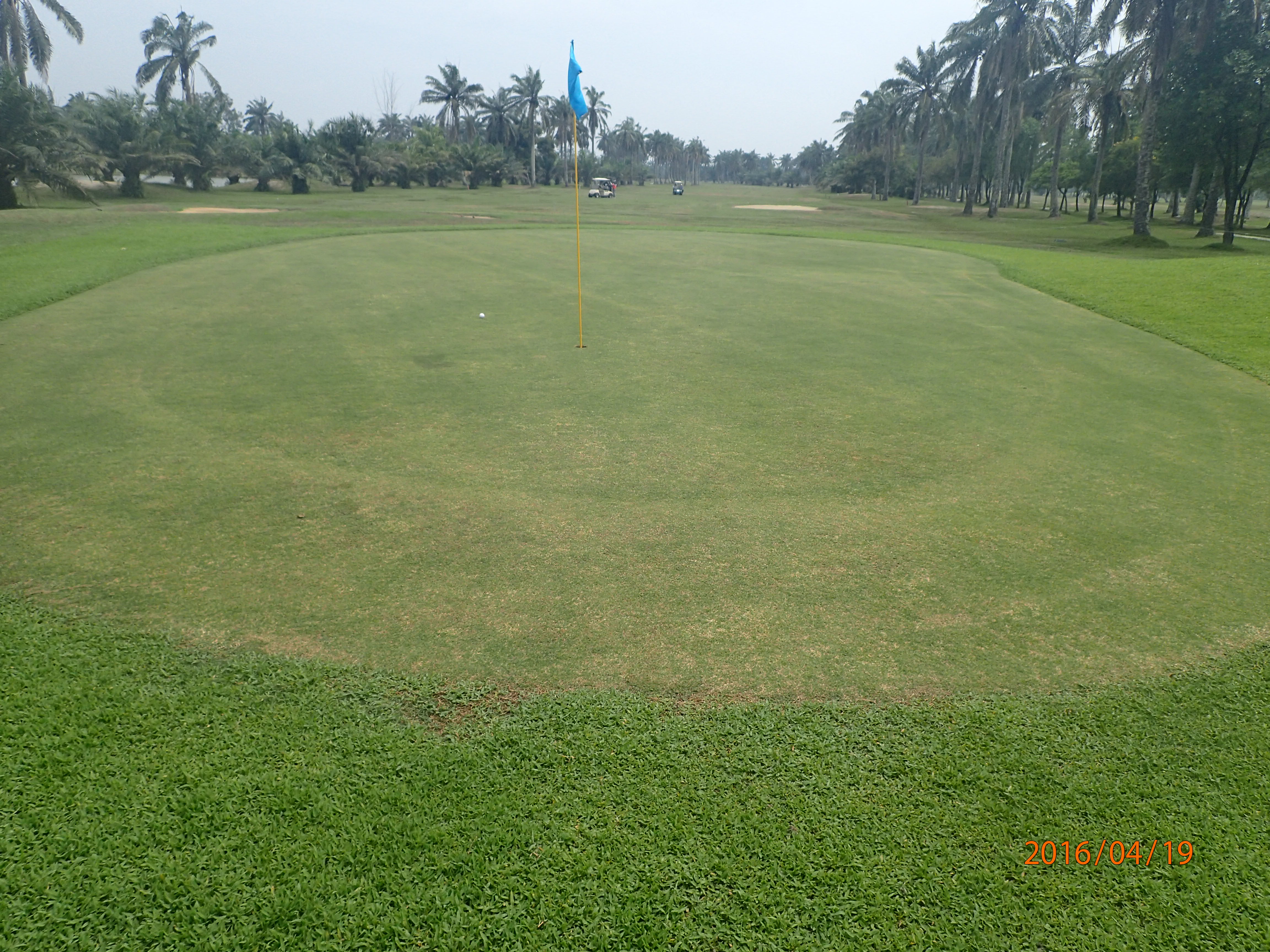
I was at a client club the other day going round the course with the superintendent. I was in crisis mode because their green no. 2 had the highest number of insects per square meter I’ve ever seen. Plus the hot weather was thinning out the other greens.

On one green, we met a flight of golfers and I as usual try to be unobtrusive without being unfriendly; a nod here, a smile there and a thumbs-up where appropriate. One of them approach us “Whatcha doing? Checking the greens?” he asked. “Yes” I whispered (one of his friend was putting). “The greens are quite fast now” he said. “Really?!” I said, wide-eyed. “Yes, really, it really is different from what it was before” or words to that effect. I’m assuming the ‘it’ he was referring to was the whole golf course.

OLYMPUS DIGITAL CAMERA

Just another green in another day on another golf course…

I pushed the superintendent to the front “Here’s the guy responsible for it. All his work” The golfer nodded to the super and the super was unsure of how to respond but I suppose it’s safe to say he was pretty proud and he should be.

He only has one triplex greensmower for 19 greens. That same mower is used for dethatching and rolling. One tractor pulled fairway mower, one unreliable front deck mower, one bunker raker and nine workers; four of which works for only half of the day. He mows his tees with backpack brushcutters. He fertilises his greens with slow-release greens’ grade fertiliser alternating with big-prilled oil palm fertiliser.

He has been working at the same course since the day it was planted with grass, in fact, he was one of the workers doing the planting. He stayed on through a few management changes and rose up through the ranks.

He doesn’t speak English and he doesn’t have formal training or even much education, what he has is a good attitude. He takes notes of almost everything that I said (doesn’t necessarily mean he does everything) and asks questions if he doesn’t understand. He is not afraid of trials and tests which I have come to fear more than he does but there were a few chemicals that I am using now that I learnt from him. He doesn’t complain or whine and he definitely does not have the victim mentality.

What he has achieved came through a victor mentality of wanting to try anything new.

Sure, the greens and even the course may not be much to KL folks but considering the resources he has, the location of the club and the price golfers pay; I think the club did well to improve the course and at least this flight of golfers agree.

OLYMPUS DIGITAL CAMERA

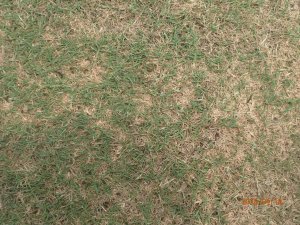
Those black things? Those are the bugs.

Posted in Golf club, Golf Course, Golf Course Superintendents, Greens | Tagged: , , | Leave a Comment »

La Nina la pulak.

Posted by mynormas on April 18, 2016

Selepas kemarau dan kepanasan yang di sebabkan oleh El Nino dalam cuaca panas sekarang yang telah berlangsung dari Januari tahun 2016 (ada yang kata dari pertengahan Disember 2015) timbul pula berita bahawa sebaik sahaja tamat El Nino, akan tiba gejala La Nina yang akan menyebabkan hujan lebat dan mungkin, banjir besar.

Sekarang adalah masa kita untuk bersiap sedia untuk menghadapi nya.

Hujan lebat membawa risiko air yang bertakung di atas padang dan tahap tepu padang (field capacity). Maka kita patut hadapi masalah itu dengan melakukan ‘pengudaraan padang’ utk membantu air masuk ke dalam tanah dan juga membuat subsoil drain yang akan membawa air keluar dari dalam padang dan mengelakkan tahap tepu di capai terlalu cepat.

Jangan ambil/jadualkan pertandingan apa-apa bermula October hingga December kalau boleh atau letakkan caveat tentang perubahan cuaca di luar jangkaan anda sebagai host.

Jika anda pemilik padang ada spiker atau slicer; lakukan kerja pengudaraan tersebut berkali kali sebelum October. Jika anda adalah pemilik halaman, lakukan pengudaraan halaman lebih kerap (sebulan sekali?).

Bilakah La Nina di jangka bermula? Sebaik sahaja tamat El Nino iaitu selepas Jun 2016. Tapi mungkin kesan hujan lebat ke atas padang yang kering dan kolam yang tiada air akan memberi kita ruang hingga September sebelum ia memberi impak negatif.

The Star (Malaysia) on 17 April 2016

The Star (Malaysia) on 17 April 2016

Posted in Golf Course | Leave a Comment »

Tanah hydrophobia

Posted by mynormas on April 13, 2016

“Tanah hydrophobia” ialah cadangan terjemahan yang saya dapat dari PRPM milik Dewan Bahasa dan Pustaka bila saya tanya tentang ‘hydrophobic soil’ iaitu tanah yang takut atau anti air. Pernah kah anda menyiram pada halaman atau padang anda dengan air yang cukup banyak tetapi ia masih lagi kering? Orang tuduh anda tidak siram sedangkan anda siram? Mungkin tanah anda adalah tanah hydrophobia; ia tidak telap air (terjemahan water repellent juga dari PRPM DBP) maka natijah dari penyiraman anda ialah rumput tetap kering tapi lumut mula naik. Atau mungkin anda pernah alami penyiraman yang air tidak meresap ke dalam tanah tetapi mengalir di atas permukaan sahaja?

“Sifat hydrophobia tanah boleh melewatkan penyerapan air ke dalam tanah untuk jangkamasa dari beberapa saat hinggalah ke berminggu minggu. Tanah hydrophobia di katakan di sebabkan utamanya dari salutan molekul organik ke atas partikel tanah. Molekul organik ini mungkin datang dari tumbuhan, bahan reput, hidupan atau mikro-organisma bawah tanah atau jika selepas tanah terbakar. Sifat hydrophobia berubah ubah, menyebabkan ia sukar di ramal dan di perhati. Ia boleh di lihat selepas waktu kemarau yang panjang dan hilang bila musim hujan bermula” Perenggan di atas di petik dari sebuah artikel dari Jabatan Geografi, Swansea University.

Bagaimana boleh kita atasi sifat hydrophobia ini? Kita boleh guna cara mekanikal iaitu dengan menggunakan benda tajam untuk menebuk permukaan tanah itu seperti cara Pengudaraan Halaman atau Pengudaraan Padang.

Satu cara lagi ialah dengan menggunakan Agen Pembasah, yang tiada kena mengena dengan agen pembelasah seperti James Bond, Jason Bourne, Jack Bauer, Jack Bristow, Justin Bieber dan sebagainya.

Apa itu Agen Pembasah atau wetting agent? (Kita bincang tengan agen pembelasah dengan nama initial JB di lain tempat). Agen pembasah ialah bahan sebatian yang membantu air untuk melawan sifat tanah yang hydrophobia. Tapi awas! Bukan semua wetting agent adalah sama.Kalau silap sembur, rumput boleh mati, seperti kawan saya seorang ni

Untuk mengetahui lebih lanjut tentang wetting agent, sila lah ke seminar yang PERCUMA jika anda ahli GCSAM, RM50 jika anda adalah affiliate MGA (Malaysian Golf Association) dan hanya RM100 jika anda bukan ahli di Bukit Jalil Golf and CC pada 9.00 pagi 19 April. Tempat adalah terhad jadi hubungi GCSAM di nombor yang tertera di bawah.

Posted in Fields, Golf Course, Golf Course Superintendents, Landscape, Padang, Padang Bola, Padang Golf, stadium, Taman | Tagged: , , , , , , | 1 Comment »

Tentang Maharaja, Jeneral & Gundik

Posted by mynormas on March 29, 2016

Dalam lawatan saya ke kelab atau company yang meminta nasihat dari saya, saya sering jumpa orang; daripada bos besar sampailah ke pekerja biasa yang akan bercerita kepada saya tentang punca masalah yang di hadapi oleh kelab/company itu: orang lain.

Sebagai seorang konsultan, saya kadang kadang di panggil untuk ‘membawa padang golf ke tahap yang lebih baik’ bukan kerana ada masalah di padang tersebut tetapi kerana pihak pengurusan inginkan improvement yang mereka rasa pasukan sediaada tidak dapat berikan, mereka cari orang luar. Kadang-kadang mereka hanya mahukan pendapat dari pihak ketiga kerana penjaga padang meminta kos yang tinggi untuk pembaikan: hampir setiap kali saya lihat peristiwa ini; ia adalah peristiwa malang. Kita mahukan  pembaharuan dari segi result tapi tidak mahu ubah apa yang kita buat: mana mungkin? Kata Albert Enstein “Membuat perkara yang sama berulang ulang tetapi mahukan result yang berbeza adalah satu kegilaan”

Bila saya berbual dengan pengurusan atas ataupun pekerja bawahan, saya selalu perasan bahawa jawapan yang sama akan saya terima: ‘Pihak satu lagi perlu ubah sikap’. Isu isu ini mengingatkan saya kepada suatu cerita tentang Sun Tzu. Sun Tzu adalah pengarang buku ‘Art of War’ buku tentang peperangan tetapi di jadikan sebagai buku taktik pengurusan juga. Buku itu di tulis lebih 2,000 tahun yang lalu dan telah di terjemah ke dalam pelbagai bahasa. Pada waktu ia di tulis, Sun Tzu bukan lah seorang jeneral tetapi seorang sarjana.

Saya baca terjemahan buku itu yang di sunting oleh James Clavell, seorang penulis novel barat yang terkenal dengan buku buku Taipan, Shogun dsb lebih kurang 25 tahun yang lalu. Saya baca buku itu sewaktu saya masih bekerja di syarikat perladangan dan ianya satu satu buku yang saya ‘terbakar’. Di ladang kelapa sawit saya, generator elektrik akan di tutup pada pukul 10 malam dan jika saya masih ingin terus membaca saya akan letak lilin di tengah muka surat buku yang saya dirikan. Saya mungkin terlelap dan buku itu terkena lilin.

Jika anda ingin cerita yang tepat, Google Sun Tzu and the emperor of Wu (nama salah satu negara di kawasan itu, China belum di satukan lagi) ataupun dapatkan buku Art of War oleh James Clavell.

Ceritanya begini: Buku yang di tulis oleh Sun Tzu menjadi terkenal hingga kan ia menarik perhatian maharaja. Maharaja memanggil Sun Tzu ke istana dan bertanya jika bagus sangat ke buku kau ni?

“Ya tuanku” kata Sun Tzu “sudah pasti”

“Semua 13 bab tu boleh di gunakan dalam peperangan?” tanya maharaja.

“Benar tuanku, semuanya boleh di gunakan dalam konteks pertempuran dan peperangan” jawab Sun Tzu.

“Boleh kah isi kandungan buku ini beta uji?” tanya maharaja lagi.

“Boleh tuanku”

“Boleh kah isi kandungan buku ini beta uji ke atas perempuan?”

“Boleh tuanku”

Maharaja mengarahkan semua perempuan yang berada di dalam istana untuk keluar dan beratur di medan perbarisan. Seramai 180 orang perempuan keluar. dan berbaris. Sun Tzu telah menyusun mereka kedalam dua pasukan yang sama ramai anggota dan menjadikan gundik-gundik kegemaran maharaja sebagai ketua tiap pasukan.

“Adakah anda tahu mana depan mana belakang, mana kiri dan kanan?” Tanya Sun Tzu kepada perempuan perempuan tadi.

“Ya” jawab mereka serentak.

“Baiklah, semua orang; PANDANG HADAPAN!” jerit Sun Tzu ala ala sarjan major perbarisan gitu. Semua wanita tersebut berdiri tegak. “Baris! PUSING KANAN!” kata Sun Tzu seterusnya. Serta merta semua wanita tersebut terbongkok bongkok gelak/ketawa.

Dengan tenang Sun Tzu berkata “Jika tentera tidak tahu atau tidak pandai menjalankan arahan, ataupun jika arahan tidak jelas, maka ia adalah kesilapan jeneral” Maka Sun Tzu pun mula mengajar dan membuat latihan tentang bagaimana untuk berpusing ke kanan, kebelakang, ke kiri dan sebagainya dalam barisan.

Setelah puas hati bahawa wanita wanita tersebut telah mempunyai pengetahuan dan latihan yang cukup, Sun Tzu memberi arahan perbarisan lagi sekali “Baris! Baris Sedia! Baris; PUSING KANAN!”. Sekali lagi wanita wanita dalam barisan terbongkok-bongkok ketawa.

Kata Sun Tzu “Jika arahan adalah jelas, jika askar telah di ajar dan di latih tetapi masih lagi askar tidak dapat mendengar arahan, maka ia adalah kesalahan pegawai” Maka Sun Tzu memberi arahan supaya ketua kedua dua pasukan iaitu gundik kegemaran maharaja di tarik dari barisan dan di pancung kepalanya.

Sang Maharaja yang sedang memerhati dari atas astaka telah menghantar utusan kepada Sun Tzu dengan berkata “Beta telah melihat kebolehan kamu dan beta akui kebenaran buku itu. Tetapi makanan dan minuman beta tidak akan terasa sama jika wanita berdua itu tiada lagi. Cukuplah setakat ini sahaja”.

Sun Tzu menjawab “Setelah mendapat titah perintah dari tuanku dan menjadi jeneral di raja, ada arahan yang tidak dapat kami patuhi” dan seterusnya memenggal kepala kedua dua gundik maharaja dan melantik dua wanita baru menjadi ketua pasukan.

Sekarang bila arahan di beri, ‘askar-askar’ Sun Tzu dengan patuh dan rapi boleh mendengar arahan dan mampu membuat perbarisan dengan betul. Tanpa bunyi, tanpa ketawa dan tanpa komplen.

Sun Tzu kini menghantar utusan naik ke astaka dan memberitahu maharaja, “Askar askar tuanku kini telah sedia untuk di periksa barisan dan boleh di uji”.

Utusan dari tuanku pula berkata “Biarlah. Sang Jeneral boleh tamatkan perbarisan. Beta tidak lagi mahu turun atau meneruskan ujian”

Jawapan dari Sun Tzu: “Maharaja hanya pandai berkata-kata tetapi tidak mahu bertindak”.

Selesai membaca ini saya pasti ramai di antara kita yang teringat tentang tempat kerja kita dan bagaimana si polan dan/atau si polan boleh masuk kategori tertentu. Kita tak ingat tentang diri kita.

Siapa yang boleh di jadikan pengajaran?

  • Maharaja? Orang atas yang mahu itu ini tetapi tidak dapat memberi kebebasan bertindak atau tidak mahu bertindak sendiri atau tidak mahu memberi peruntukan?
  • Si Jeneral? Orang yang sepatutnya mengajar, memberi latihan dan SELEPAS ITU memberi arahan? Jika arahan tidak di turuti dia yang tegas dan akan ambil tindakan? Dan dia orang yang paling mahir dan berpengetahuan dalam bidang nya ataupun dia tahu untuk menggunakan kepakaran orang di bawahnya.
  • Mendiang pegawai-pegawai (yang kini tiada kepala) yang terlalu rapat dengan orang bawah maka tidak di hormati dan tidak dapat di ikuti? Akhirnya kepala mereka yang di potong.
  • Gundik kegemaran? Orang yang di lindungi oleh orang atas maka tidak boleh di sentuh atau di suruh, jauh sekali di hukum? Walau tidak boleh perform, tapi tidak boleh di marah. Mungkin staff yang dah lama, mungkin yang mulut paling laser? Mungkin rapat dengan owner? Mungkin orang kuat Union?
  • Atau adakah kita askar biasa yang dah lali dengan segalanya? Tak hairan dengan apa apa lagi? Bila ada arahan untuk pusing, kita pusing, bila arahan untuk berdiri, kita berdiri; lain kita tak tahu. Kita buat apa, tak buat apa, gaji jalan. So… peduli apa.

Jangan terlalu cepat memberi label kepada orang lain. Takut-takut, tanpa di sedari, orang lain pun memberi kita label dan masalah sebenar di tempat kerja itu adalah… kita. Semoga kita lebih mengenali diri kita sendiri (ni ada dalam buku Art of War) dan memperbaikinya.

Untuk berlakunya perubahan; ia mesti bermula dari kita.

“I am the Master of my Fate, the Captain of my Soul” William E Henley.

Posted in Golf Course | Leave a Comment »

Penyiraman

Posted by mynormas on March 21, 2016

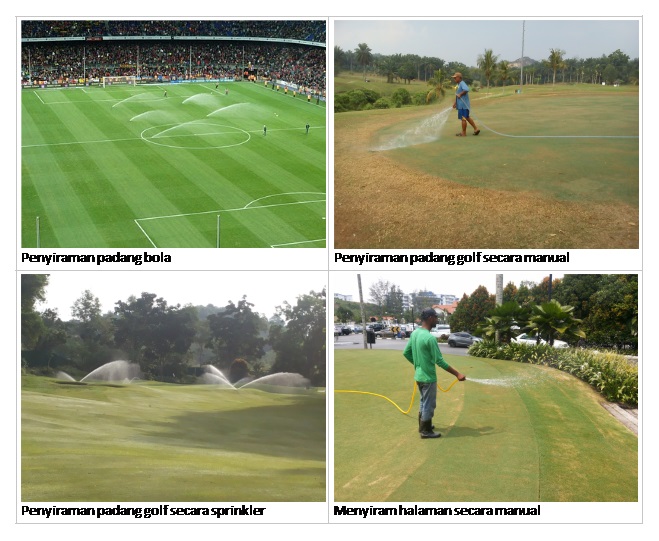
Dalam beberapa hari ini (minggu ke tiga Mac 2016) kita akan menjaga rumput melalui dua fenomena cuaca panas yang kebetulan berlaku serentak iaitu ekuinoks dan juga El Nino. Saya biasa tengok rumput yang di siram hingga lecak tetapi mati kekeringan akibat kesilapan penyiraman. Di sini saya lampirkan nota tentang penyiraman rumput yang merupakan sebahagian dari penulisan yang akan menjadi bahagian dalam buku saya akan datang.

brown grasscrown grass diagramBila cuaca menjadi panas, kawasan rumput yang tidak mendapat siraman akan menunjukkan kesan stress dari kemarau dan kepanasan. Apa yang boleh di lihat pada waktu awal ialah kawasan yang bertukar warna kepada kehitaman di padang. Daun rumput akan berlipat dan kawasan yang di pijak akan menunjukkan kesan tapak kaki lebih lama. Ini semua di akibatkan oleh dehidrasi, iaitu bila tumbuhan tidak mempunyai kandungan air yang cukup di dalam sel nya. Seterusnya kebanyakan rumput yang tidak menerima air yang cukup akan menjadi dorman. Rumput dorman ialah rumput yang mempunyai daun yang mati tetapi akar tajuk (crown roots) yang masih hidup dan boleh bertahan selama tiga hingga empat minggu tanpa siraman.

Jika kemarau berlanjutan,  pada minggu ke tiga siram dengan banyak iaitu sehingga 12mm (0.5 inci) air untuk mengelakkan kematian akar tajuk atau crown roots. Akar tajuk adalah bahagian di mana kebanyakan pertumbuhan baru bermula.

Penyiraman rumput jangan di lakukan mengikut jadual tertentu, contohnya menyiram setiap hari, tetapi penyiraman mestilah di lakukan mengikut keperluan rumput. Menyiram rumput mengikut jadual akan menyebabkan pembaziran air dan akar rumput yang pendek kerana kebiasaan senang mendapat air. Selain itu, tanah yang lembab menyebabkan mudah mendapat penyakit dan juga lumut.

Belanja minum?

Derma untuk belanja saya dan memberi lebih tenaga supaya lebih kreatif!

5.00RM

Jenis siraman

Dalam konteks ini terdapat dua jenis siraman (tidak termasuk siraman untuk melarutkan baja atau mencairkan bekas minyak yang tumpah dsb)

  1. Siraman untuk menghidratkan rumput.
  2. Siraman untuk menyejukkan kanopi rumput.


Siraman Penghidratan

Secara ringkasnya ia adalah siraman yang biasa di lakukan untuk memberi air kepada rumput. Kuantiti air yang di perlukan oleh rumput di tentukan oleh jenis rumput, ketinggian potongan, tekanan dari penggunaan padang dan juga jenis tanah. Rumput yang di tanam di atas pasir kasar memerlukan jumlah air yang lebih banyak kerana pasir kasar tidak dapat memegang kuantiti air yang banyak berbanding dengan tanah yang mempunyai partikel halus seperti tanah liat.

Jumlah air yang di perlukan di ukur dengan membuat andaian jika air tersebut tidak meresap ke dalam tanah sebaliknya ia kekal di atas tanah, berapakah ketinggian air tersebut. Adalah penting bahawa air yang di siram rata ke atas semua permukaan rumput yang terlibat.

Umumnya rumput memerlukan lebih kurang 2.5 – 3.0mm air sehari ataupun 25 mm (satu inci) seminggu.cara siram as picture

Siraman penyejukan

Akar yang di gunakan untuk mengambil nutrien dan air ialah akar rerambut yang amat halus  iaitu di antara 15 – 17 micrometer diameter dan 80 – 1,500 micrometer panjang.  Akar rerambut adalah sensitif dan banyak terdapat di satu hingga dua inci teratas lapisan tanah. Suhu yang tinggi di lapisan ini akan merosakkan bukan sahaja akar rerambut tetapi juga akar biasa dan seterusnya menjejaskan keupayaan rumput mengambil air dan nutrien dari tanah.

Tujuan penyiraman ini adalah untuk menurunkan suhu kanopi dan juga lapisan atas bahagian tanah. Siraman penyejukan hanya mengambil masa satu persepuluh dari masa siraman penghidratan.

Teori yang mengatakan butir air yang berada di atas daun akan bersifat seperti kanta yang akan memfokuskan sinar matahari ketika panas terik untuk membakar daun adalah mitos, sebarang cahaya matahari yang cukup kuat untuk membakar daun akan mengeringkan butir air.

Waktu-waktu menyiram

Waktu yang terbaik untuk menyiram rumput untuk tujuan penghidratan ialah pada awal pagi kerana

  1. Tiada gangguan; ia merupakan masa sebelum padang di gunakan untuk aktiviti sukan atau riadah.
  2. Air tersimpan di dalam tanah untuk di ambil oleh rumput pada waktu ia di perlukan
  3. Rumput dan tanah berada dalam keadaan basah ketika cuaca semakin panas.
  4. Waktu awal pagi lazimnya mempunyai kurang angin yang akan meniup siraman air.

Penyiraman untuk penyejukan seharusnya di lakukan pada masa cuaca paling panas, contohnya pada tengahari dan awal petang. Elakkan dari menyiram lewat petang.

Menyiram di waktu petang bermaksud menyiram rumput yang sudah pun mengalami tekanan kerana ketiadaan air ataupun sudah dorman malah mungkin sudah pun mati dan juga menyebabkan tanah basah di waktu senja dan malam yang memudahkan kulat membiak dan menjangkit rumput yang stress tadi.

Maintaining this Website. Sumbangan.

Saya menyumbang ilmu secara ikhlas melalui laman web ini. Tetapi pengendalian laman web ini perlukan wang. Setiap tahun USD99 (lebihkurang RM400). Sedikit sumbangan anda amat membantu. Anda mendapat manafaat dari laman web ini? Sumbangan bermula dari $10. Jangan lupa ‘Like’ artikel ini; ‘Follow’ laman web ini dan klik mana mana iklan di page ini. This website is maintained and managed with my own money. I’ve done my best to not allow advertisement on this site thus far so that I can be independent. I’m going to start to ask for donations and see if I can get enough to sustain it that way. Donations start from $10.

$10.00

Cara-cara menyiram.

Samada menggunakan sistem pengairan moden ataupun paip getah, adalah penting untuk mempastikan semua bahagian tanah menerima jumlah air yang sama rata. Ambil kira bahawa kawasan rumput yang berada di lereng bukit atau di kawasan curam akan mengalami keadaan air akan mengalir di permukaan untuk turun ke tempat rendah sebelum ia meresap. Maka rumput yang berada di lereng atau di tempat curam perlu di siram sedikit tetapi selalu. Contohnya, jika rumput di kawasan rata di siram selama 20 minit, rumput di lereng akan di siram 5 minit empat kali. Berhenti siram apabila air bertakung atau mengalir di permukaan lereng, kemudian ulang; berhenti siram bila air bertakung atau mengalir di permukaan lereng, ulang.water ponding during irrigation watering

‘Siram dengan banyak tetapi jarang-jarang’ adalah cara terbaik, ini akan mengajar rumput untuk mencari air dan tidak terlalu bergantung kepada siraman. Siram banyak akan mempastikan air masuk hingga ke bahagian bawah tanah sebagai simpanan. Berapa banyak dan berapa jarang bergantung kepada jenis tanah dan pemerhatian penjaga padang.

Untuk nota selanjutnya tentang isu lain dalam penyiraman seperti hydrophobicity, wetting agents, dormancy dan sebagainya; sila tunggu buku saya.

Rujukan:

http://www.turffiles.ncsu.edu/alerts/grasses/turfgrass-heat-and-drought-stress

http://prpm.dbp.gov.my/Search.aspx?k=dormant

http://www.thelawninstitute.org/pages/education/lawn-maintenance/let-your-turfgrass-go-dormant/

http://www.petanihebat.com/2013/09/klasifikasi-dan-morfologi-tanaman-padi.html

http://buckeyeturf.osu.edu/index.php?option=com_content&view=article&id=1194&catid=1:latest-news&Itemid=170

https://en.wikipedia.org/wiki/Root_hair


Posted in Greens, Padang, Padang Bola, Padang Golf, Rumput halaman rumah, stadium, Taman | Tagged: , , , , , , , , , , | Leave a Comment »

Hias Atas (Topdress)

Posted by mynormas on March 8, 2016

Jika padang atau laman tidak rata, antara perkara pertama yang akan di lakukan ialah memijak, menghentak ataupun menggelek tempat tinggi supaya ia sama rata dengan tempat rendah. Ia adalah tindakan naluri tetapi jika di lakukan berulang kali ataupun jika tanah tersebut adalah tanah liat ataupun jika penggelek tersebut adalah terlalu berat; kawasan yang tinggi itu akan menjadi mampat dan kawasan yang lembut akan menjadi lembang atau lembah. Bagaimana pula dengan permukaan berlekuk yang tidak kelihatan di bawah rumput? Bagaimana tentang bekas tayar kenderaan, tapak kaki dan sebagainya yang menyebabkan lekuk atau galur? Bolehkan di gelek, di hentak ataupun di pijak? Memperkenalkan ‘hias atas’ ataupun dalam bahasa Inggeris; topdressing.

Atas permintaan beberapa pihak, saya ingin menulis tentang kerja topdressing atau istilah  yang di cadang oleh Dewan Bahasa dan Pustaka dan di gunakan di Indonesia, Brunei dan Malaysia; ‘hias atas’.

Kita mungkin rasa perkataan ‘hias atas’ itu adalah pelik tetapi kalau kita sebagai petutur bahasa inggeris, perkataan ‘top dress’ yang di gunakan dalam bidang pertanian juga adalah janggal (pakaian atas?). Secara definasi nya perbuatan ‘topdressing’ yang saya akan sebut sebagai hias atas mulai sekarang ialah perbuatan menabur selapis bahan, samada baja, pasir, atau apa pun di atas permukaan tanah dengan banyak dan kemudian meratakan.

Dalam konteks penjagaan rumput, perbuatan hias atas di buat untuk membuat tiga keadaan:

  1. Meratakan dan menghilangkan lekuk lekuk di permukaan tanah.
  2. Menambah nutrien atau menukar zat (contohnya pH) tanah.
  3. Menukar sifat, struktur atau profil tanah

Hias atas untuk meratakan permukaan.

Lekuk lekuk di atas permukaan tanah akan berlaku akibat permainan, bekas tayar mesin potong ataupun kerja-kerja penyelenggaraan biasa seperti merumpai, menyembur racun dan sebagainya.

Kerja hias atas akan di tabur samada di seluruh permukaan tanah (hias atas keseluruhan) ataupun hanya di lokasi tertentu (hias atas setempat) yang di syakki mempunyai masalah lekuk sahaja. Bahan yang biasa di gunakan ialah pasir kering kerana pasir lebih mudah untuk di ratakan.

DSC_0347

Hias atas keseluruhan sebuah padang bola.

DSC_0216

Hias atas setempat (kawasan lekuk sahaja)

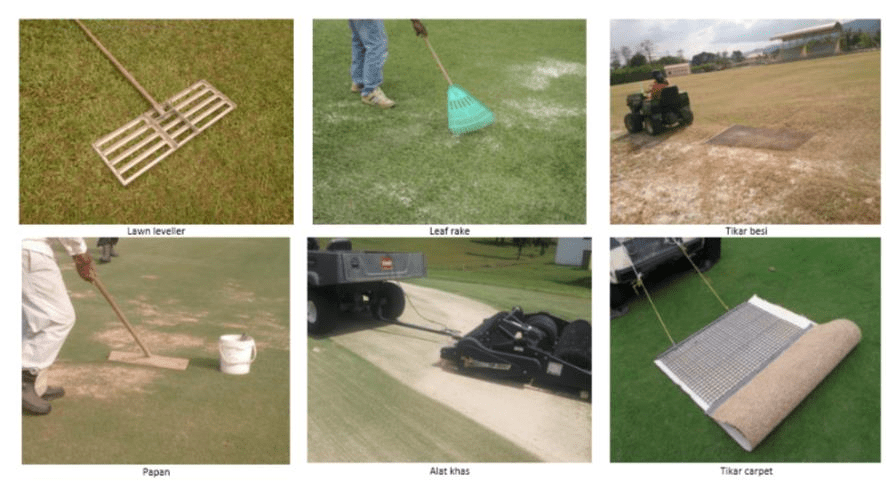
Pasir akan di tabur menggunakan mesin ataupun tangan dan kemudian, menggunakan alat khusus iaitu lawn leveller, papan yang rata ataupun sejenis tikar besi, pasir akan di tarik dan di tolak supaya pasir yang berada di kawasan tinggi masuk ke kawasan rendah.alat tool topdress rata

Hias atas utk menambah nutrien atau menukar zat tanah.

Kadang kadang pembajaan atau pemupukkan perlu di lakukan secara menyeluruh dan perlahan. Ini lazimnya di lakukan dengan baja/pupuk foliar tetapi di lakukan dengan baja organik kerana baja organik juga mempunyai sifat ‘lepas lambat’ atau slow release. Selain dari itu kadang kadang zat tanah yang contohnya terlalu berasid juga memerlukan hias atas menggunakan kapur tertentu. Ia tidak di anggap sebagai baja atau pupuk kerana ia di tabur untuk pengubahan tanah, bukan memberi nutrien kepada tumbuhan.

Hias atas untuk menukar sifat atau profil tanah

Tanah yang terlalu berpasir mempunyai sifat terlalu berliang (porous), menjadikan ia cepat kering dan tidak mampu ‘memegang’ nutrien lama.  Jadi hias atas selepas proses pengudaraan tanah di lakukan akan menggunakan bahan yang mempunyai sifat yang berlawanan dengan pasir samada tanah ataupun bahan tidak organik seperti zeolite ataupun bahan asli seperti sekam padi dan sebagainya. Biasanya lebih dari tiga kali di perlukan untuk menukar sifat tanah. Hias atas mestilah di lakukan dalam kuantiti yang cukup untuk masuk ke lubang pengudaraaan jika partikel baru adalah lebih kecil dari partikel sedia ada di permukaan.

Syarat-syarat hias atas

  1. Bahan yang di gunakan untuk hias atas tidak mempunyai saiz partikel yang lebih kecil dari bahan yang sediada di permukaan sekarang. Penggunaan pasir yang lebih halus dari dari pasir sediaada akan menyebabkan pasir baru masuk ke celah rongga dan menyumbat pergerakan air dan nutrien ke bawah.

    the 'layering effect'

    Pelapisan akibat hias atas tebal.

  2. Hias atas tidak boleh di lakukan terlalu tebal hingga ia melemaskan rumput dari mendapat cahaya matahari ataupun menjadi punca pelapisan atau layering. Pelapisan terjadi bila hias atas baru terlalu tebal dan menyekat pergerakan udara kebawah (walaupun partikel baru lebih besar dari partikel lama).
  3. Jangan siram terlalu lama ataupun lakukan hias atas sewaktu musim hujan, faktor air mengalirkan pasir mesti di ambil kira.

Cara-cara hias atas

  1. Tabur pasir ke atas permukaan yang perlu di hias atas
  2. Tolak dan tarik pasir di atas permukaan supaya ia masuk ke lekuk dan turun dari tempat tinggi.
  3. Siram sedikit supaya pasir turun ke bawah.

alat tabur topdress

Kekerapan hias atas

  • Untuk kawasan yang mempunyai pemotongan amat rendah seperti di atas green di padang golf atau lawn bowl yang mana potongan ialah di antara 3-8mm, hias atas boleh di lakukan dengan amat nipis seminggu sekali.
  • Kawasan penting seperti depan pintu gol, wicket cricket ataupun green padang golf yang di potong agak tinggi, hias atas boleh di lakukan sebulan sekali.
  • Untuk kawasan yang menerima permainan lasak seperti di tee padang golf, tempat keluar masuk di taman atau halaman dan kotak penalti; juga sebulan sekali.
  • Untuk kawasan luas tetapi penting seperti fairway (atau mungkin zon pendaratan bola sahaja) seluruh padang bola dan sebagainya; hias atas di lakukan setahun sekali bersama sama dengan pengudaraan tanah atau dua kali setahun.

Copyright and please click


Posted in Padang, Padang Bola, Padang Golf, Rumput halaman rumah, stadium, Taman | Tagged: , , , , | 4 Comments »

Emperor, General & Concubine

Posted by mynormas on February 23, 2016

I was in a client club recently and the Superintendent was telling me of his new staff who despite having agriculture or horticulture certificates are lacking in knowledge in what to do on a golf course. He did not see himself as responsible for his workers knowledge.

As a consultant, I see things at a client company as an outsider, usually with a fresh set of eyes and (hopefully) an unbiased mindset. I’m sometimes called in when the company wants the golf course to reach another level; not necessarily because there’s a problem. Other times, I’m called because there is a need for a third-party opinion, a referee even, to resolve a problem at a club that led to a (real or imagined; yes, IMAGINED) deterioration of the golf course. I will meet with a few people at the company and talk to them to see what the issues are. It never fails to surprise me how many people believe that the problem is other people.

These issues reminded me of a story about Sun Tzu – he who wrote the Art of War and an emperor of his era. Be reminded that China wasn’t one whole nation yet but were divided into a few smaller nations.

The version of the translation that I read was written by James Clavell, a renowned novelist himself and this version were full of interesting side stories that serves to illustrate better Sun Tzu’s 13 chapters. It was a very interesting book and I read it several times, it was also the only book I ever burned; I had it when I was working in a plantation 25 years ago and electricity was shut off at 10pm. To continue reading, I put a candle between the pages of the book and I must’ve dozed off. The book was singed but still readable so I kept it. I’ve lost it since then, probably loaned out and never returned or lost in the house moves I’ve made over the years. It’s been a long while so I may have forgotten a few details and I may be adlibbing or paraphrasing a few dialogues therefore if you are into details and accuracy, I would advise you to look it up.

So the story goes like this. The book written by Sun Tzu about the art of war called umm… The Art of War turned into a bestseller and probably would’ve been a blockbuster opera too if only America was as civilized as the kingdom of Wu was 2,000 years ago.

Anyway, the emperor of Wu called up Sun Tzu to his court and asked if what he wrote was good.

“Of course it is, Your Majesty” said Sun Tzu.

“All 13 chapters?” asked the emperor (should ‘emperor’ be with a capital ‘E’? Maybe I should capitalise it next time; just to be on the safe side. Don’t want to be struck by lightning or hit by car eh?)

“All 13 chapters are good Your Majesty” replied Sun Tzu.

“Can it be put to a test?”

“Yes Your Majesty”

“Can the subjects of the test be women?”

“Yes Your Majesty”

The Emperor asked that all the women in the palace be brought out to the courtyard. 180 women came out and lined up.

Sun Tzu arranged them into two companies and put the Emperor’s favourite concubines as the leaders of each company.

Sun Tzu addressed the women “I assume you know the difference between left and right, front and back?” The women nodded “Of course we do”

“Everybody facing front” Sun Tzu yelled, parade ground style to the two companies of women in front of him; they all stood at attention. “Now, everybody; right turn!” shouted Sun Tzu. Immediately the ladies burst out laughing.

Sun Tzu calmly said “When the soldiers cannot and do not know how to follow orders; or if the order is not clear; it is the general’s fault”.

So he started to train and drill the ladies on how to face forward correctly, how to turn left and right upon hearing the commands and so on.

Satisfied that the ladies are now properly trained, he barked the command “Everybody: right turn!” and the girls promptly started laughing again.

Sun Tzu said, “if the orders are clear, if the soldiers have been trained properly and yet the soldiers still can’t follow the orders properly, then it is their officers fault”

In saying so, Sun Tzu ordered the leaders of the two companies executed. The Emperor watching from a raised pavilion, upon seeing that two of his favourite concubines about to be beheaded, promptly sent a message down to Sun Tzu saying that he recognises the greatness of the general and the exhibition can now be concluded without anyone losing their heads. To which Sun Tzu replied “Having first received the appointment to be general, there are certain orders of the Emperor that I am unable to accept.”

He then had the two concubines beheaded and made the next two women to be the new leaders of the companies.

Now when orders are given, the ‘soldiers’ are able to turn to the left or right in perfect order; without uttering a sound.

Sun Tzu then sent a message to the Emperor “Your soldiers are ready and properly trained now, Your Majesty and can be put to any test you desire”

To which the Emperor replied “Let our general dismiss our forces and return to camp. We have no wish to come down and inspect the troops”

The reply from Sun Tzu was a classic man-with-balls “The Emperor is only fond of words and cannot translate into action”

Reading this and thinking about how it relates to someone in your workplace is fine, just don’t forget that sometimes it could also be about you too. There are a few classes of people in the story; The Emperor; who talks about wanting to be the best but not wanting to pay the price. The General, who assumes his people know what to do and does not do training. The Concubines; people who thinks that they know what to do but don’t. The Favourite Concubines; those that cannot be told what to do.

Lest this leads to a flurry of finger pointing, I must hasten to add that we should all be careful of who to blame. I mean, how embarrassing would it be if you thought that the problem of the company is everyone and everything or someone or something when the real problem is you?

Posted in Golf club, Golf Course, Golf Course Superintendents | Tagged: , , , , | Leave a Comment »

Puteri Malu

Posted by mynormas on February 12, 2016

Semalu di bahagian depan lalang.

Semalu di bahagian depan lalang. Tinggi pinggang!

Saya telah di minta untuk mengrehabilitasi sebuah padang bola yang terbiar dan kini di penuhi dengan lalang (Imperata cylindrica) dan semailu atau puteri malu (Mimosa pudica). Saya tahu cara untuk membunuh lalang tetapi saya belum pernah mengahadapi sebegitu banyak semalu. Saya menalipon seorang kawan yang berkata akan menghubungi saya balik selepas mesyuarat, malangnya tiada berita darinya selepas itu. Seorang lagi rakan sekerja yang saya hantar mesej membalas dengan “Hubungi Cheng di nombor…” Siapa Cheng? Seorang penjual racun di Ipoh. Akhirnya saya membuat keputusan mencari jawapan sendiri.

Saya tahu ia adalah rumpai berdaun lebar (broadleaf weeds) maka saya tahu jawapannya adalah racun selektif yang akan membunuh nya. Racun rumpai berdaun lebar yang selalu saya guna ialah Ally (bahan aktif metsulfuron methyl) yang kini di kenali dengan nama lain. Saya pun pergi ke kedai racun. Penjual di kedai itu tak kenal bahan aktif tapi pernah guna Ally, dia pegang satu botol racun yang tak di kenali, lepas tu dia letak balik. Saya mintak dia beri kepada saya botol tu dan saya dapati bahan aktif nya ialah metsulfuron methyl! “Ini lah Ally!” saya berkata kepadanya. Tiada reaksi di mukanya. Okay… Mungkin kedai ini bukan tempat perbincangan tentang racun. Melangkah masuk seorang wanita ke dalam kedai tersebut “Cari apa?” tanya nya. “Saya mau cari racun kasi mati rumput duri, semalu” jawab saya. “Ini lah? katanya “Tapi mesti campur ini barang” katanya sambil menunjukkan suatu bahan di dalam botol seperti sabun cuci tangan. Saya lihat labelnya dan dapati ia adalah agen pembasah (Wetting agent). Ok, itu saya boleh guna.

Saya balik dan sembur racun pada pokok semalu gergasi yang ada di padang itu. Saya tunggu sehari, dua tetapi tiada kesan yang saya lihat. Saya terpaksa memotong padang tersebut sekarang – niat asal saya ialah memotong selepas rumpai lalang dan semalu dah mula mati – tetapi saya tidak dapat tunggu lagi. Akhirnya saya upah beberapa orang kampung untuk datang merumpai HANYA pohon semalu. Berguni-guni semalu mereka bawak keluar.

Kemudian saya teringat kepad Professor Google. Dan jawapan yang keluar ialah “triclopyr”

Ini adalah racun yang saya guna; ini bukan iklan ataupun endorsement. Guna atas risiko sendiri

Ini adalah racun yang saya guna; ini bukan iklan ataupun endorsement. Guna atas risiko sendiri

Saya sudah ada racun dengan bahan aktif triclopyr yang saya gunakan untuk membersihkan pokok petai belalang (Albizzia falcata?) tetapi saya tidak sangka ia adalah jawapan nya.  Saya masuk ke dalam stor, ambil racun dan agen pembasah tadi dan bancuh ke dalam tong penyembur. Saya sembur kepada apa apa saja tunas baru semalu yang saya nampak yang tumbuh kembali selepas potong dan selepas saya hantar orang weeding. Mereka tidak cabut sampai ke akar jadi ia tumbuh baru.

Keesokkannya saya dapati semalu tersebut telah bertukar warna kepada kekuningan. Ada yang kelihatan dah mati. Syoknya. Saya sendiri telah mula melakukan kerja merumpai semalu yang mati itu dan dapat hampir empat baldi penuh dengan akar rumpai.

Jadi, jika anda ada masalah semalu: gunakan triclopyr dan agen pembasah. Sembur racun, biarkan racun bertindak hingga ke akar sekurang-kurangnya empat jam; kemudian baru anda cabut. Anda tidak boleh tak cabut kerana batang berduri masih ada. Anda boleh jika tidak meracun tetapi ada kemungkinan ketika cabut sahaja, tertinggal batang atau benih untuk tumbuh baru.

Sila ambil isi rencana in sebagai panduan dan untuk perbincangan. Setiap padang, penyembur, kandungan peratus bahan aktif (samada ia original atau palsu), dan cara menyembur akan memberi kesan ke atas hasil. Sila guna dengan risiko sendiri.

Semalu terkena racun. Ini bukan iklan atau endorsement. Guna atas risiko sendiri.

Semalu terkena racun. Ini bukan iklan atau endorsement. Guna atas risiko sendiri.

Copyright and please click

Posted in Fields, Golf Course, Landscape, Lanskap, Maintenance, Padang, Padang Bola, Rumput halaman rumah, Rumput secara am, stadium, Taman | Tagged: , , , , , | Leave a Comment »

Fairways

Posted by mynormas on February 9, 2016

Unmaintained fairways are not something new in Malaysia. I’m sorry, let me rephrase that: Low maintenance fairways are not something new in Malaysia, since I know many of our superintendents won’t agree (even if golfers do). Out of the 200 golf courses in Malaysia, the number of them that actually maintained their fairways beyond mowing are very few. I don’t agree to not maintain fairways at all but in the effort to be ‘sustainable’ and to survive, I actually think its a pretty good idea to have some minimum level that we won’t go beyond.

Lets defined maintained fairways first anyway: I’d say they’re

  1. Mown, regularly and not just once in a while and at a consistent cutting height.
  2. Fertilised, as per requirement and at the optimum level.
  3. Done cultural practice when necessary; things like aeration, vertical cutting, y’know… stuff like that.
  4. Watered during the dry season (this should be in ‘cultural practice’ but what the heck).
  5. Drained of excess water during the rainy season via adequately constructed or maintained subsoil or surface drainage.
  6. kept as much as uncontaminated by weeds as possible.
  7. kept to not having any bald areas (don’t you just hate it when your ball is on the fairway but its on hard clay soil that you know is going to damage your club and duff your shot?)

Otherwise, and as are often seen in Malaysia we are left with fairways that are wet in the rainy season, dry (and dead) in the dry but most importantly, and this is the culmination of the lack of all of the above practices, mostly weeds that survived the water-logged, drought, no fertilising, compacted condition of the fairway.

I think its okay. When it rains in Malaysia, it pours anyway so most golfers avoid playing in the rain. When its really dry, its hazy so most golfers avoid playing during the driest months. Of course, if your fairway are the sort that turns muddy when wet and hard as concrete when dry, you had better have fantastic greens.

So, as long as the fairway has a consistent surface that a golfer can hit a ball as best as he could without damaging his club or his ball I’m sure most golfers are happy enough. Its when a fairway’s surface are not consistent that issues arise. If I hit further than my mate but my ball lands on a area of a fairway that’s bald or hard (at least on a wet surface I may be able to declare casual water) or the weeds are so long that I can’t make a good shot then I’ll get angry because it causes me to lose the advantage of a longer drive or a well-placed shot. Especially if my mate hits a puny shot, lands on prime fairway land and he makes this smug face while whistling, making this funny walk. One day I’m going to get into my buggy and run you over…

Golfers are also prone to anger when the ball they hit and they saw it land on a fairway but they can’t find it because its buried under the fairway for some future archaelogist to find a thousand years from now but more likely an enterprising staff later in the day to sell it back to you in a bag of used balls when you come again next weekend.

It really isn’t that much of a deal to maintain the minimum. This advice may not work for all golf courses but for most clubs that I’ve seen in Malaysia, apart from good subsoil drainage; some aeration and regular mowing is good enough.

Hollow tining is good but if the problem is the cores and topdressing, may I recommend just slicing the fairways more regularly? Instead of hollow-tining once a year maybe slice six or ten times a year? You don’t have to close the course because the damage isn’t as bad as hollow tines. My experience is that after a few rounds of slicing, my fairways won’t be as soggy so soon after the beginning of the monsoon. There are of course, other factors involved so there may be some other methods to try too but many older clubs built with input from expat experts have one (I have seen a club with two) fairway slicer rusting and rotting in the workshop. Just be careful of slicing during a drought because the sliced hole may stay for as long as the drought lasts.

fairway slicer

Slicing will help with aeration and water penetration.

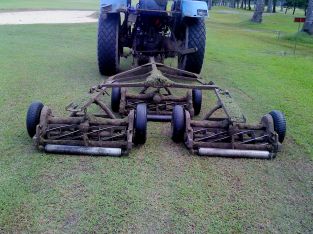
As for mowing there are two issues I’d like to bring up. One is that the insistence of many that a fairway can only be cut with a five-gang mower. It would be good and nice if you can afford it but if you can’t; why suffer? Buy a small to mid-sized tractor and fix it with mowing attachments! It costs less than one-third of a fairway mower and most mechanics can take care of it. When the time comes and you can finally afford a five-gang, the tractor can be used for other works. All you have to do is change the attachment.

Cutting height: about 15 - 17mm.

If you think a small rotary mower can’t do stripes; think again. This small mower on a course with a lot of Lovegrass does it very well.

tractor reel mower (2)

This tractor is a bit large for my liking but the small rural club have used it for years. They’ve stopped mowing the rough around greens this year because of the wet condition.


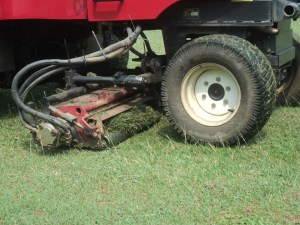
The second issue is that reel mowers can cut some of the long weeds on Malaysian fairways. I’ve seen superintendents send staff with brush-cutters or even lawnmowers behnd their five-gang mowers to cut these weeds. Why not use rotary mowers? Nowadays the five-gang mowers can be fitted with rotary mowers or you can also use a tractor-pulled rotary mower.

mow lovegrass 2

Note the long grass springing back up behind the mower.

mow fairway cutter

And this guy has to come behind the five-gang to cut the long weeds.

5 gang rotary fairway mower (2)

Or you can buy a five-gang fitted with rotary blades and save on backlapping at the same time.


But the most important thing is; don’t neglect the fairway. If you have a bald spot repair it or at the very least, mark it with a GUR or do something.

Golfers will, mainly, judge a golf course by its greens but the fairway is the area a non-golfer could judge a golf course because thats what they see from the clubhouse, the road or maybe even their houses beside the course; you really don’t want to be judged badly for something that’s not necessarily hard to maintain.

Posted in Golf Course, Golf Course Superintendents, Padang Golf | Leave a Comment »

Cheap maintenance

Posted by mynormas on January 28, 2016

“Times are bad and it will get worse this year” I hear that like almost every alternate year but yet here we are. “Really! It will be worse this year!” Ya. Ok! I hear you! Like I heard you in 2008 and 1998 too. “Was the budget amended in 2008 or 1998?” Hmm… maybe you have a point. Maybe your golf course is not that badly hit yet or you think its immune or if someone really wants to buy your hole 5 for the right price, the management would sell it but I’d like to share some ways of saving costs without sacrificing too much quality in golf course maintenance.

OLYMPUS DIGITAL CAMERA

The Malaysian government is amending their budget on the 28th January 2016. How many clubs are amending their budgets? How many golf courses have taken another look at their budgets in view of rising costs, reduced demands and increasing competition? You may argue that some golf clubs are closing down so there will be less competition but the existing golf course will be going after the same golfers as you are. Some will take the easy way out and reduce prices though I’ve heard of one golf club that want to increase their green fees.

From experience, many golf clubs will cut their maintenance budget because that is easily the biggest expense for the club. But as golfers paying green fees or as a member paying dues you don’t really want your golf course standard to deteriorate and let it be blamed on the economic situation do you? So you would expect the club – if they don’t want to lose you as a customer – to take other measures to cut costs right? At the same time, you don’t want to pay higher green fees or more subscription too.

Experienced Superintendents will have a few things they can do on the golf course to help on the cut-backs without much disruption on your golf game. Unfortunately some of them will choose from these options after they have recovered from their initial knee-jerk reaction they took or were forced to take.

  1. Clean out the store.

Big club or small club; I have yet to find a golf course store that does not have left-over fertiliser or chemicals. They are left behind because they bought one tonne of fertiliser when what they need for 18 holes was actually 0.8 tonne or perhaps the new guy has a different idea than the previous guy or there is a new trend or for whatever reason; most of the time; those few bags of fertiliser or chemicals pushed to the back of the store can still be used.

Your Superintendent won’t mix different fertilisers or chemicals on one hole or green, though I see no harm using different types on different holes as long as they calculate the nutrients or active ingredient to be more or less the same for every hole.

Always read the label! I almost advised someone to use the herbicide DSMA on greens once, believing it to be fungicide until I saw the label on the sack underneath it. If in doubt; I will prefer to tell the storekeeper to waste it.

  1. Small is beautiful.

Your Superintendent may reduce the areas that he/she needs to maintain. I would not recommend shrinking the greens but there are other areas that can be considered.

Sacrifice the OBs or out-of-play areas.

There are usually areas in the rough that are far enough from play that the maintenance crew can let it go wild. This will cut down on man and machinery hours. Save on manpower, diesel, machinery wear-and-tear and spare-parts. The Superintendent could let it become an ‘environmentally sensitive area’ or just let it become a wild rough. Look at it this way; your Superintendent is training you to hit straight.

For aesthetic value or if there is intention to bring the rough back to normal, once a month they may send a team of people to poison or cut new woody growth (including what Planters call ‘volunteer oil palms’) and creepers. Nothing ruins the ‘natural look’ more than the sight of short oil palms and big-leaf creepers creeping or hanging from trees.  You don’t really want your rough to look like a haunted forest.

If slow play becomes an issue because of ‘lost balls’ then they may do what I did once; put up a “Beware of Snakes” sign. Believe you me; even after knowing its purpose, even after knowing that for the past 10 years no one has seen snakes in that hole, no golfer will dare venture into knee-high rough looking for golf balls when they see that sign. It’s a psychology thing.

Reduce the fairways.

Fairways are a source of expenditure by virtue of the fertiliser and effort required to maintain it. In some areas, your Superintendent may shrink the fairways into rough.

Your Superintendent can’t really reduce the width of your fairways but he can shorten it up to the point where the slope rating measurements are taken, and it is possible to take out the fairways on a par 3. I once took out all the fairways on a golf course par 3s though on one long par 3, I increased the size of the approach since it is cut with the collar-mower. Collar; I cannot not have, fairway; I can. So collar I make slightly bigger, huge fairway I take out. Save money on big fairway mower operating hours and fertiliser.

  1. Use the expensive fertiliser.

What?! Some of you might ask. Well this is where I’m sure your Superintendent will insist – and I would agree – not to cut: slow-release fertiliser. At least for the greens. It comes in many types; polymer-coated, sulfur-coated, polymer-sulfur coated, long-chain methylene ureas, etc and all are more expensive than your normal ordinary routine regular standard fertiliser, some more than others. Believe it or not, using the expensive fertilisers will save money. I have to mention these because this is what management will demand first: buy the cheapest one!

Using cheaper quick release ordinary fertiliser may mean losing the nutrients by leaching or evaporation especially in our weather; these problems are supposed to be taken care of by the technologies of the new slow-release fertilisers. Use expensive fertiliser and more of the nutrients will get into the grass and you can also reduce your fertilizing frequency and amount of fertiliser.

Your Superintendent shouldn’t get into the habit of using cheap fertilisers, they are like cheap vitamins. As I always say; cheap vitamins equals expensive urine like cheap fertiliser equals expensive drainage water; the nutrients comes out with the liquid. Of course, bad fertilizing practices can cause that too but that is material for another article. Contact me for more information about it by emailing me at mynormasATconsultant.com replacing AT with @.

  1. Be more scientific and specific.

If the economic pressure does not let-up and the golf course starts to feel that it will soon need to mortgage hole 14 to the local Ahlong loanshark, there is another way to save on fertiliser cost. Your Superintendent may want to ask you for some money to do soil tests to determine how much nutrient is in the soil and maybe even tissue tests too to determine the connection between what’s in the soil and what’s taken up. He would take another look at plant requirements of the grass. Dr Micah  Woods of Asian Turfgrass Center has released guidelines for minimum levels  for sustainable nutrition that he calls umm… Minimum Levels for Sustainable Nutrition or MLSN  and apply just enough fertiliser the turfgrass needs to avoid wastage.

Amazingly, there are still golf courses that fertilise their greens by “one bag for each green method” or 15 bags for 18 +1 greens (perhaps because some greens are just too small to justify one bag). Measure your greens or at the very least: calibrate your spreaders! Then you can be accurate and consistent in your fertilising.

  1. Get a second opinion

You may see a new person going round your golf course poking and scratching on the grass. This may mean that your golf club has hired a consultant. A person who could look at the whole thing from a new perspective may be a good option, right? Having looked at the same thing for years may dull one’s objectivity, so a fresh set of eyes will be useful.

I like poking and probing

I like poking and probing

The best kind of consultant the club can get is one who has actually survived the economic crisis of the late 1990s and 2008 and has worked on both side of the fence; the side that asks for money and the side that wants to cut costs.

How does this save on costs? By looking at the golf course from a different view, he may see all the cost-cutting measures that the Superintendent does not have the heart to cut. Or he could identify a wasteful habit that was not noticed before.

Contact me now to find out more how I can help you save cost by emailing me at mynormasATconsultant.com replacing AT with @

  1. Renovate!

This is one suggestion that is going to fly in the face of convention. Why would anyone renovate a golf course during an economic crisis and call it a cost-saving measure? Well, look at it from the management point of view; traffic is going to be low, some materials’ prices are going to be cheap and some contractors want work.

The management would not want to be dragged into a green fee price war with the neighbouring clubs and if they do cut their prices, at least they can feel justified that it is partly because the golf course is literally, a work-in-progress. If the golf course across the street yells at you “Why are you setting your green fees so low?!” you can tell him “Relax bro, chill, I got three temporary greens, I have to sell cheap”

That reasoning may not go down well with some of you but let’s face it – unless you are the kinda guy who believes that “the end is near” or “the sky is falling” and is ready to jump a bridge soon – times will get better and there will be golfers with money to spend when the economy improves and they will be heading to the newly renovated and improved golf course which will be in the best position to increase green fee prices.

Add to that fact some suppliers and contractors will be reducing prices perhaps to get their stock moving or to get some quick money or to improve cash flow; now would be a good time for the club to get a good bargain.

Of course, all this is relevant only if the club has money in the bank for the work. Or now would be the time membership clubs to beg the Trustee for the use of the sinking fund.

  1. Buy that machine.

What if you really, really, really need to buy a machine? Should you defer? Why? You think it’s going to get cheaper next year or in the following year? Perhaps the currency exchange will improve but by then the machinery price may go up due to inflation and between now and then the costs of repairing your existing junk may eat into whatever amount you think you’re saving and you could end up spending more money in total while at the same time, the aggravation of operating and maintaining that junk eats into your staff’s productivity (and the golf course’s quality).

In the meantime, do consider that the machinery supplier is desperate to sell his machine too and may be willing to offer discounts or longer warranty or maybe even free parts. If he/she is corrupt and offer you kickbacks tell him to reduce the price of the machine even more or tell him to never set foot in your office again. Don’t deal with people like that; you’ll be indebted and trust me, the industry is small enough that words get around. Yes, you, we do know about you and how much you got. Shame on you for giving the rest of us a bad name.

Should you go for reconditioned/used machinery? My experience says no, not unless your golf course is right next to the supplier’s workshop and he can service you. I’ve seen reconditioned machine that work for only a week before the engine fell off; it wasn’t bolted on, it was welded on and when the machine worked for a week, the vibration broke the weld. Of course, I shouldn’t generalise, no one should; send your mechanic with your accountant to look at the machines before deciding. Who knows? Maybe there exist honest second-hand machinery dealers…

For fairway or rough mowers, you could try using a mini-tractor with mowing implements. That way, when you finally got a budget and you can finally afford a machine that the superintendent dreamt of, the tractor can be used for other works. They’re like one third or half the price of a five-gang mower anyway, plus almost any mechanic worth the job-title can repair a tractor.

By the way, there’s this friend of mine who wants to sell of some pre-loved machinery. No, I’m not contradicting myself; these are not reconditioned, these are from the days when golf courses in US are leasing their machines for two or three years and then returning them back the leaser. She managed to get a fleet of them and wants to sell them off. Let me know if you are interested by emailing me at mynormasATconsultant.com and replacing AT with @.

8. Train your staff.

What? “This guy is off his rocker” you say. No money coming in and you want me to spend on my staff who may leave? Well, firstly, I have always considered staff training as an investment, not an expense so you won’t get my sympathy but what the heck, I’ll give you face; secondly I assure you, when handling machinery worth hundreds of thousands of ringgit and applying chemicals/fertilisers on a golf course worth millions of ringgit to build, keeping untrained workers are more expensive compared to training workers and then they leave.

Are you part of the problem or are you part of the solution?

Are you part of the problem or are you part of the solution?

By the way, if you are one of those companies that have been contributing to the Malaysian Human Resource Ministry’s Development Fund or HRDF, this may be the time to use those for training. Ask your HR manager for more info.

If you want to focus on staff training for the golf club, contact someone with more than 22 years of experience in the industry and has a Train-the-Trainer certificate at O3-5I3I OO66 or mynormasATconsultant.com replacing AT with @.

The above list is just some of the things I have done for the golf courses I’ve worked with. Your Superintendent, who knows your golf course infinitely better and are more intimately familiar with the management may have other options he or she will look at.

All they ask is for is some understanding if you see some decline in the golf course standard. They don’t like it any more than you do; it is their reputation on the line. Sometimes some of the cuts were forced on them; it has happened to me too due to management knee-jerk responses when I was a Superintendent. Sometimes we just have to follow instructions even if we don’t agree. When I was part a general manager, I do the knee-jerk responses and expect the staff to follow instructions even if they don’t agree… Hey! I have a budget to balance you know, otherwise I may really have to sell Hole 5.

Contact me at 03-5[31-OO66 or email me at mynormasATconsultant.com replacing AT with @.

Posted in Golf club, Golf Course, Golf Course Superintendents | Tagged: , , | 2 Comments »