Turf Matters

The Site To Go To For All Your Turf Matters

  • Facebook Likes

  • The new Brushcutter

    Pengganti Brushcutter

    Increase productivity, cut labour. Try the AM61A

  • Trees Nursery

    Forest trees nursery

    Get your Trees from this nursery

Archive for the ‘Padang’ Category

Padang bola. Perlu ‘hollow-tine’ ke?

Posted by mynormas on January 30, 2012

Jawapan pendek: Ya.

Jawapan panjang: Olehkeranapermainanyangdimainkandiataspadangdankerjayangdilakukanuntukmenjagapadangadalahberbentukmampatan; maka ‘hollow-tine’ diperlukanuntukmengurangkankeburukkanyangdihasilkanolehmampatantersebut.
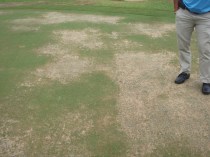
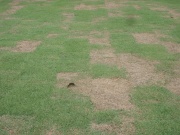
Penyakit tidak menyerang dalam garis lurus. Ini adalah kesan mampatan.

Adakah anda mengah dan tak cukup nafas bila membaca ayat di atas? Begitu juga padang anda tidak dapat bernafas bila tidak di beri ruang untuk udara masuk ke dalamnya.

Satu lagi soalan bonus; jika anda tutup mulut dan tuang air ke atas mulut anda adakah air akan masuk? Begitu juga tanah yang dah tidak ada ruang untuk air masuk kedalamnya akan menjadi kering di musim kemarau (walaupun di siram) dan menjadi basah di musim hujan (walaupun dah banyak longkang bawah tanah di gali di bawahnya).

Kenapa? Kenapa padang yang cantik dan elok perlu ditebuk-tebuk lubang-lubang kecil dan di isi dengan pasir? Saya akan cuba terangkan kenapa ia suatu proses yang perlu di lakukan keatas semua jenis padang rumput. Soalan nya hanyalah ‘Berapa kerap?’ dan bukan ‘Perlu ke?’. Sebab ia perlu. Ia perlu kerana di sebabkan oleh suatu perkara yang di panggil “mampatan” atau “compaction”. Ada dua cara untuk menerangkan mampatan:

1. Mampatan berlaku bila suatu perbuatan menghentak permukaan tanah. Isipadu tanah akan menjadi lebih kecil dengan cara mengeluarkan ruang kosong yang berada secara semulajadi diantara ketulan-ketulan (partikel) tanah dengan itu menjadikan tanah tadi lebih padat.

2. Mampatan berlaku bila tanah tak tahan berat barang kat atas dia.

Pemain, pekerja potong rumput, peserta konsert, tarik-tali, lari dalam guni, orang duduk berdating, malah apa saja jenis beban akan menjadi punca mampatan di dalam  keadaan yang sesuai. Kesan suatu bergantung beban bergantung kepada beratnya, keluasan kawasan yang menanggung beban dan keadaan tanah. Begitu juga kekerapan; lebih kerap permainan berada di satu kawasan, lebih banyak mampatan akan berlaku di kawasan itu. Pasal itulah kawasan paling teruk di sebuah padang bola ialah di kotak penalti.

Bila saya kata ‘tanah’ apa yang kita nampak mungkin ialah rumput, atau pasir atau tanah liat di bawah rumput. Sekarang bayangkan jika kita boleh besarkan gambar ‘tanah’ tadi seribu kali. ‘Tanah’ tadi terdiri dari ketulan-ketulan atau partikel-partikel yang mempunyai ruang udara di antara mereka. Sama seperti bila kita timbunkan ketul-ketul batu diatas satu sama lain, kita boleh nampak ruang di antara batu-batu tersebut kan? Sama lah! Cuma pasir lebih mempunyai ketulan yang halus, dan tanah liat lebih-lebih halus lagi.

Kesan hollow tine ke atas tanah.

Dan bila saya kata ‘mampatan’, apa yang saya maksudkan ialah apa-apa (atau siapa-siapa) yang berada di atas tanah akan memicit partikel tanah untuk menjadi lebih rapat dan menjadikan ruang udara lebih sempit. Partikel tanah sama aja saiznya, tapi ruang udara menjadi bertambah kecil. Udara dah keluar dari ruang-ruang tersebut.

Mampatan menyebabkan masalah berkait yang akan menular menerusi pelbagai sifat-sifat tanah. Masalah pada rumput mungkin hanya kelihatan bila salah satu dari sifat ini menjadi penghalang kepada pertumbuhan rumput. Mampatan mempunyai kesan buruk keatas keadaan fizikal, kimia, air dan biologi. Jadi penjaga padang akan berusaha untuk merawat “penyakit” dan menyelesaikan “masalah” sedangkan masalah sebenarnya ialah mampatan.

Perhatikan lubang hollowtine masih elok rupa tanahnya sedangkan di kiri kanan sudah berwarna hitam menandakan kehadiran hidrogen sulfida yang toksik kepada rumput.

Bila air di picit keluar dari ruang tanah, akan tiba masa bila oksigen akan berkurang di dalam tanah. Bila ini berlaku, rumput akan mengalami stress dan akan lebih sensitif kepada serangan organisma penyakit. Di masa yang sama, kekurangan oksigen juga akan membunuh organisma yang berfaedah kepada rumput.

Suatu beban yang berat tak semestinya menyebabkan lebih banyak mampatan dari suatu beban yang ringan. Beban yang ringan di atas tanah yang basah akan menyebabkan lebih banyak mampatan dari beban yang berat di atas tanah yang kering.

Di pendekkan cerita, mampatan memberi kesan keatas pertumbuhan rumput dalam banyak cara yang tak semestinya konsisten (apa yang jadi kat padang A tak semestinya jadi kat padang B). Kesan-kesan utama mampatan ialah:

  1. Pertumbuhan akar: di dalam tanah yang mampat/padat, akar akan kurang tumbuh.
  2. Pertumbuhan pucuk: kawasan itu akan mempunyai kepadatan rumput yang makin kurang.
  3. Pembajaan:  proses mengambil nutrisi ialah suatu proses yang memerlukan oksigen (aerobik).
  4. Air: bergantung kepada keadaan (musim hujan atau kemarau; contohnya) mampatan boleh menyebabkan terlalu banyak air atau terlalu kurang air. Kedua-duanya akan menjadi masalah kepada rumput.

Penyelesaian

Ada banyak cara pengurusan mekanikal yang boleh di lakukan untuk mengurangkan kesan mampatan dengan cara membuat lubang besar (secara perbandingan). Cara ini akan mengurangkan kepadatan tanah tapi untuk berkesan, lubang di permukaan tanah mestilah cukup besar untuk melakukan pengudaraan. Oleh itu hydroject ataupun verti-drain bukan lah semestinya cara paling sesuai.

‘Hollow-tine’ adalah nama generik yang di beri kepada sebarang kerja pengudaraan yang di lakukan keatas rumput.

Jadi kita boleh gunakan mesin coring. Kita pasang ‘tine’ kepada mesin tersebut. Ada dua jenis tine, iaitu tine yang ada lubang di tengahnya yang kita panggil sebagai ‘hollow tine’ dan juga tine yang merupakan besi padat yang kita akan panggil ‘solid tine’.
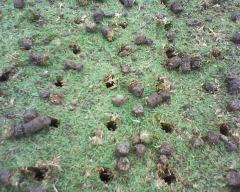
Selepas mesin hollow tine mengeluarkan 'core'. Lubang untuk udara, air dan baja masuk.

Kita lebih suka hollow tine kerana ia akan mengeluarkan tanah ke permukaan dan kita boleh buang tanah tersebut. Lubang-lubang yang hadir kita boleh topdress dengan pasir baru yang tidak akan mampat buat seketika (6 bulan hingga 2 tahun). Manakala solid tine pula akan menebuk atau menekan tanah kedalam dan menghasilkan mampatan lebih jauh kedalam tanah.

Berapa besar tine yang perlu kita gunakan bergantung kepada beberapa faktor. Satu diantaranya ialah kekerapan kerja-kerja pengudaraan itu. Lebih jarang kerja yang anda lakukan, lebih besar tine yang kita gunakan.

Kita boleh juga ‘spike’ atau ‘slice’. Ini juga boleh mengurangkan mampatan dan membantu air tembus masuk. Tapi ia adalah cara menyelesaikan masalah jangka masa pendek kerana kadang-kadang mampatan berlaku lebih jauh ke dalam. Tetapi ‘slicing’ mempunyai kesan sampingan yang baik iaitu menggalakkan pertumbuhan akar dan pucuk baru.

Penyuntikan air dan bahan seperti styrofoam adalah metode baru dalam kerja pengudaraan ini. Air dan/atau udara akan di suntik pada tekanan tinggi ke bawah tanah. Ia boleh di buat lebih kerap kerana titik masuk ke permukaan tanah hampir tidak kelihatan.

Satu lagi cara baru ialah ‘verti-drain’ yang kini juga menjadi nama generik. Ia melibatkan suatu besi yang masuk lurus dan keluar pada sudut hingg 80 darjah. Ini memberi suatu gua di bahagian bawah tetapi lubang kecil di permukaan tanah.

Ada juga dakwaan dari beberapa penjual bahawa bahan kimia yang mereka jual boleh membuat kita tak perlu lagi ‘hollow-tine’. Saya belum boleh percaya.

Jika padang anda mempunyai masalah rumput yang tak berapa nak sihat dan selalu basah atau kering; masalah anda ialah pengudaraan.

Berapa selalu saya syorkan proses pengudaraan ini; lain padang lain belalang. Secara umumnya, setahun sekali. Apa?! Dah 7 tahun tak buat?! Lepas tu anda  hairan kenapa rumput mati dan padang basah tiap tiap kali hujan? Nampaknya, saya dah selesaikan misteri anda…
 

Posted in Padang, Padang Golf, Taman | Tagged: , , , | 7 Comments »

Menanam cara ‘sod’

Posted by mynormas on January 24, 2012

Menanam cara sod adalah cara paling biasa digunakan di Malaysia dan pada pendapat saya, cara paling senang tetapi paling selalu salah.

Nampak jer cantik, tapi silap.

Kebaikan cara sod ialah;

1. boleh ditanam hampir dalam sebarang cuaca; musim hujan atau musim kemarau.

2. kawasan yang di tanam cepat tumbuh dan kelihatan rapat.

3. boleh di tanam di kebanyakan kawasan; rata ataupun di tepi bukit.

4. perlukan penjagaan yang kurang berbanding dengan cara lain.

5. Tidak mudah hanyut.

6. Tidak di makan oleh burung (berbeza dengan bijibenih).

Kesilapan atau keburukan sod:

1. Memerlukan jumlah rumput yang lebih banyak berbanding cara lain.

2. Kecuali rumput cow/pearlgrass, hasil padang akan bertompok kerana rumput tidak sama spesis ataupun di susun tidak mengikut ‘grain’.

3. Akar yang pendek, maka rumput tidak lasak. Terutamanya jika penyediaan tapak tidak betul.

4. Tempat bercantum sod boleh kering dan/atau akan kelihatan lama setelah padang digunakan.

5. Berpotensi membawa bersama masalah dari nursery seperti serangga, spora kulat, benih rumpai, telur dinosaur (ha?!), jin tanah (haa?!), makhluk halus (haaa?!) dan sebagainya.

Secara definasi, sod ialah rumput termasuk akar yang di pegang oleh tanah. Biasanya ia adalah lebih besar atau bersamaan dengan 1 kaki persegi. Cara penanaman ialah dengan menanam rapat-rapat dalam susunan seperti menyusun batu bata. Ia boleh juga di susun jarang-jarang sehingga memenuhi 50% luas kawasan. Kurang dari 50% – kita boleh memberi ia nama ‘spot turfing’ yang mempunyai muka lain di laman web ini.

Langkah-langkah penanaman cara ‘sod’.

1. Mengukur luas kawasan.

Berapa luas kawasan yang perlu ditanam dengan rumput? Untuk kawasan rumah, saya cadangkan membeli jumlah sod sama besar atau 80% luas kawasan tersebut, mengikut kemampuan. Biasanya kalau tanam sendiri, kadang-kadang hampir 10% dari sod tak boleh digunakan kerana pecah atau ada rumput liar. Rumput yang pecah boleh digunakan untuk ditanam di kawasan tepi/sempadan, tapi sod yang ada rumput liar mesti dipecahkan dan di tanam di kawasan tepi atau sebagai ‘spare’ untuk repair.

Walaupun Malaysia dah lama bertukar metrik, tetapi sod biasanya di jual dalam kaki persegi.

Cara untuk mengukur luas kawasan yang tidak geometri boleh di baca di sini

2. Membeli sod.

Berbekal dengan pengetahuan berapa luas kawasan (dan budget dalam poket) maka mulalah bershopping. Pastikan kita tahu rumput apa kita mahu dan tidak terpengaruh dengan apa yang kita lihat di nursery.

Bandingkan harga dan utamakan nursery yang kita boleh pilih rumput dan bawa balik (ataupun kita pilih dan dia terus angkat naik lori). Was-waskan nursery yang kita pilih rumput kat showroom  dan dia akan hantar dari nursery dia yang katanya berada 136.7 km dari situ. Kadang-kadang, rumput yang di hantar ke rumah tak sama dengan rumput yang kita pilih.

Jika tak dapat di elakkan (kerana kawasan kita sangat besar atau kita suka shopping kat showroom yang ada aircon dsb) maka beritahu dia yang kita nak ada kat nursery tu masa dia tuai sod. Ada satu lagi alternatif; bahagikan kawasan kepada beberapa sektor, beli dan tanam mengikut sektor. Dengan cara ini, kita tak perlu risau rumput tak sama bersebelahan, kerana sekurang-kurangnya dalam satu sektor, rumput dari keturunan yang sama.

Sekalli lagi saya ulang, masalah rumput tak sama menjadi masalah utama pada rumput jenis ‘carpetgrass’ dan jarang pada cowgrass atau pearlgrass.

3. Penyediaan tapak.

Saya ada satu muka tentang penyediaan tapak dalam laman web ini. Tapi pendek katanya, di bawah sod itu perlu ada tanah yang agak peroi dan boleh di tembusi oleh akar. Satu masalah ialah bila tanah bawah terlalu mampat dan akar rumput hanya berada di dalam sod. Bila hujan lebat, sod akan ‘terapung’. Bila kering, sod akan mati kerana akar terlalu pendek.

Bagaimanapun, sila baca tentang penyediaan tapak di sini

4. Menyusun sod

Comot tapi betul.

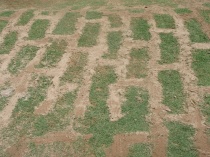
Nampak tak sod di susun air tidak boleh mengalir bebas dari kiri ke kanan?

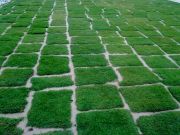
Kesilapan paling asas yang saya tengok orang buat ialah bila dia tanam sod dia mengikut garisan yang membenarkan air mengalir. Jika kita menyusun sod, susun supaya ia menyerupai orang susun batu bata; bata yang di atas akan melintang di atas sambungan bata di bawah. Dengan cara ini, air tidak mempunyai satu ‘lorong’ untuk mengalir dan membawa baja, pasir dan rumput.

Jika kita membeli 100% sod (ertinya jika luas kawasan anda ialah 120 kaki persegi dan anda beli 120kaki sod) menyusun adalah mudah. Jika kita  membeli hanya 80% atau kurang, mulakan dengan bahagian paling penting kawasan kita contohnya depan rumah, kotak penalti, tengah green dan sebagainya. Saya tahu ada orang yang akan mulakan dengan sempadan dan menanam ketengah, tapi jika kita kehabisan rumput atau salah budget, maka tengah akan lompong/kosong. Mulakan dari satu sisi dan pilih sisi yang paling penting untuk kita (pedulikan apa orang lain kata)dan tanam ke arah yang tak penting. Kalau sod nampak macam tak cukup, maka kawasan yang kurang penting tu kita boleh tanam kemudian ATAU, kita boleh jarakkan lebih sikit baki sod yang ada untuk mencukupkan kawasan yang – ahem – kurang penting tadi. Jadi, kalau di rumah, kita tanam dari depan ke belakang (contohnya) dan di pejabat kita tanam dari depan ofis bos ke luar dan sebagainya.

Untuk padang golf dan padang bola. Ada lagi yang saya tak cerita kat sini. Ada orang yang ciplak kerja saya sebagai kerja mereka. Sekarang ada bahagian untuk orang komersil yang saya simpan. Sorry. Nak tahu? Email saya dan kenalkan diri.

5. Tanam sod.

Menanam dengan rapi. Sod dan luas kawasan 100%

Ada orang tanam dengan cara mengorek tanah dan meletakkan sod ke dalam. Ada orang melakukan dengan cara hanya meletakkan sod ke atas tanah. Kedua-dua cara betul, tapi lazimnya jika menanam 100%, kita boleh hanya letakkan sod atas tanah, dan jika 80% atau kurang, kita akan tanam dia supaya dia tidak ‘lari’ dari kedudukan.

Jika kita meletakkan sahaja sod di atas tanah dan tanah itu sedikit curam, kita mungkin terpaksa menggunakan paku yang diperbuat dari kayu atau bahan mudah-urai lain.

Apapun, pastikan tanah bawah TIDAK keras.

6. Siram.

Siram serta-merta lepas tanam. Siram hingga tanah bawah basah. Untuk seminggu dua lepas itu, pastikan tanah di bahagian bawah sod basah di waktu pagi dan tengahari (perasan tak, saya tak kata ‘siram’?)

Selepas itu, JANGAN siram sehari sekali atau sehari dua kali, siram bila keadaan memerlukan. Ertinya, bila tanah di bawah sod kering; siram. Jangan siram lepas pukul 3 petang. Rumput yang basah hingga ke malam akan mengundang penyakit dan lumut.

Jangan pijak rumput tu untuk lebih kurang sebulan sehinggalah akar rumput dah tumbuh.

Mula potong pada minggu ke lima, jangan potong lebih dari satu pertiga ketinggian rumput. Lepas dua minggu turun kan ketinggian, lepas tu dua minggu lagi, hinggalah mencapai ketinggian yang kita mahu.

Mulai minggu ke empat, topdress seminggu sekali dengan nipis. Tujuan topdress ialah supaya pasir masuk ke kawasan yang tak rata dan meratakan permukaan tanpa melemaskan rumput. Ratakan pasir dengan tangan atau kayu ‘T’ dan siram. Jangan potong sehari lepas topdress, nanti pasir berterbangan.

Mulai minggu ke enam, mulai merumpai. Bahagikan kawasan anda kepada seksyen2 kecil dan merumpai dalam satu seksyen selama satu hari. Esok (atau hari seterusnya) merumpai di seksyen kedua, hari seterusnya di seksyen ketiga dan ulang. Dalam masa tiga bulan kita seharusnya akan dapat laman yang kita idamkan.

insyaAllah.

Selamat mencuba!

Bagaimana sod di tuai di nursery.

Ini adalah permukaan bunker padang golf yang senget dan boleh rosak akibat hujan lebat.

rumput yang pendek akar (dan nyawa) mati dulu.

Rumput dah di tanam tapi tak di siram.

Posted in Fields, Golf Course, Lanskap, Maintenance, Padang, Padang Golf, Rumput, Rumput halaman rumah, Taman | Tagged: , , , , | Leave a Comment »

Preparing a maintenance Schedule

Posted by mynormas on January 13, 2012

Can you play on this grass?

Do you find that your turf maintenance work keep clashing with major events, or that you have to apologize to a customer because he played on turf that is ‘less than perfect’? Do you become irritated when the turf maintenance guy asks for higher expenditure in one month and sometimes it is in the month with the lowest income?  Do you understand why, everyone and their mother, knows that the months of Nov and December of every  year is the rainy season but yet, after all this years, nothing has been done to prepare the turf so that minimal disease and damage happen? Have you ever asked, if everybody is aware of the date of the year’s main event (Club Championship, football final, concert season, school holidays etc) why can’t they prepare the turf to take the extra stress?

Question: do you have a turf maintenance calendar?

In the context of turf maintenance, there are a few maintenance works that fall under the category of ‘Cultural Practice’ that needs to be applied or performed at certain intervals.  Of course, for most turf areas these works disrupt play or enjoyment of customers, clients and guests. At the same time, most golf courses, football fields, or parks cannot afford to be closed wholly for long periods of time.

The best way to overcome this problem is to schedule these works into periods of low activity for example; in between football seasons, during fasting month, major exams week etc. This way, the disruption occurs to the least number of customers, which can be easier to handle.

Other benefits of scheduling work for the whole year includes:

1. Peaking the performance of the playing field/golf course during the period when it will receive the most media or customer attention.

2. Knowing exactly the amount of interval between the maintenance activity; e.g. between aerations or dethatchings; and adjusting accordingly.

3. Informing important guests or big organizers of when to schedule (or reschedule) their event. In my experience, several organizers are grateful  to be informed earlier and especially if we can help to point an alternate site for them.

4. Preparing the grass for the times when it is predicted to receive the most amount of stress. E.g. before the monsoon season, or before the grassed area is turned into a temporary car park for an annual sale or ‘buka puasa buffet’ or concert or lion dance etc.

5. Staggering the purchase of materials and equipment needed for one major work over many months will help in managing the cash-flow better and will help you spread the costs over the year.

6. Keeping staff employed effectivelythrough most of the year.

How do you start?

Start by having two lists:

1. List of events for the year or probable time of the year for the events. This may include, school holidays, public holidays, wedding season, golf season etc.

2. List of maintenance work activities (cultural practices, liming, soil amendment etc). Basically any major work that will disrupt play. Forget regular fertilizing or irrigation or stuff like that that can be manouvered around play.

Also weather pattern for the past few years. Ok, you may ask: what pattern? Did I miss the global warming crisis? Stop making excuses and get a monthly bar chart of rain days or rainfall; at the very least, you can make educated guesses.

Next:

Simple sample of yearly schedule

  1. Take  one of your most important and biggest (messiest) work of the year and consider when you would have that.
  2. Choose the time when traffic is lowest on your site but weather is tolerable. And mark the dates for your work.
  3. Basing on the interval for the same work, set the  dates for the next round (e.g. twice a year: six months later, 4x a year: 3 months later etc)
  4. Then stagger the other works so that it is not too close to the main works as in no 2 and 3 above.

Its not that difficult is it? Well, who said turf maintenance was rocket science? Of course, if you’ve never done it before or if the turf maintenance guys don’t have the support of the event management or marketing or golf management guys/gals; they’ll never get it done and the result is finger pointing the whole year. I’ve seen it done and I’ve seen people lose their jobs too.

Of course its not the end of the story after you actually do the annual calendar. Then you do the monthly calendar. This is especially important to maintenance crews that have limited manpower and resources (tractor, machinery etc.) You plan your work so that you can have enough workers for your projects and enough projects for your workers.

Because of a tournament (in red) extra attention was given to the greens a week prior to the event. Of course lucky Mountan View had an experienced consultant to guide them.

Now that is the easy but yet tricky part. At the same time it is important because this is the time when you should know the exact dates of tournaments, visits, etc so that you can plan your work.

Remember too that a schedule is not set in stone that it cannot be changed. But not having a schedule is as true as the old cliched quote goes: “Failing to plan is like planning to fail”

Posted in Fields, Golf Course, Padang | Tagged: , , | Leave a Comment »

4 Principles I won’t drop in 2012

Posted by mynormas on January 2, 2012

  1. As a paid consultant, I should not take commission from suppliers.
  2. I must follow The Golf Course Superintendents’ ethics of never pitching to the GM without knowledge of Superintendent.
  3. I must teach my clients the details.

1. Commission, a cut or whatever you call it.
I’ve always believed that I should not recommend specific products to clients. I’ve wanted to be known as an independent consultant so I believe that when I am hired I should recommend only the active ingredients,  formulations or specifications that in my opinion will help to solve my client’s problems. I have had suppliers who asked I recommend their products; I couldn’t. Having said that, I have also had clients, who admit their ignorance and gave me instruction to recommend a specific supplier or product. I have done that, giving more than one name, if possible. And in more than one instance, the succesful supplier has offered me a commision; I have always refused, except for one time when a grateful supplier traveled all the way from Ipoh to deliver a hamper, I didn’t have the heart to say no.

Well lately, I have been made to feel stupid for not taking part in this lucrative … ‘trade’. Don’t get me wrong, I feel that for a one-off, pro bono or free work, I should get paid by the supplier who I recommended.  Except that, I didn’t have the heart to do that either when given the chance. After all, the supplier is a friend anyway. Maybe I am not cut out for this business. Should have stuck to taking a salary.

2. The ethical part
Many years ago, as the Vice President of the GCSAM, I wrote a set of ethics. One of the ethics said something that I (or any other superintendent/supplier/member of association) should not offer advice, or service to a golf club without the knowledge of the club’s superintendent.

Honestly, it would have been easy enough to go for a round of golf (or drinks) at a golf club, ask to meet the manager and offer unsolicited advice. That could put me in a good light and maybe do the opposite to the superintendent.

Should I care? I mean, of the 200 golf courses in Malaysia, there are only 40 superintendent who are/were members of the association. Chances are, the superintendent of the club that I could afford to offer free advice are not a member of the association anyway.

3. Hold your knowledge tight
My wife, who has seen me work, feels that I teach too much to the people I work with to the point that those people feel they know enough that they can work without me. She feels that I should just stick to telling them to do something without teaching the ‘whys’ and ‘hows’.

That should be easy enough. Some client’s staff feel that they don’t need to know and some want to find fault anyway. So why bother.

4. The race card
This may sound alien to non-Malaysian readers. I have always considered myself a Malaysian first. I have always thought that I should be considered for the job because I am the best choice due to my skills, my knowledege and my experience.  It hurts when a couple of weeks back, a supplier/competitor suggested that it was easier for me to get clients because of my race.  She promised to meet me to discuss so I did not press the matter further over the phone conversation. But it was a shock, after all, if anything, I thought it was the other way round – that is, the only way I can make it as a consultant in Malaysia was if I was John, Michael or, at least in one instance; Chong.

But no, this is one principle I can’t do without. After all, I left one company because I felt that it had ‘preferred’ race over ability and I convinced a partner to change the company name from Australian Turf Management to Advance Turf Management.

All in all, 2011 has been a disappointing year for me and 1st January 2012 found me in a slightly depressed mood. Perhaps some changes are in order. I’ll have to do more marketing work for sure. Maybe I should drop the ‘halo’, do what other people are doing and stop being such an uptight a$$hole.

Maybe its time to change in 2012.


Posted in Fields, Golf Course, Golf Course Superintendents, Padang, Padang Golf | Tagged: , | Leave a Comment »

Golf Malaysia: An interview.

Posted by mynormas on November 25, 2011

In November 2011 issue of Golf Malaysia, I talked about why golf courses (this applies to homeowners too) who don’t think they can’t afford high maintenance cost in the future, should stick to local grasses.  Why bother spending so much money buying and growing in imported grasses during the initial construction – or renovation – and then let it all go to waste in the next five years due to poor maintenance? I know:- some people will argue that “the grasses are actually not imported, we bought/got them from a neighbour” but it is still grasses that came from overseas and require high maintenance.

But why not plant local grasses or grasses that have adapted to local conditions that will require cheaper maintenance? After all, the first part of Integrated Pest Management is about selecting the right plant for the location.

It is a long interview. What you see here is only the 1st page. Get your copy at the newsstand and most respectable golf clubs or Pro-shop. Or go to http://www.golfmalaysia.com.my to subscribe.

Posted in Golf Course, Golf Course Superintendents, Padang, Padang Golf, Rumput secara am, Taman | Tagged: , , , , | Leave a Comment »

Choosing grass

Posted by mynormas on October 18, 2011

One of the most common question I get asked is; what type of grass should I use?

There are actually three important criteria to think about when choosing grass, and I write this in layman terms, mainly:

  1.  The condition of the area – whether it is shaded, it gets too much water (for example it is next to non-porous area e.g. road or pavement or perhaps it is out in the open with poor or no irrigation).
  2. The budget for future maintenance of the grassed area and
  3. The use of the grassed area; simply whether it is more for aesthetics or more as a playing field. In the golf course, this question will also refer to whether that area is a green or a rough.

Now for home-owners (and I get a lot more questions from these people) I usually tell them the order of priority will be 1. The condition of the area; 2. The budget and time they are willing to spend on maintenance and 3. The use; whether the lawn is for impressing passers-by or is it for grandchildren to play on? Stuff like that.

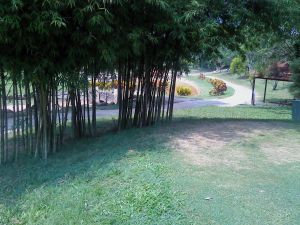
The Bermuda carpetgrass planted at cost under the bamboo? Dead. The Cowgrass that came on its own for free? Nice. Lesson? Use cowgrass under shade.

For golf courses, playing fields, stadiums and large areas like municipal councils, the order of priority is reversed: I ask them to think of what is the use of the area – whether it is for greens, for tees, for out-of-play areas,

football, picnic, or whatever. Then they should think of the budget they are willing to spend for maintenance (and I would like to emphasise FOR MAINTENANCE) and lastly only about the condition of the area. Why is the order reversed? Because, for these kind of construction, the condition can be modified, trees can be moved, or the green can be redesigned away from the large 100 year-old tree, for instance.

Most of these owners, be them developers, local government or large bungalow owners etc, will have a huge budget during construction but when it comes to routine daily maintenance; they scrimp and save.

Zoysia is a nice grass but needs to be cut once a week - at least. If you can't afford to do that, why use it?

So what I advise is: design and pick plants for the place so that it will be cheap and easy to maintain in the future! Naturally,  people want the best and most designers/contractors who are paid by percentage don’t mind at all to oblige.

But I digress. The world of grass is divided into three main areas; warm-season and cool-season. The third area? What is termed as the transition zone area, this area is cold enough in the winter to make it difficult to maintain warm-season grasses and warm enough in the summer to make it difficult to grow cool-season grasses, therefore, no single species of grass is well adapted in this region.

So there are only two types of grasses; warm-season and cool-season grasses. In the transition zone areas, they will use quick growing cool-season grasses in the autumn and early winter and warm-season grasses in spring/summer.

What are the characteristics of warm season grasses? They thrive in air temperatures from 27 – 35 degrees Celsius and soil temperatures of 21 – 32 degrees Celsius. They’ll lose chlorophyll in autumn and turn from green to brown.

Cool-season grasses grow very well when soil temperature is between 10 – 18 degrees Celsius and air temperatures a cool 15 – 24 degrees Celsius.

Tall fescue is a cool-season grass

Other than those, there are of course a few other things that should be taken into consideration too. Soil types, quality of water for irrigation – in fact, quantity of water too; there are a few other things if we want to go into details. But lets leave it at that for now.


Weights and Measures, Metric Conversions Weights and Measures,
Metric Conversions


Posted in Fields, Greens, Landscape, Lanskap, Maintenance, Padang, Padang Golf, Rumput, Rumput halaman rumah, Rumput secara am, Taman | Tagged: , , , | Leave a Comment »

Menyiram rumput

Posted by mynormas on October 16, 2011

Bagaimana patut kita menyiram rumput? Ada dua tiga sebab kita menyiram rumput.

  1. Kerana rumput memerlukan. Diantara tanda-tanda: tanah kering atau rumput layu: ini ertinya perlu siram.
  2. Kerana kita meletakkan bahan keatas rumput yang perlu di siram supaya ia meresap ke tanah. Contohnya baja, setengah jenis racun, bahan pelembab (wetting agent),  topdressing dan sebagainya.
  3. Kerana cuaca terlalu panas dan kita menyejukkan permukaan tanah untuk melindungi akar rerambut atau menurunkan suhu permukaan. Siraman ini dinamakan ‘syringing’ dan bukan bertujuan memberi rumput air; HANYA untuk menyejukkan permukaan. Ertinya siraman dua minit biasanya mencukupi. Untuk kawasan yang rumput di potong pendek, contohnya green di padang golf (3-6mm) kadang kadang syringing di lakukan hingga dua kali sehari (contohnya kul 11pagi dan 2 petang)

Jangan, jangan, jangan siram mengikut jadual. Contohnya setiap Isnin, Rabu dan Jumaat. Atau setiap hari pukul 4pagi. Jangan siram jika ia akan menyebabkan tanah lembab hingga ke malam: ini akan menyebabkan penyakit. Ertinya elakkan menyiram di kebanyakkan tempat selepas pukul 5 petang (ada tempat pukul 3petang pun dah tak boleh siram contohnya jika tempat yang teduh).

Amalkan siram di awal pagi. Ini memberi peluang tanah menyimpan air hingga ke tengahari di waktu ia paling memerlukan air. Menyiram di waktu petang; rumput mungkin kata “Aku dah nak mati kering baru kau nak siram!” dan juga akan menyebabkan tanah lembab hingga ke malam yang boleh menggalakkan kulat dan lumut.  Lagipun waktu pagi kurang angin yang menyebarkan air terlalu jauh/dekat (bergantung arah angin dan arah air).

Berapa lama nak siram? Siram jarang-jarang tapi lama-lama (Water irregularly but deeply). Ini akan menggalakkan akar tumbuh panjang mencari air. Siraman terlalu kerap akan memanjakan rumput. Pasal tu kita siram hanya bila rumput memerlukan, bukan ikut jadual. Biasanya saya siram 20 minit. Tapi awas, untuk kawasan yang terlalu curam atau tanah yang padat (air akan bertakung atau mengalir dan tidak masuk ke dalam tanah) saya mungkin akan menyiram 10minit x 2 ataupun 5minit x 4; tunggu hingga air meresap… dan ulang. Perkara ini perlukan pemerhatian dan pemahaman.  Lain tanah, lain siraman.

Sprinkler irrigation in a golf course

Sprinkler irrigation in a golf course.

Posted in Fields, Golf club, Landscape, Padang, Padang Golf, Rumput halaman rumah, Taman | Leave a Comment »

How many staff in a Malaysian golf course?

Posted by mynormas on October 11, 2011

I visited a golf course that was built in an oil palm plantation; for the second time yesterday. The golf course was started in 1917 as three holes, finished as 9 holes in 1929 and was completed as 18 holes only a few years ago.
But what fascinated me was that it had only 5 permanent workers to keep it going. I guess it had to do on how it was built. It was flat, it had few landscaping features and there were almost no slopes (whether drain, bunker, hill etc) there. They also had big trees that were planted far enough apart that machine can mow between them. And they had cowgrass on fairways and serangoon on the old 9.
The guy in charge believed in mechanization and I could see the big and relatively new machinery working on the golf course. And best of all? I’ve seen worse golf courses that had more than three times the number of staff this course had. When I praised him and his assistant (who attended to me in my second visit because the boss was sick) their immediate reaction was to say: I have dedicated staff.
We have a lot to learn from En. Azman and his team Carey Island Golf Club.

Posted in Golf club, Golf Course Superintendents, Padang, Padang Golf | Tagged: , | Leave a Comment »

Managing Malaysian lovegrass (C. aciculatus)

Posted by mynormas on September 15, 2011

Lets not kid ourselves, there are many Malaysian golf courses, football fields and tamans that are plagued by the lovegrass (presumably named because it loves our pants). I have seen golfers comments that hate a particular golf course because that golf course has a lot of lovegrass on its fairways.

Lets start a discussion – although from experience this ‘discussion’ will end up being a monologue – but lets discuss anyway. Lets clarify what is ‘lovegrass’. Its that type of plant that has seeds that sticks to pants or socks. The leaf are light green. It is sometimes called as ‘kemuncup’ in some places in Malaysia. In the U.S it is called as the pilipiliula or golden false beardgrass or false beardgrass (http://plants.usda.gov/java/profil

This field was cut about 5 days ago! But the amount of lovegrass now would make a pious man curse...

e?symbol=CHAC) and Mackie’s pest.

What ever it is called I am sure most of us agree that it is a pest.

The leaf and the plant per se is tolerable but it is the seeds and how they were made to propagate that gets most golfers, footballers, joggers (or their wife, mom or maid) worked up. They stick to the pants and socks with no regard to price, brand or label.

Why on earth Malaysians called it love grass is a mystery.

It is also a stubborn pest. The only effective selective pesticide I know that we can use against it is Facet (available in Malaysia). Of course you can use Round-up but that may fall into the ‘overkill’ territory.

It resists mowing with regular reel mower, no matter what brand or how many reels. I have had arguments with two golf course superintendents (actually, make that three but in the end that one guy bought a rotary mower though I suspect it could be because of the price)   who insisted to buy five-gang reel mowers even though their fairways are infested with lovegrass. Why? Because all the other golf courses use a five-gang how can I use a tractor mounted rotary mower?

I have pictures of this golf course with better stripes; but no tractor, so this will have to do. Not to mention that I'm late already. Just take my word that rotarys make stripes

Using Facet has its drawbacks, one of it (other than price) is that it affects cowgrass. I am currently helping a Superintendent testing a few rates of Facet to see which will not kill cowgrass permanently. Lets see what happens; I have my doubts because as I see it, there is just too much lovegrass on his fairways. In my opinion, he would be better off changing his old five-gangs with second-hand mini-tractors equipped with new rotary mowers and mow twice or thrice a week.

Newsflash: Facet kills lovegrass. But the broadleaf survives! Not the cowgrass. And those are RM240 Hush Puppies.

Of course, if your golf course, field, taman or lawn that was planted with Bermuda or Zoysia, by all means; spray it out. Unfortunately, if your bla bla bla was planted (or is now covered) with cowgrass or Serangoon then your options are limited: if not much or only a few areas are invaded by lovegrass – you still could do chemical control. Otherwise you may have to replant (though I would still advise you to use chemical first to ensure no seeds or roots are left behind to continue) or buy new rotary mowers. For lawn owners, you may need to buy your own cutters or adopt one of the foreigner-who-mows-house-lawns as ‘anak angkat’.

Plus, a certain brand of golf course machinery is now coming out with five-gang rotary mowers too so you don’t lose your prestige when talking to other peers at the networking dinner of the club/stadium/local council/dewan bandaraya. And don’t worry, rotary mowers can make stripes as well as reel mowers too.

Try it.

The lovegrass just springs back up behind the mower. But notice that the leaves are quite nice.

Posted in Fields, Golf club, Golf Course Superintendents, lovegrass, Padang, Padang Golf, Taman | 1 Comment »

A slow green is better than a fast brown

Posted by mynormas on July 16, 2011

I just came back from a golf course in north Malaysia where the weather has been hazy; little sunlight. But at the same time, in central region, we are having thunderstorms/heavy rains in the evenings with about the same result; little sunlight.

For both situations, I would advise people to raise their cutting heights. But please don’t stop or skipping mowing. Just mow higher. For green, raise it by 0.5mm and for fairways and fields, well, if the weather doesn’t improve soon or when you start to notice that you are cutting more leaf or the grass starts turning brown after mowing; raise your mowers by a notch or by 2mm.

For rough or fields under shade (trees, buildings etc) you may need to take action sooner.

Remember that grass is a plant that uses photosynthesis to make food and that process needs sunlight to work. If there is not enough sunlight, the leaf and stem will start to lengthen

Same grass. Gues which one got not enough sunlight

. When they lengthen and you cut at the same height; you are cutting off more leaf than usual.

The usual response I get to that advice is: but my greenspeed will be slower! And my usual answer is: A slow green is better than a fast brown.

Posted in Fields, Greens, Padang, Rumput secara am, Taman | Leave a Comment »