Turf Matters

The Site To Go To For All Your Turf Matters

  • Facebook Likes

  • The new Brushcutter

    Pengganti Brushcutter

    Increase productivity, cut labour. Try the AM61A

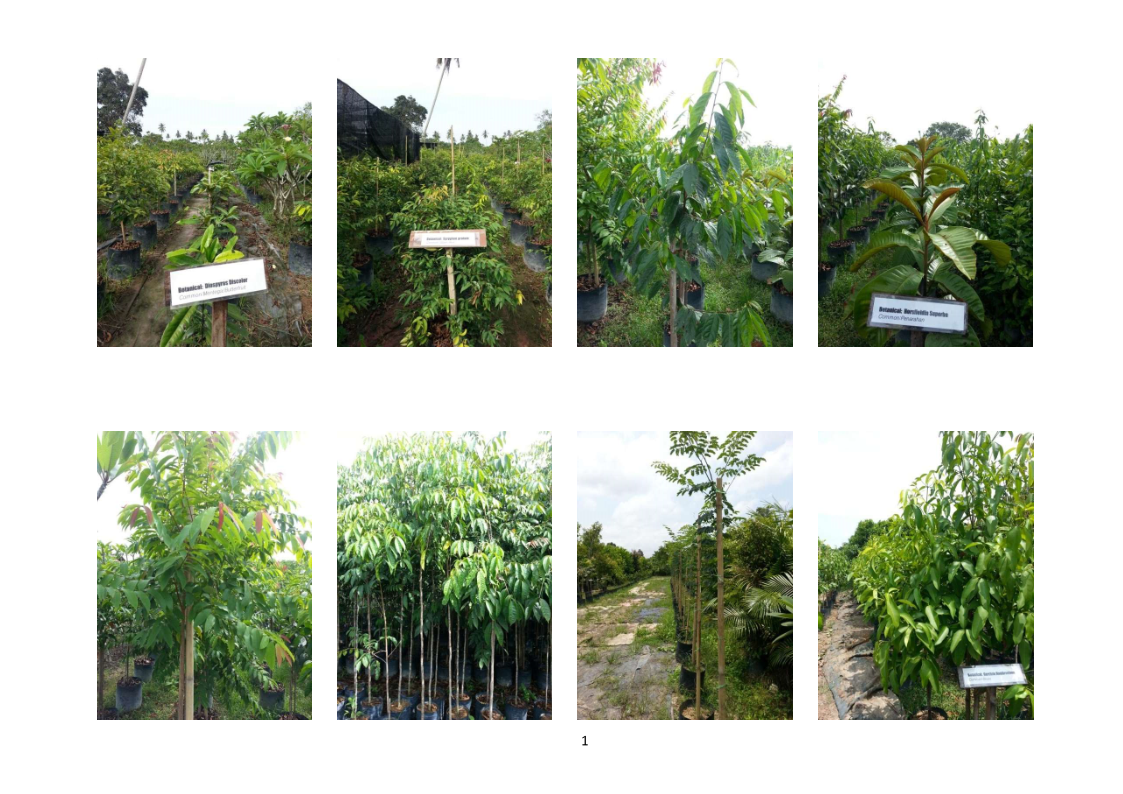
  • Trees Nursery

    Forest trees nursery

    Get your Trees from this nursery

Archive for the ‘Golf Course’ Category

Tentang Maharaja, Jeneral & Gundik

Posted by mynormas on March 29, 2016

Dalam lawatan saya ke kelab atau company yang meminta nasihat dari saya, saya sering jumpa orang; daripada bos besar sampailah ke pekerja biasa yang akan bercerita kepada saya tentang punca masalah yang di hadapi oleh kelab/company itu: orang lain.

Sebagai seorang konsultan, saya kadang kadang di panggil untuk ‘membawa padang golf ke tahap yang lebih baik’ bukan kerana ada masalah di padang tersebut tetapi kerana pihak pengurusan inginkan improvement yang mereka rasa pasukan sediaada tidak dapat berikan, mereka cari orang luar. Kadang-kadang mereka hanya mahukan pendapat dari pihak ketiga kerana penjaga padang meminta kos yang tinggi untuk pembaikan: hampir setiap kali saya lihat peristiwa ini; ia adalah peristiwa malang. Kita mahukan  pembaharuan dari segi result tapi tidak mahu ubah apa yang kita buat: mana mungkin? Kata Albert Enstein “Membuat perkara yang sama berulang ulang tetapi mahukan result yang berbeza adalah satu kegilaan”

Bila saya berbual dengan pengurusan atas ataupun pekerja bawahan, saya selalu perasan bahawa jawapan yang sama akan saya terima: ‘Pihak satu lagi perlu ubah sikap’. Isu isu ini mengingatkan saya kepada suatu cerita tentang Sun Tzu. Sun Tzu adalah pengarang buku ‘Art of War’ buku tentang peperangan tetapi di jadikan sebagai buku taktik pengurusan juga. Buku itu di tulis lebih 2,000 tahun yang lalu dan telah di terjemah ke dalam pelbagai bahasa. Pada waktu ia di tulis, Sun Tzu bukan lah seorang jeneral tetapi seorang sarjana.

Saya baca terjemahan buku itu yang di sunting oleh James Clavell, seorang penulis novel barat yang terkenal dengan buku buku Taipan, Shogun dsb lebih kurang 25 tahun yang lalu. Saya baca buku itu sewaktu saya masih bekerja di syarikat perladangan dan ianya satu satu buku yang saya ‘terbakar’. Di ladang kelapa sawit saya, generator elektrik akan di tutup pada pukul 10 malam dan jika saya masih ingin terus membaca saya akan letak lilin di tengah muka surat buku yang saya dirikan. Saya mungkin terlelap dan buku itu terkena lilin.

Jika anda ingin cerita yang tepat, Google Sun Tzu and the emperor of Wu (nama salah satu negara di kawasan itu, China belum di satukan lagi) ataupun dapatkan buku Art of War oleh James Clavell.

Ceritanya begini: Buku yang di tulis oleh Sun Tzu menjadi terkenal hingga kan ia menarik perhatian maharaja. Maharaja memanggil Sun Tzu ke istana dan bertanya jika bagus sangat ke buku kau ni?

“Ya tuanku” kata Sun Tzu “sudah pasti”

“Semua 13 bab tu boleh di gunakan dalam peperangan?” tanya maharaja.

“Benar tuanku, semuanya boleh di gunakan dalam konteks pertempuran dan peperangan” jawab Sun Tzu.

“Boleh kah isi kandungan buku ini beta uji?” tanya maharaja lagi.

“Boleh tuanku”

“Boleh kah isi kandungan buku ini beta uji ke atas perempuan?”

“Boleh tuanku”

Maharaja mengarahkan semua perempuan yang berada di dalam istana untuk keluar dan beratur di medan perbarisan. Seramai 180 orang perempuan keluar. dan berbaris. Sun Tzu telah menyusun mereka kedalam dua pasukan yang sama ramai anggota dan menjadikan gundik-gundik kegemaran maharaja sebagai ketua tiap pasukan.

“Adakah anda tahu mana depan mana belakang, mana kiri dan kanan?” Tanya Sun Tzu kepada perempuan perempuan tadi.

“Ya” jawab mereka serentak.

“Baiklah, semua orang; PANDANG HADAPAN!” jerit Sun Tzu ala ala sarjan major perbarisan gitu. Semua wanita tersebut berdiri tegak. “Baris! PUSING KANAN!” kata Sun Tzu seterusnya. Serta merta semua wanita tersebut terbongkok bongkok gelak/ketawa.

Dengan tenang Sun Tzu berkata “Jika tentera tidak tahu atau tidak pandai menjalankan arahan, ataupun jika arahan tidak jelas, maka ia adalah kesilapan jeneral” Maka Sun Tzu pun mula mengajar dan membuat latihan tentang bagaimana untuk berpusing ke kanan, kebelakang, ke kiri dan sebagainya dalam barisan.

Setelah puas hati bahawa wanita wanita tersebut telah mempunyai pengetahuan dan latihan yang cukup, Sun Tzu memberi arahan perbarisan lagi sekali “Baris! Baris Sedia! Baris; PUSING KANAN!”. Sekali lagi wanita wanita dalam barisan terbongkok-bongkok ketawa.

Kata Sun Tzu “Jika arahan adalah jelas, jika askar telah di ajar dan di latih tetapi masih lagi askar tidak dapat mendengar arahan, maka ia adalah kesalahan pegawai” Maka Sun Tzu memberi arahan supaya ketua kedua dua pasukan iaitu gundik kegemaran maharaja di tarik dari barisan dan di pancung kepalanya.

Sang Maharaja yang sedang memerhati dari atas astaka telah menghantar utusan kepada Sun Tzu dengan berkata “Beta telah melihat kebolehan kamu dan beta akui kebenaran buku itu. Tetapi makanan dan minuman beta tidak akan terasa sama jika wanita berdua itu tiada lagi. Cukuplah setakat ini sahaja”.

Sun Tzu menjawab “Setelah mendapat titah perintah dari tuanku dan menjadi jeneral di raja, ada arahan yang tidak dapat kami patuhi” dan seterusnya memenggal kepala kedua dua gundik maharaja dan melantik dua wanita baru menjadi ketua pasukan.

Sekarang bila arahan di beri, ‘askar-askar’ Sun Tzu dengan patuh dan rapi boleh mendengar arahan dan mampu membuat perbarisan dengan betul. Tanpa bunyi, tanpa ketawa dan tanpa komplen.

Sun Tzu kini menghantar utusan naik ke astaka dan memberitahu maharaja, “Askar askar tuanku kini telah sedia untuk di periksa barisan dan boleh di uji”.

Utusan dari tuanku pula berkata “Biarlah. Sang Jeneral boleh tamatkan perbarisan. Beta tidak lagi mahu turun atau meneruskan ujian”

Jawapan dari Sun Tzu: “Maharaja hanya pandai berkata-kata tetapi tidak mahu bertindak”.

Selesai membaca ini saya pasti ramai di antara kita yang teringat tentang tempat kerja kita dan bagaimana si polan dan/atau si polan boleh masuk kategori tertentu. Kita tak ingat tentang diri kita.

Siapa yang boleh di jadikan pengajaran?

  • Maharaja? Orang atas yang mahu itu ini tetapi tidak dapat memberi kebebasan bertindak atau tidak mahu bertindak sendiri atau tidak mahu memberi peruntukan?
  • Si Jeneral? Orang yang sepatutnya mengajar, memberi latihan dan SELEPAS ITU memberi arahan? Jika arahan tidak di turuti dia yang tegas dan akan ambil tindakan? Dan dia orang yang paling mahir dan berpengetahuan dalam bidang nya ataupun dia tahu untuk menggunakan kepakaran orang di bawahnya.
  • Mendiang pegawai-pegawai (yang kini tiada kepala) yang terlalu rapat dengan orang bawah maka tidak di hormati dan tidak dapat di ikuti? Akhirnya kepala mereka yang di potong.
  • Gundik kegemaran? Orang yang di lindungi oleh orang atas maka tidak boleh di sentuh atau di suruh, jauh sekali di hukum? Walau tidak boleh perform, tapi tidak boleh di marah. Mungkin staff yang dah lama, mungkin yang mulut paling laser? Mungkin rapat dengan owner? Mungkin orang kuat Union?
  • Atau adakah kita askar biasa yang dah lali dengan segalanya? Tak hairan dengan apa apa lagi? Bila ada arahan untuk pusing, kita pusing, bila arahan untuk berdiri, kita berdiri; lain kita tak tahu. Kita buat apa, tak buat apa, gaji jalan. So… peduli apa.

Jangan terlalu cepat memberi label kepada orang lain. Takut-takut, tanpa di sedari, orang lain pun memberi kita label dan masalah sebenar di tempat kerja itu adalah… kita. Semoga kita lebih mengenali diri kita sendiri (ni ada dalam buku Art of War) dan memperbaikinya.

Untuk berlakunya perubahan; ia mesti bermula dari kita.

“I am the Master of my Fate, the Captain of my Soul” William E Henley.

Posted in Golf Course | Leave a Comment »

Emperor, General & Concubine

Posted by mynormas on February 23, 2016

I was in a client club recently and the Superintendent was telling me of his new staff who despite having agriculture or horticulture certificates are lacking in knowledge in what to do on a golf course. He did not see himself as responsible for his workers knowledge.

As a consultant, I see things at a client company as an outsider, usually with a fresh set of eyes and (hopefully) an unbiased mindset. I’m sometimes called in when the company wants the golf course to reach another level; not necessarily because there’s a problem. Other times, I’m called because there is a need for a third-party opinion, a referee even, to resolve a problem at a club that led to a (real or imagined; yes, IMAGINED) deterioration of the golf course. I will meet with a few people at the company and talk to them to see what the issues are. It never fails to surprise me how many people believe that the problem is other people.

These issues reminded me of a story about Sun Tzu – he who wrote the Art of War and an emperor of his era. Be reminded that China wasn’t one whole nation yet but were divided into a few smaller nations.

The version of the translation that I read was written by James Clavell, a renowned novelist himself and this version were full of interesting side stories that serves to illustrate better Sun Tzu’s 13 chapters. It was a very interesting book and I read it several times, it was also the only book I ever burned; I had it when I was working in a plantation 25 years ago and electricity was shut off at 10pm. To continue reading, I put a candle between the pages of the book and I must’ve dozed off. The book was singed but still readable so I kept it. I’ve lost it since then, probably loaned out and never returned or lost in the house moves I’ve made over the years. It’s been a long while so I may have forgotten a few details and I may be adlibbing or paraphrasing a few dialogues therefore if you are into details and accuracy, I would advise you to look it up.

So the story goes like this. The book written by Sun Tzu about the art of war called umm… The Art of War turned into a bestseller and probably would’ve been a blockbuster opera too if only America was as civilized as the kingdom of Wu was 2,000 years ago.

Anyway, the emperor of Wu called up Sun Tzu to his court and asked if what he wrote was good.

“Of course it is, Your Majesty” said Sun Tzu.

“All 13 chapters?” asked the emperor (should ‘emperor’ be with a capital ‘E’? Maybe I should capitalise it next time; just to be on the safe side. Don’t want to be struck by lightning or hit by car eh?)

“All 13 chapters are good Your Majesty” replied Sun Tzu.

“Can it be put to a test?”

“Yes Your Majesty”

“Can the subjects of the test be women?”

“Yes Your Majesty”

The Emperor asked that all the women in the palace be brought out to the courtyard. 180 women came out and lined up.

Sun Tzu arranged them into two companies and put the Emperor’s favourite concubines as the leaders of each company.

Sun Tzu addressed the women “I assume you know the difference between left and right, front and back?” The women nodded “Of course we do”

“Everybody facing front” Sun Tzu yelled, parade ground style to the two companies of women in front of him; they all stood at attention. “Now, everybody; right turn!” shouted Sun Tzu. Immediately the ladies burst out laughing.

Sun Tzu calmly said “When the soldiers cannot and do not know how to follow orders; or if the order is not clear; it is the general’s fault”.

So he started to train and drill the ladies on how to face forward correctly, how to turn left and right upon hearing the commands and so on.

Satisfied that the ladies are now properly trained, he barked the command “Everybody: right turn!” and the girls promptly started laughing again.

Sun Tzu said, “if the orders are clear, if the soldiers have been trained properly and yet the soldiers still can’t follow the orders properly, then it is their officers fault”

In saying so, Sun Tzu ordered the leaders of the two companies executed. The Emperor watching from a raised pavilion, upon seeing that two of his favourite concubines about to be beheaded, promptly sent a message down to Sun Tzu saying that he recognises the greatness of the general and the exhibition can now be concluded without anyone losing their heads. To which Sun Tzu replied “Having first received the appointment to be general, there are certain orders of the Emperor that I am unable to accept.”

He then had the two concubines beheaded and made the next two women to be the new leaders of the companies.

Now when orders are given, the ‘soldiers’ are able to turn to the left or right in perfect order; without uttering a sound.

Sun Tzu then sent a message to the Emperor “Your soldiers are ready and properly trained now, Your Majesty and can be put to any test you desire”

To which the Emperor replied “Let our general dismiss our forces and return to camp. We have no wish to come down and inspect the troops”

The reply from Sun Tzu was a classic man-with-balls “The Emperor is only fond of words and cannot translate into action”

Reading this and thinking about how it relates to someone in your workplace is fine, just don’t forget that sometimes it could also be about you too. There are a few classes of people in the story; The Emperor; who talks about wanting to be the best but not wanting to pay the price. The General, who assumes his people know what to do and does not do training. The Concubines; people who thinks that they know what to do but don’t. The Favourite Concubines; those that cannot be told what to do.

Lest this leads to a flurry of finger pointing, I must hasten to add that we should all be careful of who to blame. I mean, how embarrassing would it be if you thought that the problem of the company is everyone and everything or someone or something when the real problem is you?

Posted in Golf club, Golf Course, Golf Course Superintendents | Tagged: , , , , | Leave a Comment »

Puteri Malu

Posted by mynormas on February 12, 2016

Semalu di bahagian depan lalang.

Semalu di bahagian depan lalang. Tinggi pinggang!

Saya telah di minta untuk mengrehabilitasi sebuah padang bola yang terbiar dan kini di penuhi dengan lalang (Imperata cylindrica) dan semailu atau puteri malu (Mimosa pudica). Saya tahu cara untuk membunuh lalang tetapi saya belum pernah mengahadapi sebegitu banyak semalu. Saya menalipon seorang kawan yang berkata akan menghubungi saya balik selepas mesyuarat, malangnya tiada berita darinya selepas itu. Seorang lagi rakan sekerja yang saya hantar mesej membalas dengan “Hubungi Cheng di nombor…” Siapa Cheng? Seorang penjual racun di Ipoh. Akhirnya saya membuat keputusan mencari jawapan sendiri.

Saya tahu ia adalah rumpai berdaun lebar (broadleaf weeds) maka saya tahu jawapannya adalah racun selektif yang akan membunuh nya. Racun rumpai berdaun lebar yang selalu saya guna ialah Ally (bahan aktif metsulfuron methyl) yang kini di kenali dengan nama lain. Saya pun pergi ke kedai racun. Penjual di kedai itu tak kenal bahan aktif tapi pernah guna Ally, dia pegang satu botol racun yang tak di kenali, lepas tu dia letak balik. Saya mintak dia beri kepada saya botol tu dan saya dapati bahan aktif nya ialah metsulfuron methyl! “Ini lah Ally!” saya berkata kepadanya. Tiada reaksi di mukanya. Okay… Mungkin kedai ini bukan tempat perbincangan tentang racun. Melangkah masuk seorang wanita ke dalam kedai tersebut “Cari apa?” tanya nya. “Saya mau cari racun kasi mati rumput duri, semalu” jawab saya. “Ini lah? katanya “Tapi mesti campur ini barang” katanya sambil menunjukkan suatu bahan di dalam botol seperti sabun cuci tangan. Saya lihat labelnya dan dapati ia adalah agen pembasah (Wetting agent). Ok, itu saya boleh guna.

Saya balik dan sembur racun pada pokok semalu gergasi yang ada di padang itu. Saya tunggu sehari, dua tetapi tiada kesan yang saya lihat. Saya terpaksa memotong padang tersebut sekarang – niat asal saya ialah memotong selepas rumpai lalang dan semalu dah mula mati – tetapi saya tidak dapat tunggu lagi. Akhirnya saya upah beberapa orang kampung untuk datang merumpai HANYA pohon semalu. Berguni-guni semalu mereka bawak keluar.

Kemudian saya teringat kepad Professor Google. Dan jawapan yang keluar ialah “triclopyr”

Ini adalah racun yang saya guna; ini bukan iklan ataupun endorsement. Guna atas risiko sendiri

Ini adalah racun yang saya guna; ini bukan iklan ataupun endorsement. Guna atas risiko sendiri

Saya sudah ada racun dengan bahan aktif triclopyr yang saya gunakan untuk membersihkan pokok petai belalang (Albizzia falcata?) tetapi saya tidak sangka ia adalah jawapan nya.  Saya masuk ke dalam stor, ambil racun dan agen pembasah tadi dan bancuh ke dalam tong penyembur. Saya sembur kepada apa apa saja tunas baru semalu yang saya nampak yang tumbuh kembali selepas potong dan selepas saya hantar orang weeding. Mereka tidak cabut sampai ke akar jadi ia tumbuh baru.

Keesokkannya saya dapati semalu tersebut telah bertukar warna kepada kekuningan. Ada yang kelihatan dah mati. Syoknya. Saya sendiri telah mula melakukan kerja merumpai semalu yang mati itu dan dapat hampir empat baldi penuh dengan akar rumpai.

Jadi, jika anda ada masalah semalu: gunakan triclopyr dan agen pembasah. Sembur racun, biarkan racun bertindak hingga ke akar sekurang-kurangnya empat jam; kemudian baru anda cabut. Anda tidak boleh tak cabut kerana batang berduri masih ada. Anda boleh jika tidak meracun tetapi ada kemungkinan ketika cabut sahaja, tertinggal batang atau benih untuk tumbuh baru.

Sila ambil isi rencana in sebagai panduan dan untuk perbincangan. Setiap padang, penyembur, kandungan peratus bahan aktif (samada ia original atau palsu), dan cara menyembur akan memberi kesan ke atas hasil. Sila guna dengan risiko sendiri.

Semalu terkena racun. Ini bukan iklan atau endorsement. Guna atas risiko sendiri.

Semalu terkena racun. Ini bukan iklan atau endorsement. Guna atas risiko sendiri.

Copyright and please click

Posted in Fields, Golf Course, Landscape, Lanskap, Maintenance, Padang, Padang Bola, Rumput halaman rumah, Rumput secara am, stadium, Taman | Tagged: , , , , , | Leave a Comment »

Fairways

Posted by mynormas on February 9, 2016

Unmaintained fairways are not something new in Malaysia. I’m sorry, let me rephrase that: Low maintenance fairways are not something new in Malaysia, since I know many of our superintendents won’t agree (even if golfers do). Out of the 200 golf courses in Malaysia, the number of them that actually maintained their fairways beyond mowing are very few. I don’t agree to not maintain fairways at all but in the effort to be ‘sustainable’ and to survive, I actually think its a pretty good idea to have some minimum level that we won’t go beyond.

Lets defined maintained fairways first anyway: I’d say they’re

  1. Mown, regularly and not just once in a while and at a consistent cutting height.
  2. Fertilised, as per requirement and at the optimum level.
  3. Done cultural practice when necessary; things like aeration, vertical cutting, y’know… stuff like that.
  4. Watered during the dry season (this should be in ‘cultural practice’ but what the heck).
  5. Drained of excess water during the rainy season via adequately constructed or maintained subsoil or surface drainage.
  6. kept as much as uncontaminated by weeds as possible.
  7. kept to not having any bald areas (don’t you just hate it when your ball is on the fairway but its on hard clay soil that you know is going to damage your club and duff your shot?)

Otherwise, and as are often seen in Malaysia we are left with fairways that are wet in the rainy season, dry (and dead) in the dry but most importantly, and this is the culmination of the lack of all of the above practices, mostly weeds that survived the water-logged, drought, no fertilising, compacted condition of the fairway.

I think its okay. When it rains in Malaysia, it pours anyway so most golfers avoid playing in the rain. When its really dry, its hazy so most golfers avoid playing during the driest months. Of course, if your fairway are the sort that turns muddy when wet and hard as concrete when dry, you had better have fantastic greens.

So, as long as the fairway has a consistent surface that a golfer can hit a ball as best as he could without damaging his club or his ball I’m sure most golfers are happy enough. Its when a fairway’s surface are not consistent that issues arise. If I hit further than my mate but my ball lands on a area of a fairway that’s bald or hard (at least on a wet surface I may be able to declare casual water) or the weeds are so long that I can’t make a good shot then I’ll get angry because it causes me to lose the advantage of a longer drive or a well-placed shot. Especially if my mate hits a puny shot, lands on prime fairway land and he makes this smug face while whistling, making this funny walk. One day I’m going to get into my buggy and run you over…

Golfers are also prone to anger when the ball they hit and they saw it land on a fairway but they can’t find it because its buried under the fairway for some future archaelogist to find a thousand years from now but more likely an enterprising staff later in the day to sell it back to you in a bag of used balls when you come again next weekend.

It really isn’t that much of a deal to maintain the minimum. This advice may not work for all golf courses but for most clubs that I’ve seen in Malaysia, apart from good subsoil drainage; some aeration and regular mowing is good enough.

Hollow tining is good but if the problem is the cores and topdressing, may I recommend just slicing the fairways more regularly? Instead of hollow-tining once a year maybe slice six or ten times a year? You don’t have to close the course because the damage isn’t as bad as hollow tines. My experience is that after a few rounds of slicing, my fairways won’t be as soggy so soon after the beginning of the monsoon. There are of course, other factors involved so there may be some other methods to try too but many older clubs built with input from expat experts have one (I have seen a club with two) fairway slicer rusting and rotting in the workshop. Just be careful of slicing during a drought because the sliced hole may stay for as long as the drought lasts.

fairway slicer

Slicing will help with aeration and water penetration.

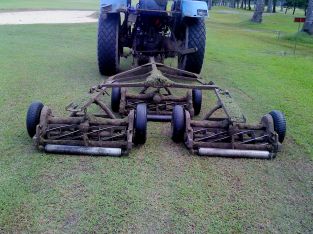
As for mowing there are two issues I’d like to bring up. One is that the insistence of many that a fairway can only be cut with a five-gang mower. It would be good and nice if you can afford it but if you can’t; why suffer? Buy a small to mid-sized tractor and fix it with mowing attachments! It costs less than one-third of a fairway mower and most mechanics can take care of it. When the time comes and you can finally afford a five-gang, the tractor can be used for other works. All you have to do is change the attachment.

Cutting height: about 15 - 17mm.

If you think a small rotary mower can’t do stripes; think again. This small mower on a course with a lot of Lovegrass does it very well.

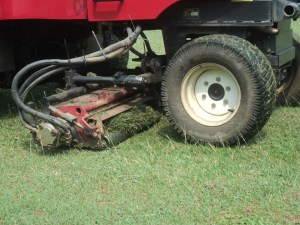
tractor reel mower (2)

This tractor is a bit large for my liking but the small rural club have used it for years. They’ve stopped mowing the rough around greens this year because of the wet condition.


The second issue is that reel mowers can cut some of the long weeds on Malaysian fairways. I’ve seen superintendents send staff with brush-cutters or even lawnmowers behnd their five-gang mowers to cut these weeds. Why not use rotary mowers? Nowadays the five-gang mowers can be fitted with rotary mowers or you can also use a tractor-pulled rotary mower.

mow lovegrass 2

Note the long grass springing back up behind the mower.

mow fairway cutter

And this guy has to come behind the five-gang to cut the long weeds.

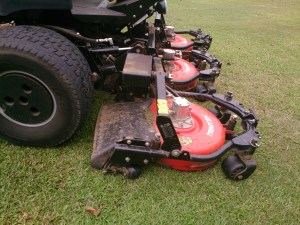
5 gang rotary fairway mower (2)

Or you can buy a five-gang fitted with rotary blades and save on backlapping at the same time.


But the most important thing is; don’t neglect the fairway. If you have a bald spot repair it or at the very least, mark it with a GUR or do something.

Golfers will, mainly, judge a golf course by its greens but the fairway is the area a non-golfer could judge a golf course because thats what they see from the clubhouse, the road or maybe even their houses beside the course; you really don’t want to be judged badly for something that’s not necessarily hard to maintain.

Posted in Golf Course, Golf Course Superintendents, Padang Golf | Leave a Comment »

Cheap maintenance

Posted by mynormas on January 28, 2016

“Times are bad and it will get worse this year” I hear that like almost every alternate year but yet here we are. “Really! It will be worse this year!” Ya. Ok! I hear you! Like I heard you in 2008 and 1998 too. “Was the budget amended in 2008 or 1998?” Hmm… maybe you have a point. Maybe your golf course is not that badly hit yet or you think its immune or if someone really wants to buy your hole 5 for the right price, the management would sell it but I’d like to share some ways of saving costs without sacrificing too much quality in golf course maintenance.

OLYMPUS DIGITAL CAMERA

The Malaysian government is amending their budget on the 28th January 2016. How many clubs are amending their budgets? How many golf courses have taken another look at their budgets in view of rising costs, reduced demands and increasing competition? You may argue that some golf clubs are closing down so there will be less competition but the existing golf course will be going after the same golfers as you are. Some will take the easy way out and reduce prices though I’ve heard of one golf club that want to increase their green fees.

From experience, many golf clubs will cut their maintenance budget because that is easily the biggest expense for the club. But as golfers paying green fees or as a member paying dues you don’t really want your golf course standard to deteriorate and let it be blamed on the economic situation do you? So you would expect the club – if they don’t want to lose you as a customer – to take other measures to cut costs right? At the same time, you don’t want to pay higher green fees or more subscription too.

Experienced Superintendents will have a few things they can do on the golf course to help on the cut-backs without much disruption on your golf game. Unfortunately some of them will choose from these options after they have recovered from their initial knee-jerk reaction they took or were forced to take.

  1. Clean out the store.

Big club or small club; I have yet to find a golf course store that does not have left-over fertiliser or chemicals. They are left behind because they bought one tonne of fertiliser when what they need for 18 holes was actually 0.8 tonne or perhaps the new guy has a different idea than the previous guy or there is a new trend or for whatever reason; most of the time; those few bags of fertiliser or chemicals pushed to the back of the store can still be used.

Your Superintendent won’t mix different fertilisers or chemicals on one hole or green, though I see no harm using different types on different holes as long as they calculate the nutrients or active ingredient to be more or less the same for every hole.

Always read the label! I almost advised someone to use the herbicide DSMA on greens once, believing it to be fungicide until I saw the label on the sack underneath it. If in doubt; I will prefer to tell the storekeeper to waste it.

  1. Small is beautiful.

Your Superintendent may reduce the areas that he/she needs to maintain. I would not recommend shrinking the greens but there are other areas that can be considered.

Sacrifice the OBs or out-of-play areas.

There are usually areas in the rough that are far enough from play that the maintenance crew can let it go wild. This will cut down on man and machinery hours. Save on manpower, diesel, machinery wear-and-tear and spare-parts. The Superintendent could let it become an ‘environmentally sensitive area’ or just let it become a wild rough. Look at it this way; your Superintendent is training you to hit straight.

For aesthetic value or if there is intention to bring the rough back to normal, once a month they may send a team of people to poison or cut new woody growth (including what Planters call ‘volunteer oil palms’) and creepers. Nothing ruins the ‘natural look’ more than the sight of short oil palms and big-leaf creepers creeping or hanging from trees.  You don’t really want your rough to look like a haunted forest.

If slow play becomes an issue because of ‘lost balls’ then they may do what I did once; put up a “Beware of Snakes” sign. Believe you me; even after knowing its purpose, even after knowing that for the past 10 years no one has seen snakes in that hole, no golfer will dare venture into knee-high rough looking for golf balls when they see that sign. It’s a psychology thing.

Reduce the fairways.

Fairways are a source of expenditure by virtue of the fertiliser and effort required to maintain it. In some areas, your Superintendent may shrink the fairways into rough.

Your Superintendent can’t really reduce the width of your fairways but he can shorten it up to the point where the slope rating measurements are taken, and it is possible to take out the fairways on a par 3. I once took out all the fairways on a golf course par 3s though on one long par 3, I increased the size of the approach since it is cut with the collar-mower. Collar; I cannot not have, fairway; I can. So collar I make slightly bigger, huge fairway I take out. Save money on big fairway mower operating hours and fertiliser.

  1. Use the expensive fertiliser.

What?! Some of you might ask. Well this is where I’m sure your Superintendent will insist – and I would agree – not to cut: slow-release fertiliser. At least for the greens. It comes in many types; polymer-coated, sulfur-coated, polymer-sulfur coated, long-chain methylene ureas, etc and all are more expensive than your normal ordinary routine regular standard fertiliser, some more than others. Believe it or not, using the expensive fertilisers will save money. I have to mention these because this is what management will demand first: buy the cheapest one!

Using cheaper quick release ordinary fertiliser may mean losing the nutrients by leaching or evaporation especially in our weather; these problems are supposed to be taken care of by the technologies of the new slow-release fertilisers. Use expensive fertiliser and more of the nutrients will get into the grass and you can also reduce your fertilizing frequency and amount of fertiliser.

Your Superintendent shouldn’t get into the habit of using cheap fertilisers, they are like cheap vitamins. As I always say; cheap vitamins equals expensive urine like cheap fertiliser equals expensive drainage water; the nutrients comes out with the liquid. Of course, bad fertilizing practices can cause that too but that is material for another article. Contact me for more information about it by emailing me at mynormasATconsultant.com replacing AT with @.

  1. Be more scientific and specific.

If the economic pressure does not let-up and the golf course starts to feel that it will soon need to mortgage hole 14 to the local Ahlong loanshark, there is another way to save on fertiliser cost. Your Superintendent may want to ask you for some money to do soil tests to determine how much nutrient is in the soil and maybe even tissue tests too to determine the connection between what’s in the soil and what’s taken up. He would take another look at plant requirements of the grass. Dr Micah  Woods of Asian Turfgrass Center has released guidelines for minimum levels  for sustainable nutrition that he calls umm… Minimum Levels for Sustainable Nutrition or MLSN  and apply just enough fertiliser the turfgrass needs to avoid wastage.

Amazingly, there are still golf courses that fertilise their greens by “one bag for each green method” or 15 bags for 18 +1 greens (perhaps because some greens are just too small to justify one bag). Measure your greens or at the very least: calibrate your spreaders! Then you can be accurate and consistent in your fertilising.

  1. Get a second opinion

You may see a new person going round your golf course poking and scratching on the grass. This may mean that your golf club has hired a consultant. A person who could look at the whole thing from a new perspective may be a good option, right? Having looked at the same thing for years may dull one’s objectivity, so a fresh set of eyes will be useful.

I like poking and probing

I like poking and probing

The best kind of consultant the club can get is one who has actually survived the economic crisis of the late 1990s and 2008 and has worked on both side of the fence; the side that asks for money and the side that wants to cut costs.

How does this save on costs? By looking at the golf course from a different view, he may see all the cost-cutting measures that the Superintendent does not have the heart to cut. Or he could identify a wasteful habit that was not noticed before.

Contact me now to find out more how I can help you save cost by emailing me at mynormasATconsultant.com replacing AT with @

  1. Renovate!

This is one suggestion that is going to fly in the face of convention. Why would anyone renovate a golf course during an economic crisis and call it a cost-saving measure? Well, look at it from the management point of view; traffic is going to be low, some materials’ prices are going to be cheap and some contractors want work.

The management would not want to be dragged into a green fee price war with the neighbouring clubs and if they do cut their prices, at least they can feel justified that it is partly because the golf course is literally, a work-in-progress. If the golf course across the street yells at you “Why are you setting your green fees so low?!” you can tell him “Relax bro, chill, I got three temporary greens, I have to sell cheap”

That reasoning may not go down well with some of you but let’s face it – unless you are the kinda guy who believes that “the end is near” or “the sky is falling” and is ready to jump a bridge soon – times will get better and there will be golfers with money to spend when the economy improves and they will be heading to the newly renovated and improved golf course which will be in the best position to increase green fee prices.

Add to that fact some suppliers and contractors will be reducing prices perhaps to get their stock moving or to get some quick money or to improve cash flow; now would be a good time for the club to get a good bargain.

Of course, all this is relevant only if the club has money in the bank for the work. Or now would be the time membership clubs to beg the Trustee for the use of the sinking fund.

  1. Buy that machine.

What if you really, really, really need to buy a machine? Should you defer? Why? You think it’s going to get cheaper next year or in the following year? Perhaps the currency exchange will improve but by then the machinery price may go up due to inflation and between now and then the costs of repairing your existing junk may eat into whatever amount you think you’re saving and you could end up spending more money in total while at the same time, the aggravation of operating and maintaining that junk eats into your staff’s productivity (and the golf course’s quality).

In the meantime, do consider that the machinery supplier is desperate to sell his machine too and may be willing to offer discounts or longer warranty or maybe even free parts. If he/she is corrupt and offer you kickbacks tell him to reduce the price of the machine even more or tell him to never set foot in your office again. Don’t deal with people like that; you’ll be indebted and trust me, the industry is small enough that words get around. Yes, you, we do know about you and how much you got. Shame on you for giving the rest of us a bad name.

Should you go for reconditioned/used machinery? My experience says no, not unless your golf course is right next to the supplier’s workshop and he can service you. I’ve seen reconditioned machine that work for only a week before the engine fell off; it wasn’t bolted on, it was welded on and when the machine worked for a week, the vibration broke the weld. Of course, I shouldn’t generalise, no one should; send your mechanic with your accountant to look at the machines before deciding. Who knows? Maybe there exist honest second-hand machinery dealers…

For fairway or rough mowers, you could try using a mini-tractor with mowing implements. That way, when you finally got a budget and you can finally afford a machine that the superintendent dreamt of, the tractor can be used for other works. They’re like one third or half the price of a five-gang mower anyway, plus almost any mechanic worth the job-title can repair a tractor.

By the way, there’s this friend of mine who wants to sell of some pre-loved machinery. No, I’m not contradicting myself; these are not reconditioned, these are from the days when golf courses in US are leasing their machines for two or three years and then returning them back the leaser. She managed to get a fleet of them and wants to sell them off. Let me know if you are interested by emailing me at mynormasATconsultant.com and replacing AT with @.

8. Train your staff.

What? “This guy is off his rocker” you say. No money coming in and you want me to spend on my staff who may leave? Well, firstly, I have always considered staff training as an investment, not an expense so you won’t get my sympathy but what the heck, I’ll give you face; secondly I assure you, when handling machinery worth hundreds of thousands of ringgit and applying chemicals/fertilisers on a golf course worth millions of ringgit to build, keeping untrained workers are more expensive compared to training workers and then they leave.

Are you part of the problem or are you part of the solution?

Are you part of the problem or are you part of the solution?

By the way, if you are one of those companies that have been contributing to the Malaysian Human Resource Ministry’s Development Fund or HRDF, this may be the time to use those for training. Ask your HR manager for more info.

If you want to focus on staff training for the golf club, contact someone with more than 22 years of experience in the industry and has a Train-the-Trainer certificate at O3-5I3I OO66 or mynormasATconsultant.com replacing AT with @.

The above list is just some of the things I have done for the golf courses I’ve worked with. Your Superintendent, who knows your golf course infinitely better and are more intimately familiar with the management may have other options he or she will look at.

All they ask is for is some understanding if you see some decline in the golf course standard. They don’t like it any more than you do; it is their reputation on the line. Sometimes some of the cuts were forced on them; it has happened to me too due to management knee-jerk responses when I was a Superintendent. Sometimes we just have to follow instructions even if we don’t agree. When I was part a general manager, I do the knee-jerk responses and expect the staff to follow instructions even if they don’t agree… Hey! I have a budget to balance you know, otherwise I may really have to sell Hole 5.

Contact me at 03-5[31-OO66 or email me at mynormasATconsultant.com replacing AT with @.

Posted in Golf club, Golf Course, Golf Course Superintendents | Tagged: , , | 2 Comments »

Unaffordable Course

Posted by mynormas on January 26, 2016

The USGA Green Section wrote a tongue-in-cheek, sarcastic even, article on its website on how golf courses increase their maintenance costs. I may not agree with all of them (edging the buggy paths, for example) but there are plenty that I agree with and am surprised that Malaysian golf courses continue to do them or even constructing them. Lets list and summarise  them here; words in bold are from the article (ok, maybe I paraphrased here and there: sorry) and those not in bold are my comments.

  1. Having (or adding) a lot of bunkers which should be maintained to be consistent and uniform. The more bunkers a golf course has, the more difficult it is to be maintained to be consistent and uniform or even maintained regularly. And no, I don’t think consistently and uniformly not maintaining them at all counts.

    Now almost all new bunkers in Malaysia 'must' look like this. I once asked "Why?!" and was told "There's a new cloth/coat/technology to hold the sand". "Thats good" I said "but it will still increase your construction and maintenance cost and it looks out of character from your older bunkers!" "Ya... but everyone else has them" was the reply.

    Almost all new bunkers in Malaysia ‘must’ look like this. I once asked “Why?!” and was told “There’s a new cloth/coat/technology to hold the sand”.
    “Thats good” I said “but it will still increase your construction and maintenance cost and it looks out of character from your older bunkers!”
    “Ya… but everyone else has them” was the reply.

  2. Plant more trees. Ya… There are owners and bosses who love to plant trees. Committees too. Perhaps some people think its a legacy thing. With too much trees, grass don’t get enough sunlight and the efficiency of your mowers is less to mow around them. Plus your rough/fairways dries out slower because less air and sun.
  3. Lakes and stream banks. Mowing and trimming them as close to the water edge as possible. These are mostly manual work.
  4. A ball washer for every hole. If you must have them (they’re sponsored perhaps?) install them at tees of holes 1, 10 and at your par-3s. Golfers or caddies can make use of them while waiting for their turn. If I have a ball washer I’d be changing the soap water every week.
  5. Let the maintenance staff fill the divots instead of educating golfers (and caddies) to do it.
  6. Blowing debris from fairways and roughs (I may not agree totally on this.  Though I usually blow the leaves on Fridays only)
  7. Have a multitude of mowing heights. This is my pet peeve. I try very hard to not roll my eyes when superintendents proudly tell me that their tee is mowed at 14mm, the collar is at 12mm the apron is at 15; the fairway collar at 20, the light rough… As if golfers or even the staff can tell the difference of 2mm. I’m betting the Myanmarese mechanic back at the workshop is laughing to himself while setting everything at 17mm… For most clubs; I suggest only three mowing heights: greens, fairway (=tee, collar, apron etc) and rough (=light rough, deep rough etc).
  8. Mow the greens and/or tees with walk-behinds. Mind you most clubs in Malaysia get away with it because instead of either two ride-ons or six walk-behinds greensmowers for 18 holes; some clubs have two or three walk-behinds for 18 holes and don’t see a problem with it.
  9. Ornamental flower beds. I totally agree. Why have an unmaintained flower bed? I actually conspired with a superintendent of a client club by removing a long neglected flower bed while the boss is away and pretending it was never there. Long story… Maybe one day I’ll tell it.
  10. Irrigate non-playing areas. I took out a lot of sprinklers from rough areas.
  11. Overseed turf that would go dormant. Not applicable to Malaysia.
  12. Make your natural unnatural. Yeah… about this. I think we shold keep natural areas to be natural however, this does not mean unmanaged; I usually send workers once a year to kill new trees, ‘volunteer’ oil palms and creeper plants.
  13. Plant the wrong grasses for your area. You know; Seashore Paspalum for fields far from the seashore or Bermudagrass/Tifeagle for areas with a lot of shade.
  14. Edge the buggy paths frequently. I actually see nothing wrong with this if you have the manpower. I do this at least at holes 1 and 10 for the best first impressions.
  15. Let your irrigation system get too old. At the very least the pump house lah…
  16. Use plenty of signs, stakes and ropes. Ya. Mowing around these takes time and reduce efficiency.

For detailed sarcasm, visit the page at www.usga.org/course-care/forethegolfer/steps-to-make-your-course-unaffordable.html.

For sharing information about how to not increase the cost of your course, call Normas at 03-5I3I-OO66 or email me at mynormasATconsultant.com replacing AT with @. 
Posted in Golf club, Golf Course, Golf Course Superintendents, Padang Golf | Tagged: , | Leave a Comment »

Call the Consultant

Posted by mynormas on November 13, 2015

Suddenly my presence is needed all over. Presumably the rain is causing problems for golf courses and football fields alike. Disease here, dead greens there and wet fields everywhere but they call me only when the problem has deteriorated badly. Reminds me of the saying “A consultant is someone called in at the last minute to share the blame”.

Some of the issue could have been solved if they had a plan. A schedule. Sure the weather is becoming unpredictable but who in Malaysia didn’t know the monsoon at the end of the year? So schedule the work AND/OR the tournaments accordingly lah!

Posted in Golf Course, Padang Bola | Tagged: , | Leave a Comment »

Meet Azmi

Posted by mynormas on November 3, 2015

Have you ever met a local worker that feels lunchtime is a waste of time and consistently works through it? When that was brought to my attention a few months ago, I had thought it was only during the busy periods or maybe a once a month kind of phenomena, but it turns out he has been doing it for years. Ladies and gentlemen, meet Encik Azmi bin Mat Ali. Pernahkah anda berjumpa dengan pekerja tempatan yg merasakan waktu makan adalah ‘buang masa’? Kenali Encik Azmi bin Mat Ali. Pertama kali saya mendengarnya, saya sangka ia berlaku jarang-jarang sekali atau hanya jika tekanan kerja memerlukan, rupanya dia telah melakukannya secara diam, tanpa meminta balasan atau pujian selama bertahun tahun.. 

A father of three and a 17-year veteran of the golf course industry, he says that he would rather work through lunch because ‘stopping mid-way and going back to the workshop is a waste of time’ and he feels that he might just as well finish what he started which is primarily, mowing fairways.

Azmi

Azmi

In the Malaysian context, a golf course machinery operator can usually operate only one or two machines. Not Azmi, he can operate several and ‘given the tools, I can make adjustments to the cutting unit too’. Some superintendents, the foreign ones especially, may find this laughably mundane and strange to be unique but in Malaysia where many clubs use transient migrant workers as machine operators, this is unique. Working through lunch hour consistently would make him an abnormality especially with the attitude of many in the industry today, whether from the management or even from the workers side.

The management thinks that the local workers are not reliable and hardworking (which usually means work long hours; productivity be damned), and the workers usually have entitlement issues (like “I am entitled to this” kind of thing). Both are right in their own way; the problem comes when they fail to see issues from the perspective of the ‘other side’.

Back to Azmi, he mows fairways of nine holes in one day, without overtime. Again, some may think that is normal but I have worked in a golf course with machine operators that took two days or more to finish nine holes.  It took me about two months to untrain and retrain one particular worker; he’s not stupid, just not trained hence not productive. It would be easier to just give him overtime to finish the job and if he can’t, because he has to pick up kids after school, to call him lazy. I chose the hard way.

Personally, I feel that management needs to move away from the mentality that golf course maintenance is just cutting grass (to which I mean the workers need to be trained: either send them for training or send your superintendent/supervisors to a specialized/shortened Train the Trainer program) and I also feel that workers needs to move away from the mentality of ‘I’m just a grass cutter’ and as long as ‘cukup makan (just enough to eat), I’m fine’, whether in terms of knowledge or skill or contribution. We seem to be satisfied with what we have except for salary though, everyone wants a big salary increment every year, even if what we can do (skills, knowledge and contribution) this year compared to last year, in fact, every year is the same.  We want a bigger increment because we are still breathing?

As workers, we claim that we deserve better pay because of our 10 years’ experience but if we take a closer look at our ’10 years’, it is actually one year’s experience repeated 10 times or at best, two years’ experience repeated five times. We need to get over our entitlement issues, to be respected and to be able to claim for better pay or promotion, we need to be able to show our skill, knowledge and contribution is increasing over the years.

Secara peribadi, saya ber pendapat bahawa majikan perlu mempunyai mentality yg ber beza dari ‘pekerja padang hanya lah tukang potong rumput; siapa siapa pun boleh buat’; sebaliknya memikirkan untuk menambah produktiviti, pengetahuan dan kebulehan pekerja dengan cara menghantar mereka ke sesi latihan luar ataupun menghantar pegawai atas ke sesi ‘ Train the Trainer’ di reka khusus untuk mereka supaya mereka boleh menjadi pengajar yg lebih baik. Pastikan semua kursus di ‘tailor made’ utk kakitangan anda dan bukan sebarang kursus untuk awam.

Untuk pekerja pula, kita harus menjauhi pemikiran ‘cukup makan’ dan berpuashati dengan sumbangan, pengetahuan dan kebolehan kita. Kita tak berpuashati dengan pendapatan kita, kita mahukan kenaikan besar setiap tahun sedangkan sumbangan, pengetahuan dan kebolehan kita pada tahun ini – malah setiap tahun – sama sahaja. Jadi kenapa kita mahukan kenaikan besar? Kerana kita masih bernafas?

Kita mengaku kita ada pengalaman 10 tahun, tapi bila diteliti, kita dapati pengalaman kita adalah satu tahun di ulang 10 kali ataupun pengalaman dua tahun di ulang lima kali. Pada saya, untuk mendapat penghormatan dan hak untuk demand kenaikan kita harus tingkatkan sumbangan, kebolehan atau pengetahuan kita. Pada saya, pembohongan dari majikan bukanlah tentang kenaikan gaji 3% atau 5% setiap tahun, tetapi kegagalan mereka utk memberi ruang dan peluang kepada pekerja meningkatkan ilmu dan kebolehan lantas mengurang peluang pekerja mencari majikan baru (yang mungkin boleh memberi kenaikan lebih) sekaligus memerangkap mereka dalam perbincangan atau rundingan tapi kekal di satu tempat kerja. Pekerja pula mengambil jalan mudah dengan memilih mentality mangsa dan tidak mengambil tanggungjawab untuk destiny sendiri sebaliknya menyerahkan kepada dan menyalahkan org lain: Lebih mudah utk merungut dan mengadu pada bulan Januari daripada berusaha untuk peningkatan diri dari Februari hingga Disember.

Azmi’s employer told me that if he ever asks for leave, they would immediately approve – mainly because he rarely applies for one anyway – and that they have been generous in his annual increments because of his dedication to his duty and to his work. He may not be the perfect example in terms of knowledge and skill, but in terms of dedication and responsibility, his employers know they can depend on him and has rewarded him accordingly.

You may have your own stories of dedication and hard work; I’ve always liked to highlight such stories to inspire and perhaps debunk prejudices so do share with us. If your story is about how you were treated unfairly, trust us, you’re not the only one; but the rest of us just refuse to be victims.

Majikan Azmi memberitahu saya bahawa mereka akan segera meluluskan cuti beliau jika dipohon, selalunya dia jarang memohon cuti pun dan mereka merasakan mereka lebih mudah untuk bermurah hati sewaktu mempertimbangkan kenaikan gaji tahunan untuk beliau kerana kebolehan dan dedikasinya. Dia mungkin bukan contoh terbaik untuk menggambarkan kebolehan dan pengetahuan pekerja, tetapi majikan nya tahu dia boleh di harap dari segi dedikasi dan tanggungjawab.

Anda mungkin ada kisah dan cerita tentang pekerja ber dedikasi anda sendiri, saya berharap anda tidak keberatan untuk berkongsi. Jika cerita anda adalah tentang ketidakadilan, percayalah kami yang lain semua pernah mengalaminya, cuma kami memilih  untuk tidak memiliki pemikiran mangsa.

Posted in Golf Course, Golf Course Superintendents | Tagged: , , | Leave a Comment »

Apa itu Topsoil?

Posted by mynormas on October 28, 2015

Apa itu topsoil? Ia adalah sejenis bahan yang di gemari dan dijadikan sebagaI piawaian utk kebanyakan padang di Malaysia. Apa hikmatnya yang ia mesti di gunakan dalam pembinaan padang sebelum ia di luluskan oleh agensi kerajaan atau pihak berkuasa tempatan? Hampir setiap spesifikasi atau Bill of Quantity untuk pembinaan padang milik kerajaan yang saya lihat akan mempunyai ‘top soil’  sebagai lapisan atas sebelum rumput di tanam. Di bawahnya biasanya adalah lapisan pasir untuk membantu saliran air.

Partikel partikel pasir duduk situ diam diam, air boleh lalu, takde masalah...

Partikel partikel pasir duduk situ diam diam, air boleh lalu, takde masalah…

Kenapa kita menggunakan top soil? Tradisi, mungkin. Hampir 30 tahun dulu, sewaktu saya masih menuntut di UPM, kami di ajar, ketika mengorek lubang untuk menanam pokok, untuk meletak tanah bahagian atas lubang di sebelah kanan, bahagian bawah lubang di sebelah kiri dan selepas anak pokok dimasukkan ke dalam, tanah di kanan akan di masukkan ke dalam kerana ia di anggap lebih subur.  Itu lah dia top soil atau tanah atas dalam kefahaman dan pengalaman saya. Kenapa? Kerana proses penguraian dan pereputan bahan bahan organic seperti tumbuhan, haiwan, cacing, serangga dan sebagainya menghasilkan nutrient utk tumbuhan baru. Proses  penguraian dan pereputan ini juga bermaksud kehadiran mikrob yg bermanafaat. Top soil juga dilihat sebagai mampu memegang nutrient dan air yang tak mampu di buat oleh pasir.

Soalan saya ialah: utk membina sebuah padang bola, kawasan mana yg juga sebesar padang bola akan di korek utk mendapatkan top soil? Kawasan yg sama? Bukankah kawasan tersebut ada lah kawasan yg penuh dengan rumput liar? Tiada kah kemungkinan bijibenih atau bahagian vegetatif seperti stolon, rhizome atau akar yg masih ada di top soil itu seterusnya akan tumbuh sebagai rumpai di padang baru iti di masa akan datang?

Saya masih ingat hampir 30 tahun lalu, pensyarah Sains Tanah saya, En Peli bin Mat, berpesan bahawa “tanah satu kaki persegi di sini akan mempunyai sifat dan ciri yang berbeza dari tanah satu kaki persegi di sebelahnya”. Saya tidak ada sebab utk meragui En Peli jadi saya tidak faham bagaimana kita boleh guna ‘topsoil’ utk asas penanaman kawasan sebesar padang bola; tidak kah kita mengambil risiko tanah seluas padang kita mempunyai kesuburan dan sifat yang berbeza? Kerana kita telah menggunakan topsoil dari pelbagai ‘satu kaki persegi’? Tidak kah nanti sebelah kiri padang lebih subur dari sebelah kanan, dan sebelah belakang padang lebih keras dari sebelah tengah dan sebagainya?

sand particle+topsoil

Sekarang, tanpa di jemput, selapis ‘topsoil’ yg mempunyai saiz partikel yg halus, di letak atas pasir. Tak lama, partikel halus akan ‘migrate’ ke bawah dan sumbat aliran air. Dalam ‘topsoil’ itu juga mempunyai benih rumpai.

Apa yg saya biasa lihat juga ialah tanah liat yg tak di ketahui asal usulnya di panggil sebagai ‘top soil’ dan oleh kerana tanah liat mempunyai saiz partikel yg lebih kecil dari pasir, ia akan berhijrah (migrate) ke dalam pasir dan menyumbat ruang yg menjadi tempat air mengalir dan akan menyebabkan padang basah.

Tanah liat yang menjadi keras bila di roll dan lembik di musim hujan adalah punca kebanyakan masalah padang di Malaysia walaupun padang tersebut di tambah dengan longkang subtanah. Diburukkan lagi jika longkang subtanah itu dibalut dengan kain geotextile kerana partikel yang sangat halus pada topsoil akan menutup lubang lubang pada kain geotextile dan longkang akan tidak lagi berfungsi.

OLYMPUS DIGITAL CAMERA

Padang ini sangat basah. Saya telah mengorek diatas longkang subtanah dan mendapati ‘topsoil’ telah menjadi keras dan tidak berguna.

Saya ada dua cadangan.

  1. berpegang kepada prinsip prinsip ‘biar mati anak, jangan mati adat’ atau ‘copy paste lebih senang’ atau ‘saya hanya menurut arahan, bukan fikiran’ dan kita masih lagi akan menggunakan ‘top soil’ maka saya cadangkan: ada kan spesifikasi tepat tentang top soil terutama nya saiz partikel dan kehadiran benih rumpai. Kedua dua nya memerlukan bukti, yg pertama ialah dengan menghantar nya ke makmal atas tanggungan kontraktor kedua ialah demgan menyimpan sampel top soil dalam balang selama dua minggu dan lihat apa yg tumbuh.
  2. Gunakan cara ‘root zone’ iaitu campuran bahan bahan specific utk mencapai sifat tanah yg kita mahu. Contohnya, 90% pasir, 5% bahan organic yg boleh reput, dan 5% amendment yg kekal seperti zeolite atau cocopeat atau sekam padi. Bahan organc akan membekalkan nutrisi sama macam top soil, malah lebih sekata dan soil amendment itu akan memegang air utk pihak pasir. Semua ini hanya perlu di bahagian 4-6 inci ter atas dimana majority akar akan berada. Bawahnya pasir. Atau gunakanlah apa-ap campuran pun; janji tanah itu sekata kesuburan (atau keTIDAKsuburannya), sifat dan ciri di seluruh padang. Padang itu akan lebih senang di urus.

Tapi tak lengkap rasanya kalau tiada rujukan, dan ada orang yang kalau takde orang putih cakap, dia tak percaya, jadi silakan senarai di bawah. Sebagai ganti topsoil pun boleh lhat di bawah atau Google “Root zone for athletic fields” sendiri (jangan kata saya tak bagi alternative lain)

  1. “The Shocking Truth about Topsoil” dari Michigan State University http://msue.anr.msu.edu/news/the_shocking_truth_about_topsoil
  2. “Topsoil 101” http://What www.bhg.com/gardening/yard/soil/topsoil/
  3. “What is topsoil? Definition and Composition” http://study.com/academy/lesson/what-is-topsoil-definition-composition-uses.html
  4. “Purchasing Topsoil” dari University of New Hampshire. Ini lagi best; dia warning tentang racun yang masih ada dalam topsoil akan memberi kesan dalam tumbuhan akan datang.  http://extension.unh.edu/resources/representation/Resource000492_Rep514.pdf
  5. “Topsoil Quality Guidelines for Landscaping” dari Utah State University http://forestry.usu.edu/files/ uploads/AGSO02.pdf
  6. “Sand-based Athletic Fields”  dari Wikipedia https://en.wikipedia.org/wiki/Sand-based_athletic_fields
  7. “Root zones for High Traffic Turfgrass Areas” dari Ohio State University http://www.oardc.ohio-state.edu/ss540/chapters/SWSGCch6.pdf
  8. “Selecting Sand-Dominated Rootzones for Sports Fields” dari Penn State University  http://www.sportsbuilders.org/events/presentations/Orlando_2C.pdf
  9. “Rootzone” dari Sports Turf Managers Association atau STMA  http://www.stma.org/sites/stma/files/Technical_Resources/Rootzone.pdf
  10. “Managing Soil vs Sand Sports Fields” Ministry of Agriculture, Food and Rural Affairs, Ontario, Canada.  http://www.omafra.gov.on.ca/english/crops/facts/soilsand.htm


Untuk maklumat lanjut tentang penjagaan padang; hubungi saya di mynormasATconsultant.com (gantikan AT dengan @) atau talipon O3-5I3I OO66 dan biarkan ia berdering lama. 

Untuk mengetahui ilmu penjagaan rumput seterusnya, “Follow” laman web ini dengan memasukkan email anda di bahagian atas sebelah kanan. Saya biasa menulis satu atau dua kali sahaja setiap bulan. 

Sila sudi klik gambar iklan di bawah artikel in, ia adalah sumber pendapatan untuk laman web ini. Terima kasih.

Copyright and please click

Posted in Golf Course, Padang, Padang Bola | Tagged: , | 8 Comments »

Cheap fertilising, expensive water

Posted by mynormas on October 23, 2015

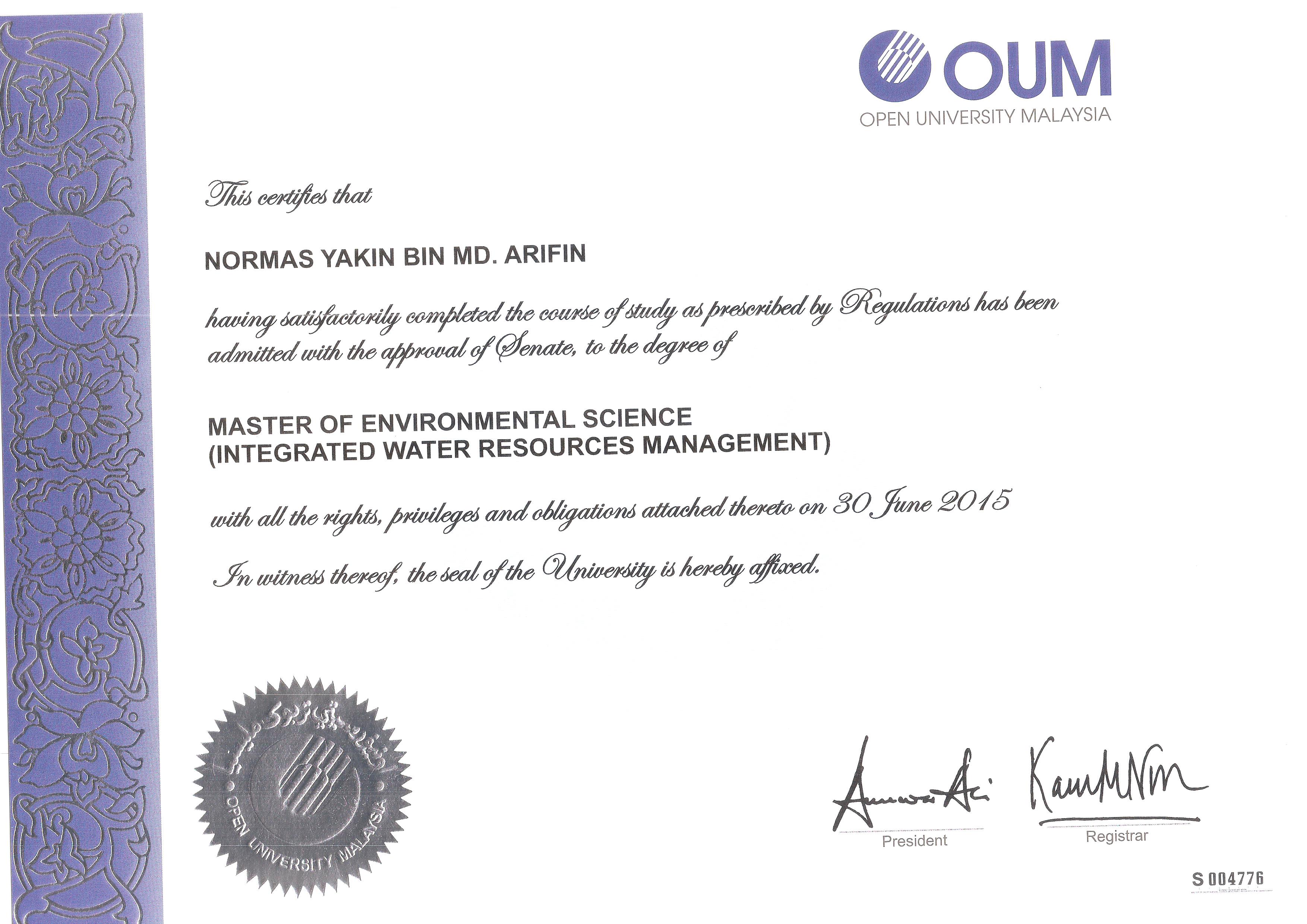
I have just graduated with a Masters in Environmental Science from the Open University of Malaysia last month. It was the culmination of two plus years years of weekend classes and another three of doing research, well one year of planning, 30 days of collecting data and almost two years of writing up the report (hardworking; I am, genius; I am not) about the link between golf course fertilisation and nutrient in the river water inside a particular golf course. I’m sure that my sponsor is happy, my scholarship being my savings from the Employees Provident Fund. I’ve even had to resign from a job that made me work on weekends to start my classes.

I have always maintained that, in the Malaysian context, golf course pollution is not so much from the pesticides, as is assumed by most people. The majority of Malaysian golf courses do not apply much in the way of pesticides as can be seen in the amount of pests, be it weeds, fungi or even insects on a typical Malaysian golf course. If I were to hazard a guess, perhaps only 10% of Malaysian golf courses would actually apply pesticides in any quantity large enough to make a difference on their course and the environment.  The danger to the environment, with regard to pesticides would be the courses that is part of this 10% that has the money to buy the pesticides but do not have the training, knowledge or even the willingness to protect their workers, never mind the environment. The next time you come across a staff applying anything on a golf course, ask him three question 1. What is he applying? 2. Who taught him how to apply? 3. When was his last training for application? You’ll be surprised how many workers don’t know what they’re applying, never mind the MSDS (Material Safety Data Sheet) which would specify what to do if accidents happen.

What about the rest of the Malaysian golf courses? Do the other 90% pose a risk? To a certain extent, I believe they do, but not from pesticides; perhaps because we associate pesticides with poison, we assume that is the only environmental hazard in golf courses, whereas, there lurks another hazard; the fertiliser. Especially the cheap, quick-release fertiliser. Especially in Malaysia’s tropical climate with an annual rainfall of above 2,500mm. Especially in golf courses with drainage designed for golf in tropical climate with heavy rainfall.

Apply fertiliser; rain come, fertilizer bye-bye either through leaching or surface-runoff which would wash away the fertilizer prills or the nutrients into the lower parts of the course, into drainage which  inevitably will be or lead to a water body, be it a river, lake or even the irrigation pond.

An example of fertiliser prill after application, imagine if it rains heavily, where would the prill go?

An example of fertiliser prill after application, imagine if it rains heavily, where would the prill go?

Of the 16 or 17 nutrients turfgrass needs, two that are applied in large amounts are considered to be hazardous if they are released into the water bodies (ponds, lakes, river etc) in large amounts: nitrogen and phosphorus.

Why? There is such a thing as national water quality standards, which we should not exceed (thank you, Captain Obvious). Secondly, they cause eutrophication, which is to say: both these nutrients will increase plant life (algae, phytoplankton etc.) in the water, significantly. Wait, more plants, not good? Not good. Water weeds when die will sink to the bottom, become food for more plant life AND microorganism that helps them decay. These organisms and processes needs oxygen, which they take from the water, depriving the fishes, which then die and rot and that rotting process uses oxygen, which if lacking, some of the afore-mentioned organisms may then cheat by going anaerobic which is not cool because its by-product is hydrogen sulphide, a smelly and poisonous gas. So we either get no oxygen (aka ‘dead zones’) or poisonous gas (death zones?).  All simplified of course, a scientific journal this is not, however do feel free to Google ‘eutrophication’, ‘nitrogen and phosphorus in water’ or ‘fertiliser pollution’ for more info.

I've asked this club to send their water for testing. In their case, I suspect the nutrients may come from sewage upstream.

I’ve asked this club to send their water for testing. In their case, I suspect the nutrients may come from sewage upstream.

As for my research, I focused on three major nutrients; nitrogen, phosphorus and kalium (or potassium as the Americans call ‘K’) and I looked for any correlation between fertiliser application, rainfall and the amount of nutrients in the river inside the golf course. The results of the research show that there is no correlation between all three.  My supervisor or as I like to say, my professor, Dr. Thiru, has encouraged me to publish my findings in relevant journals, which I will, soon (don’t hold your breath).

This does not conclusively mean all golf courses’ fertilising activity do not pose a threat; the risk increases with the use of cheap quick-release fertiliser, better drainage, higher rates, no equipment calibration, no training and also type of soil, so pay attention. It is said that cheap vitamins lead to expensive urine, likewise I like to say that cheap fertilising will lead to expensive drainage water.

This piece of paper cost me a lot but its been one heck of a journey.

This piece of paper cost me a lot but its been one heck of a journey.

Posted in Golf Course, Rumput | Tagged: | Leave a Comment »